
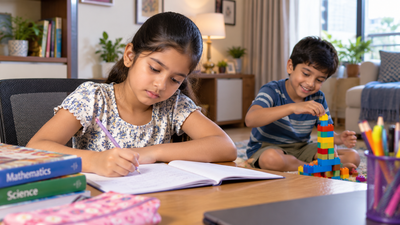
A child is halfway through a maths worksheet when their older sibling starts building a Lego tower nearby. Within minutes, the pencil is down, the chair has been abandoned, and the child is asking to join in. At another time, the same child may sit quietly through a story or finish a puzzle without much difficulty. So why does concentration suddenly become harder when a sibling has something more exciting to do?For many Indian families, this is a familiar scene. Children may share a bedroom, study table or living space, making it difficult for one child to focus while another watches cartoons, plays a game or builds something nearby. Even when nobody is deliberately disturbing them, the more interesting activity can be difficult to ignore.
28 Sept 2026 | 08:18
Does your teenager tell you about their friends, or do you often have to ask? How much do you know about their social life?
Psychology offers a useful explanation: concentration is not just about trying hard. It also involves filtering out distractions, controlling impulses and staying with a task that may be less immediately rewarding. These abilities develop throughout childhood, and an exciting activity nearby can make them harder to use.
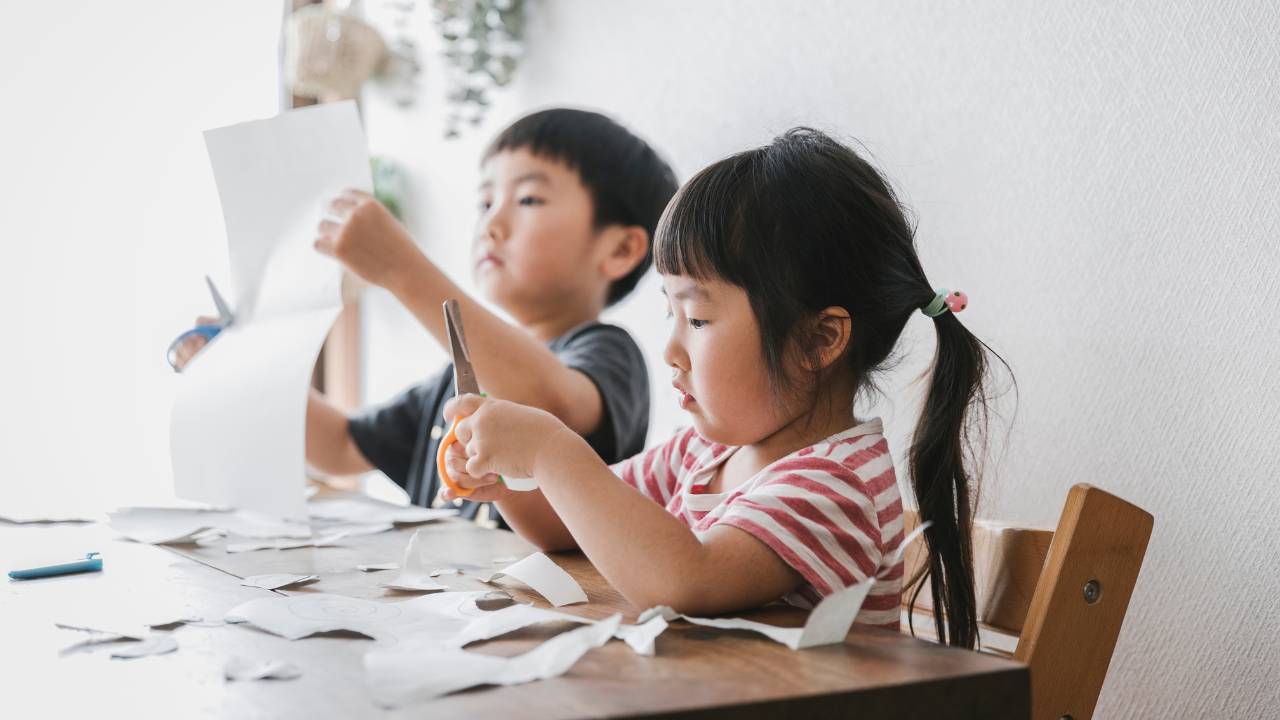
Children are still developing the ability to resist distractions.
Why a sibling’s play can be difficult to ignore
Imagine a six-year-old trying to finish a Hindi writing exercise while their younger sibling laughs at a cartoon. The child may know what they are supposed to do, but their attention keeps drifting towards the sounds and movement around them.This involves selective attention – the ability to focus on relevant information while filtering out competing distractions.A 2022 study published in Developmental Science, titled “Attentional control in middle childhood is highly dynamic”, examined children aged four to 10 years and adults performing a visual task while unexpected sounds played in the background.The researchers found that novel sounds distracted children, with younger children particularly affected. Children aged four and five remained distracted throughout the experiment, while older children increasingly adapted to the sounds as the task progressed.The experiment did not specifically involve siblings, but it helps explain why children may struggle to ignore an interesting sound or activity while concentrating on something else.In everyday family life, a sibling’s game, a funny video or an animated conversation can be more compelling than copying spellings or completing a worksheet. The contrast becomes especially noticeable when the child’s own task requires sustained effort.
The more interesting activity may feel more rewarding
Another factor is the difference between what a child has to do and what they want to do.Homework, handwriting practice and revision often involve delayed rewards. A child has to finish several questions before getting a break. A sibling’s activity, on the other hand, offers immediate enjoyment, novelty or social interaction.This does not necessarily mean the child is deliberately disobedient. They may simply be finding it difficult to resist an appealing alternative.Executive functions – the mental skills involved in controlling impulses, holding information in mind and switching between tasks – develop throughout childhood. These abilities help children stay with a task even when something more attractive is happening nearby.Sibling interactions can also provide opportunities to practise these skills. Playing together may require children to wait for a turn, negotiate rules, plan and manage frustration. However, enjoying an activity with a sibling and concentrating independently while that sibling plays are two different situations.The same relationship can offer opportunities for learning while also creating moments when attention becomes harder to maintain.
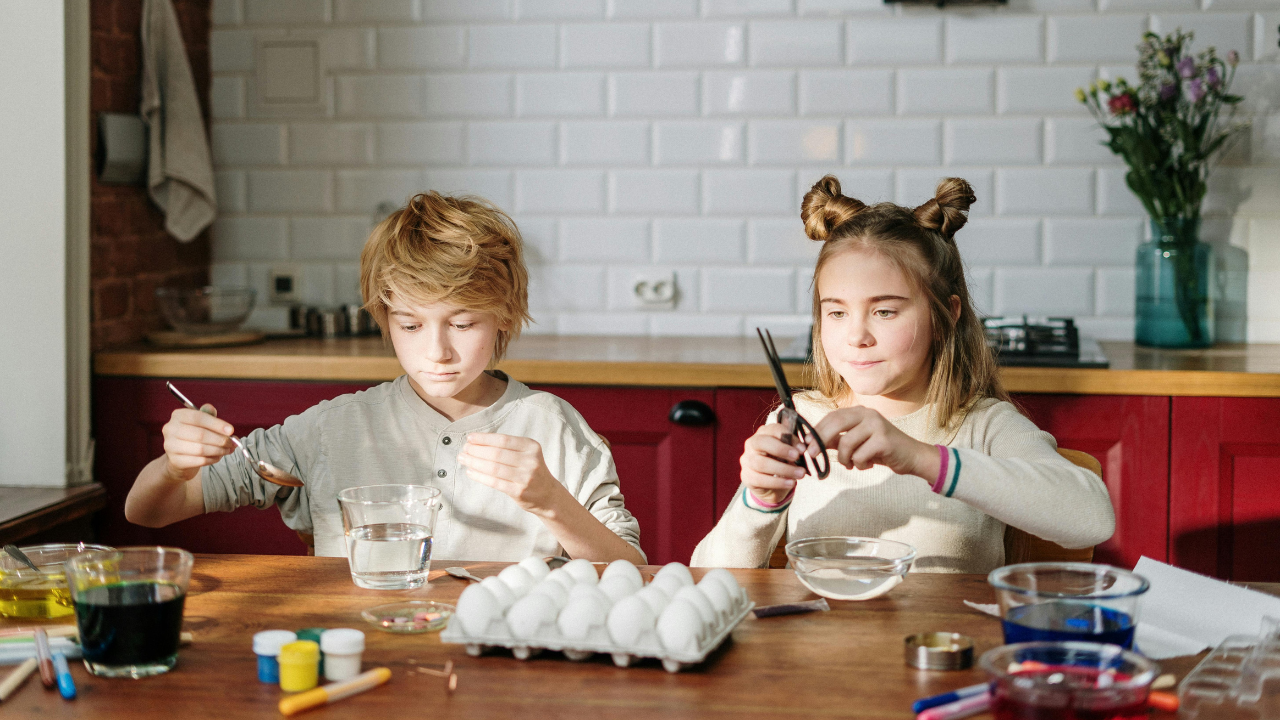
Breaking homework into smaller tasks may help children stay focused.
Why “just concentrate” may not work
When a child repeatedly looks away from their books to watch a sibling play, parents may interpret it as laziness, a lack of discipline or an attempt to avoid studying. But repeatedly telling a child to concentrate does not remove the distraction competing for their attention.Research on background television offers a useful parallel. In a 2008 experiment published in Child Development, researchers observed children aged 12, 24 and 36 months playing with toys, with and without a television programme playing in the background.Although the children looked at the television only briefly, its presence significantly reduced the length of their play episodes and their focused attention.A sibling is not the same as a television. They can speak directly to the child, invite them to play and introduce new ideas. Their activity can also carry emotional significance: the child may be curious, excited or worried about missing out.Still, the study illustrates an important point: a distraction does not have to hold a child’s attention continuously to interrupt what they are doing.Rather than assuming a child is unwilling to work, parents can first examine whether the environment is making concentration unnecessarily difficult.
Does having a sibling make children less focused?
Not necessarily. Growing up with siblings can also offer opportunities to develop important thinking and social skills.A 2023 longitudinal study published in Psychology in Russia: State of the Art followed 490 children who were initially five to six years old. It found that children who watched videos or played video games with siblings showed greater gains in certain measures of inhibitory control over a year than children who generally did these activities alone.Inhibitory control is the ability to resist an automatic response and do what a situation requires. It is relevant when a child wants to leave their homework to join a sibling but needs to finish the current task first.However, the study examined shared digital activities, not distraction during homework. Its findings do not establish that playing with siblings directly improves concentration during schoolwork. They do suggest that sibling interactions can be associated with the development of skills children use to manage their behaviour.The takeaway is not that siblings are bad for concentration. Rather, children need opportunities both to interact with their siblings and to practise focusing independently.
What parents can do when one child keeps getting distracted
For families living in Indian cities, separating siblings into different rooms may not always be practical. A shared bedroom, a compact flat or a single dining table used for homework can make it difficult to create completely separate spaces.Small changes, however, can make the task more manageable.1. Create a quieter window for homeworkIf one child needs to study while another is playing, try scheduling a short period when the more exciting activity is paused or moved elsewhere. This does not mean keeping siblings silent throughout the evening. Even a brief, predictable period with fewer distractions may help.2. Break work into smaller sectionsInstead of saying, “Finish all your maths before you get up,” try setting a manageable goal: complete five sums, check the answers and then take a short break. Smaller goals can make it easier for a child to see progress and return to the task after resting.3. Avoid comparing siblingsStatements such as “Look at your sister, she has already finished” can make homework more emotionally charged. The child may begin to associate studying with comparison rather than learning.Focus instead on individual progress: “You finished these five questions. Let’s see what you can do next.”4. Explain when it is time to work and when it is time to playChildren can learn simple, consistent rules. Parents might say, “Your brother can keep building his tower, but this is your ten-minute writing time. When the timer rings, you can take a break.”The aim is not to make the child feel guilty for wanting to play. It is to help them understand that different activities have different times.5. Make room for shared playIt is equally important not to treat every sibling interaction as an interruption. Playing together, negotiating rules, taking turns and resolving disagreements can offer opportunities to practise social and cognitive skills. The goal is to balance shared activities with time for individual responsibilities.
When should parents pay closer attention?
Occasionally struggling to concentrate when a sibling is doing something exciting is not, by itself, evidence of an attention problem. Age, temperament, sleep, interest in the task and the surrounding environment can all influence how easily a child focuses.Parents can observe whether the difficulty occurs mainly when there is an obvious distraction or whether it also appears in quieter settings, during conversations, play, meals and other everyday routines.If persistent attention difficulties affect schoolwork, relationships or daily life across settings, it may be worth discussing them with a paediatrician or qualified child mental health professional.Ultimately, a child who abandons a worksheet to watch their sibling build a tower may not be making a statement about their attitude towards learning. They may simply be finding it difficult to resist something more engaging in that moment.For parents, the useful question is not only, “Why won’t my child concentrate?” It is also, “What is competing for their attention, and how can I make it easier for them to return to what they need to do?”Sometimes, helping a child focus begins not with another reminder to pay attention, but with a small change to the environment around them.