
There is something quite staggering about Oppo’s newest flagship, the Find X10 Pro Max. This is the world’s first smartphone with a triple 200-megapixel camera system. Second, there is a really small gap between this flagship and its predecessor, the very likeable Oppo Find X9 Ultra, which we assessed at its May launch. I am now beginning to wonder what Oppo’s Find X series hierarchy looks like now, because both will be on sale in India. One doesn’t replace the other, at least not for now. In a way, the Find X10 Pro Max succeeds last year’s Find X9 Pro.
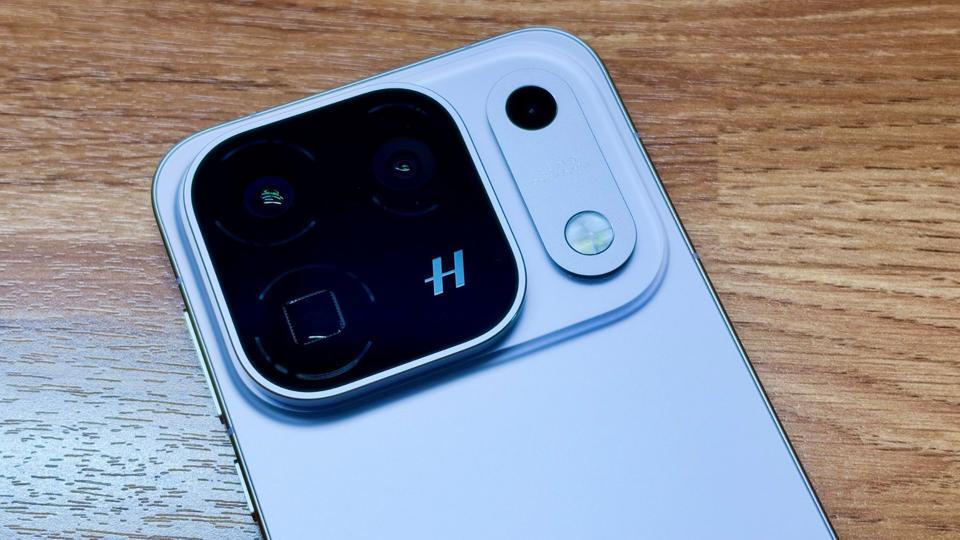
Look closely, and you’ll begin to see what Oppo is going for with the Find X10 Pro Max. The Find X9 Ultra had set the template, and the Find X10 Pro Max is building on that. It is a simple enough template to decode—throw the absolute kitchen sink at it in terms of specs, and therefore underline value. The latter though, may prove easier said than done amidst the bill of materials inflation, and the pricing shows.
Oppo has priced the Find X10 Pro Max at ₹1,99,999 while the Find X9 Ultra is right now, retailing for around ₹1,69,999. That is an astonishing amount of money to spend on a flagship smartphone. It seems Oppo thought that, with prices inevitably much higher than they’d have liked, they might as well go all the way and enter the ‘super phone’ territory. The Hasselblad camera points in that direction, as do some of the specs.
This spec, that spec, and a balance
But there’s some perplexity on that front. The Find X10 Pro Max has a slightly smaller display than the Find X9 Ultra (6.78 inches versus 6.82 inches) and slightly lower resolution (2772×1272 as against 3168×1440), which also results in lower pixel density (450 pixels per inch compared with 510 ppi). This is still a very vibrant screen with a 144Hz refresh rate.
The chip is a 2-nanometer MediaTek Dimensity 9600 Pro flagship chip with 12GB memory and 512GB storage, while the Find X9 Ultra uses a Qualcomm Snapdragon 8 Elite Gen 5 with similar memory and storage. This makes for interesting reading compared with the price tags. None of these comparisons means either is inferior, but they offer perspective and an overall curation of a personality. Which one would you pick?
It feels a bit baffling to assess the Find X10 Pro Max as a flagship worthy of its title so soon after seeing that the Find X9 Ultra also delivered resoundingly on that proposition.
The Dimensity 9600 Pro brings a chip-level app accelerator, a neural processing unit for on-device AI compute, and fantastic thermal management not just at the chip level, but across Oppo’s cooling architecture. This generation’s flagships are just better at keeping cool, compared with the heating issues we regularly noted a couple of years ago.
A first-of-its-kind camera system
The triple 200-megapixel camera system that has been co-developed with Hasselblad uses a 200MP Samsung ISOCELL HPC sensor with an f/1.5 lens (1/1.3-inch size) for the main wide camera, a 200MP Samsung ISOCELL HP5 sensor with a 124-degree field of view for the ultra-wide camera, and a 200MP Samsung ISOCELL HP5 sensor with 70mm equivalent focal length and 3x optical zoom for the telephoto.
The results are nothing short of stunning as far as crispness of detail and vividness of colours are concerned. Even subjectively so, having a healthy appreciation for Hasselblad’s general photography philosophy. Mind you, 200-megapixel sensors don’t mean you’re shooting every photo at that resolution—only Hasselblad Hi-Res does, in 200-megapixel or 50-megapixel modes.
It is perplexing that the camera app doesn’t allow the user to choose a pixel-binning resolution, with automatic selection for the 12-megapixel or 26-megapixel resolutions. The latter figures more often than not when ambient lighting is close to perfect, or you are capturing photos within the optical zoom range. Some photos may demand higher resolution, but in those moments, your only choice is Hasselblad Hi-Res mode.
Across lighting conditions, this phone delivers the sort of photos that will set the benchmark for the next line of photography flagships. The upcoming Vivo X500 series, Xiaomi and Leica’s next effort and of course at some point, Samsung’s next Galaxy S series, will all compare with Oppo and Hasselblad’s results to gauge how effectively they are developing their tech. As would customers, even more so because the monetary outlay is much higher.
A key reason the Oppo Find X10 Pro Max delivers rich, vibrant photos in a range of lighting conditions is its in-house DeepPix sensor tech. Essentially, for every photo, this delivers what Oppo says are 17 stops of ultra high-dynamic range, with the large sensor and wide aperture proving to be solid foundations. A slight optimisation may be necessary at some stage—in certain photos, shadows look a bit more illuminated than they should be.
It is a similarly neat experience with the telephoto that does 6x optical zoom at 140mm focal length. Beyond that, the image processing relies significantly on artificial intelligence (AI) to fill in the details, but there is a definitive reduction in overall aggressive processing that we saw in most of last year’s Android flagship phones.
The broader advantage of that change, defined by Oppo’s new Lumo True Image Engine, is most photos despite some gentle touch-ups here and there by the processing pipeline, retain a realism in terms of the sense of place and the illumination of the scene. On the video front, the Find X10 Pro Max gets 8K/30fps recording across all three rear cameras, and the ultra wide can also do 4K/120fps. Dolby Vision recording is also an option.
Everything else, and a checklist
The Find X10 Pro Max that goes on sale in India has an 8,000mAh silicon-carbon battery. The stamina is impressive. An hour of streaming the Formula 1 US Grand Prix saw the battery dip from 100% to 97% at auto brightness, and the entire race finished with the battery still at 93%. I allowed the settings to err on the side of a brighter display relative to the room’s lighting—any less bright, and the battery usage would have been lower by at least one percentage point.
This has 80-watt fast charging, which while absolutely not a challenge, must be weighed against the perspective of the 100-watt charging ceiling of the Find X9 Ultra.
What I do miss in terms of the build and visual aesthetic is the bold experimentation with materials. Such as the dual-tone vegan leather finish on the Find X9 Ultra that feels uber luxurious. The Find X10 Pro Max does have a subtle dual tone particularly on the Luna White version, and the finish does have a fabric-like softness. The separated camera island design also grows with the passage of time.
Oppo’s ColorOS 17 has seen a significant uptick in a fluid design, subtle light play and slight realignments that open up a bit more space in certain parts of the interface. Oppo says there is a new Adaptive Scheduling Architecture which understands your phone usage as time passes, which means it’ll be able to identify certain apps that may be most used at certain times of the day and preload them for faster response. There is a complete Oppo AI suite as you’d expect alongside all the Google Gemini integration in Android.
The Find X10 Pro Max has two big matters to contend with. First, the inevitable groans that consumers will let out once they hear the price tag. It isn’t an Oppo problem; it is a broader smartphone industry problem and there’s no way around it. Secondly, it is perplexing why the X10 series follows the Find X9 series so soon. Those who bought any of the latter launched Find X9 series phones will have a right to feel unhappy about this shortened succession window.
The things in its control, which primarily revolve around the camera, overall performance or the overall experience, leave nothing to chance. The nitpick I do have is a flagship shouldn’t have so many preloaded apps—while most of them can be removed, it takes away from a premium experience one expects after paying ₹1,99,999 for a phone.
Timing-borne confusion isn’t the Find X10 Pro Max’s fault, having arrived as a camera powerhouse so soon after another camera powerhouse, the impressive Find X9 Ultra—and potential buyers will certainly see some overlap. That said, we may be a few months out from the Find X10 Ultra (if the naming scheme continues).
It may not be an easy decision if you are waving your credit card to buy one of Oppo’s newest flagship phones now or at some point in the near future. But this strategy of choice, and I’m certain it’s purposefully done, could be a masterstroke from Oppo. After all, one size rarely fits all.