
In its 37-year presence in India, Intel has invested nearly $11 billion in the country across research, development, and engineering. It is no longer just that, as Gokul V. Subramaniam, Intel India president and vice president of the Client Computing Group at Intel Corporation, describes the transition.
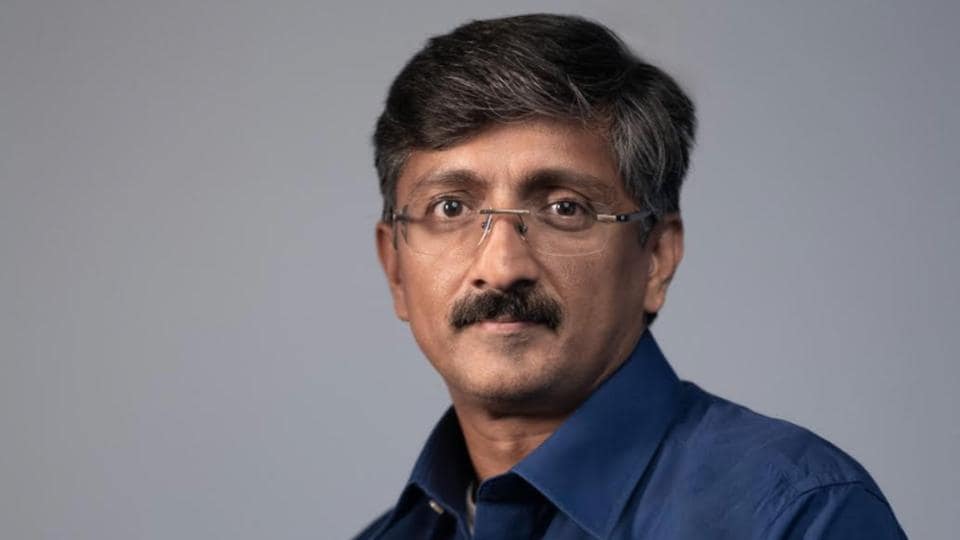
“The shift is very big. Intel India is now a fully vertically focused semiconductor engineering centre,” he said, illustrating a mandate that goes much further than just research and development.
Subramaniam explains that Intel has teams in India working on everything from instruction set architectures and processor design to CPUs and GPU graphics processors, ecosystem IPs, and firmware and software. For Intel, this shift over the past five years is framed not merely as a matter of scale, but of architectural ownership.
While he doesn’t mention a specific number for upcoming investments in India, this perspective aligns with chief executive officer Lip-Bu Tan’s direction for Intel to focus on cost and margin. From that standpoint, Intel India is presenting itself as a way to execute faster.
Subramaniam pointed to significant contributions from India for the chipmaker’s Clearwater Forest, Panther Lake and Wildcat Lake across enterprise and consumer silicon. All three are built on 18A, the process node Intel’s turnaround depends on. He also flagged a newer stream of work—purpose-built or custom silicon, which Intel added “in the last year and a half,” alongside foundry work.
Intel’s big focus for India is sovereign artificial intelligence (AI), skilling, and strong academic engagement. “We work with the government, with the Ministry of Electronics and Information Technology (MeitY), on the IndiaAI mission, as well as the India Semiconductor Mission (ISM),” he said.
To that end, Intel has active partnerships with Bhashini, CoRover.ai and Tech Mahindra, focusing on multilingual and locally relevant AI. For instance, Intel and Tech Mahindra have collaborated to bring Project Indus education-focused LLMs that support Hindi and regional Indian dialects to Intel-powered AI PCs for students.
Earlier this year, Intel India collaborated with MeitY’s Digital India Bhashini Division to make Vidyalekha’s real-time AI translation and transcription tool available on Intel-based AI PCs. This runs sovereign multilingual models directly on AI PCs rather than relying solely on the cloud, enabling easier local-language access in low-connectivity areas. It supports 22 Indian languages and is meant for a higher education use case.
Subramaniam noted that a medley of models were being used, including some for speech recognition, text-to-speech, machine translation and LLMs. The key, he said, was “how they all get stitched together to solve a problem”. There is also an added layer of complexity with conversational AI in India, which often must process code-switching—a mix of English and an Indic language—for context and accuracy.
“In the real-time aspect of translation and transcription, there is a latency angle to it. And also, these are good at the model level, but what are the final applications it’s serving,” said Subramaniam. He believes their work in education, enterprise and small business spaces can add value at the application level, with optimisations being embedded from the chip level itself.
Subramaniam said success in India would depend on delivering breakthrough innovations, the right products with the performance consumers require, and products for specific use cases. The company’s generational upgrades, including Panther Lake and Wildcat Lake, provide momentum across personal computing devices, clients, edge devices, robotics, physical AI, and data centres.
Intel recently added custom silicon and Application-Specific Integrated Circuits as a category, a space mostly dominated by competitors like Broadcom and Marvell, and it will cater to hyperscale cloud providers and AI infrastructure needs that often don’t rely on off-the-shelf processors.
Intel’s custom silicon and 18A chip architecture could benefit directly from India’s data centre boom. India is expected to expand data centre capacity to nearly 8 Gigawatt (GW) by 2030, up from 1.6GW in August this year. Official figures peg data centre investments at nearly $70 billion, with an additional $90 billion in announced projects highlighting the scale of expansion.