
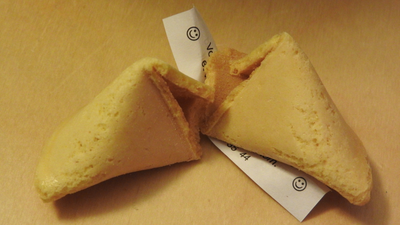
Every time you enter a Chinese restaurant, you cannot wait for the meal to end. But not because you hate the food or simply love dessert. It is, in fact, for one of the most beloved Chinese food traditions: the fortune cookie at the end of the meal.Fortune cookies are those little folded, crispy biscuits that promise to predict your future through a tiny slip of paper tucked inside. While many might not believe these predictions to be true, the actual lie is that the fortune cookie is Chinese! Yes, the so-called Chinese staple has surprisingly little to do with China.So, where did fortune cookies come from?
A little fortune from Japan
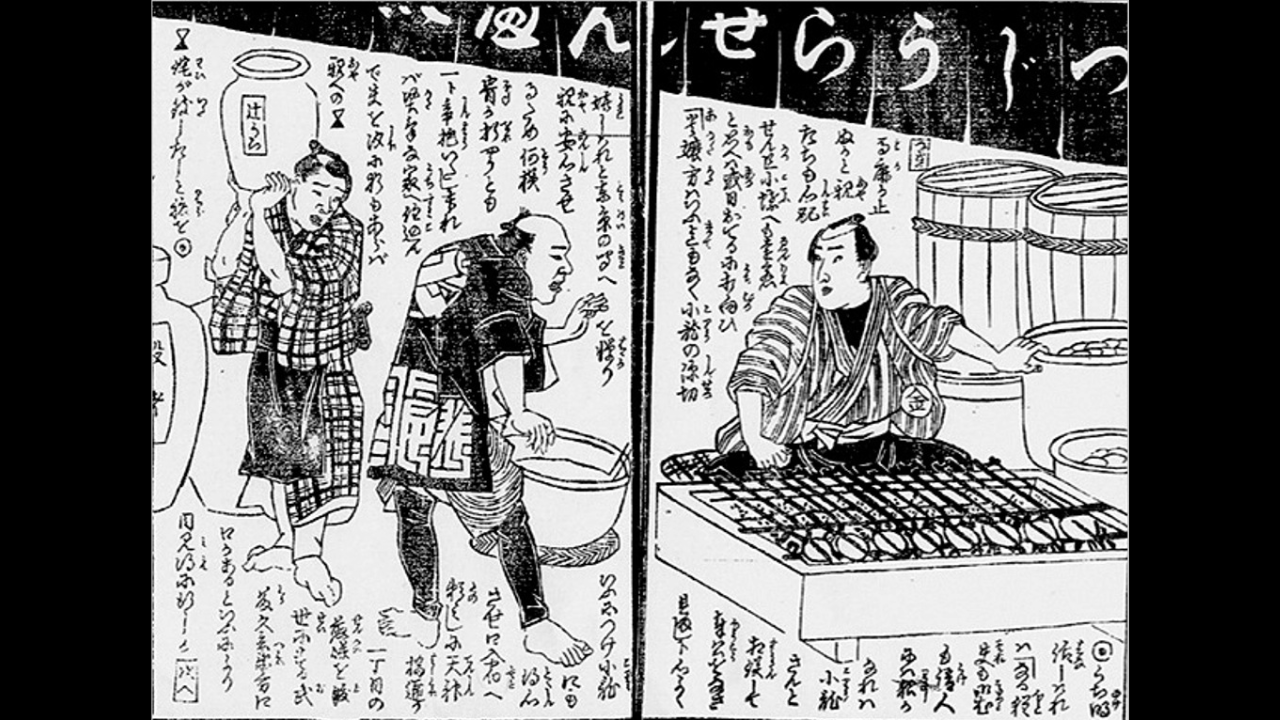
Baking Tsujiura SenbeiImage Credit: WikiMedia Commons
The story begins in Japan, where fortune-telling and food have crossed paths for centuries. One tradition involves senbei, Japanese crackers that are commonly served with green tea. A variation known as tsujiura senbei, or fortune crackers, combined these snacks with the practice of reading fortunes.Dating back to at least the 19th century, these crackers were particularly popular around Kyoto. Unlike the sweet, vanilla-flavoured biscuits served in Chinese restaurants today, traditional tsujiura senbei were larger, darker and savoury, made using ingredients such as sesame and miso. Their fortunes were not tucked into a hollow centre either. Instead, small slips of paper were pinched into the folded edge of the cracker.In fact, you can even find them mentioned in Japanese storybooks dating back to 1878 that contain illustrations of an apprentice making these fortune crackers in a senbei shop. The resemblance to the modern fortune cookie is difficult to miss, even if the taste is quite different.
From Kyoto to California
The fortune cracker eventually travelled across the Pacific with Japanese immigrants who settled in Hawaii and California between the late 19th and early 20th centuries. Japanese confectioners began opening bakeries in American cities, bringing familiar treats from home and adapting them to local tastes.An early American locale linked to the fortune cookie was the Japanese Tea Garden, in San Francisco’s Golden Gate Park. Its manager, Makoto Hagiwara, is often given credit for introducing the cookies to visitors around 1914. Suyaichi Okamura founded Benkyodo, a Japanese confectionary, in 1906, and these are said to have come from there.
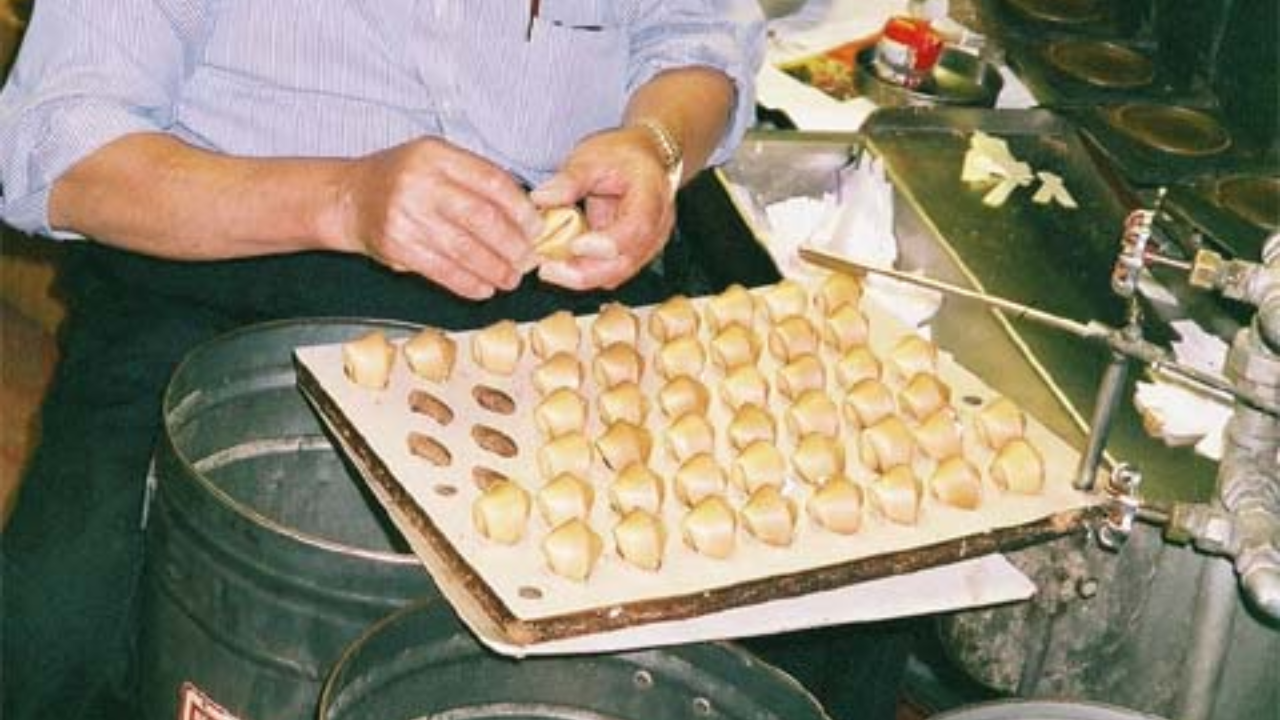
Golden Gate Fortune Cookie FactoryImage Credit: WikiMedia Commons
Benkyodo bakery is credited with developing a sweeter version, using ingredients such as butter and vanilla, that more closely resembled the fortune cookies Americans recognise today.However, it was not the only establishment claiming a place in the cookie’s history. Los Angeles-based Japanese businesses, including Fugetsu-Do and Umeya, were also associated with its production. Meanwhile, David Jung of the Hong Kong Noodle Company in Los Angeles claimed to have invented his own version in 1918, distributing cookies containing inspirational messages to unemployed men in the neighbourhood.With several competing claims and little definitive documentation, the exact inventor remains a mystery. What is clearer is that Japanese American bakers played a significant role in bringing the treat to the United States.
An unexpected Chinese takeaway
So, how did a Japanese cracker become the expected finishing touch to a Chinese meal?Part of the answer lies in America’s changing appetite for Asian food. During the early 20th century, Chinese restaurants were gaining popularity, because Americans were kind of going through a big renaissance with dishes such as chop suey, chow mein and egg foo young becoming familiar. And, Americans’ expectation for dessert at the end of meals may explain why many of these restaurants began to offer fortune cookies with the check.But, following Japan’s attack on Pearl Harbor in 1941, the US government ordered the forced relocation and incarceration of Japanese Americans under Executive Order 9066. Thousands of Japanese American businesses were shut down, including the bakeries producing fortune cookies. Chinese American entrepreneurs stepped in to fill the gap, manufacturing and supplying the biscuits to restaurants.As Chinese restaurants spread across the country during the post-war years, so did the fortune cookie. By the 1950s, the association was firmly established. The cookie had found a new home, even if its original one was thousands of miles away.
A fortune of its own
Today, fortune cookies remain a familiar part of the American Chinese dining experience. They have even travelled beyond American restaurants, with versions occasionally appearing in other countries, including China, largely as novelty treats for curious customers. But walk into a traditional restaurant in China expecting one with your bill, and you may find yourself explaining the very thing you thought was a local tradition.The fortune cookie’s journey is a curious example of how food travels, changes and eventually acquires an identity of its own. A Japanese cracker crossed an ocean, found a place in American bakeries, became popular in Chinese restaurants and was eventually mistaken for a symbol of Chinese heritage.Perhaps its own fortune should read: “Your true identity will surprise those who think they know you.”