
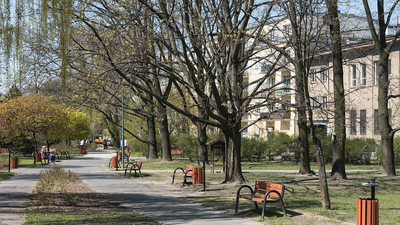
Take a walk around Poland and you will find plenty of reminders of its rich history. From cobbled streets and grand squares to monuments commemorating wars, revolutions and the people who shaped the country, almost every corner has a story to tell. But tucked away in Warsaw is a rather unusual tribute: a public square named after an Indian maharaja. Thousands of kilometres away from the kingdom he once ruled, this Indian royal continues to be remembered for an act of kindness that crossed continents and generations.This is the story of Maharaja Digvijaysinhji Ranjitsinhji Jadeja, also known as ‘Jam Sahib’, who helped save the lives of around 1,000 Polish children looking for refuge after fleeing Poland.
Kindness during an era of cruelty
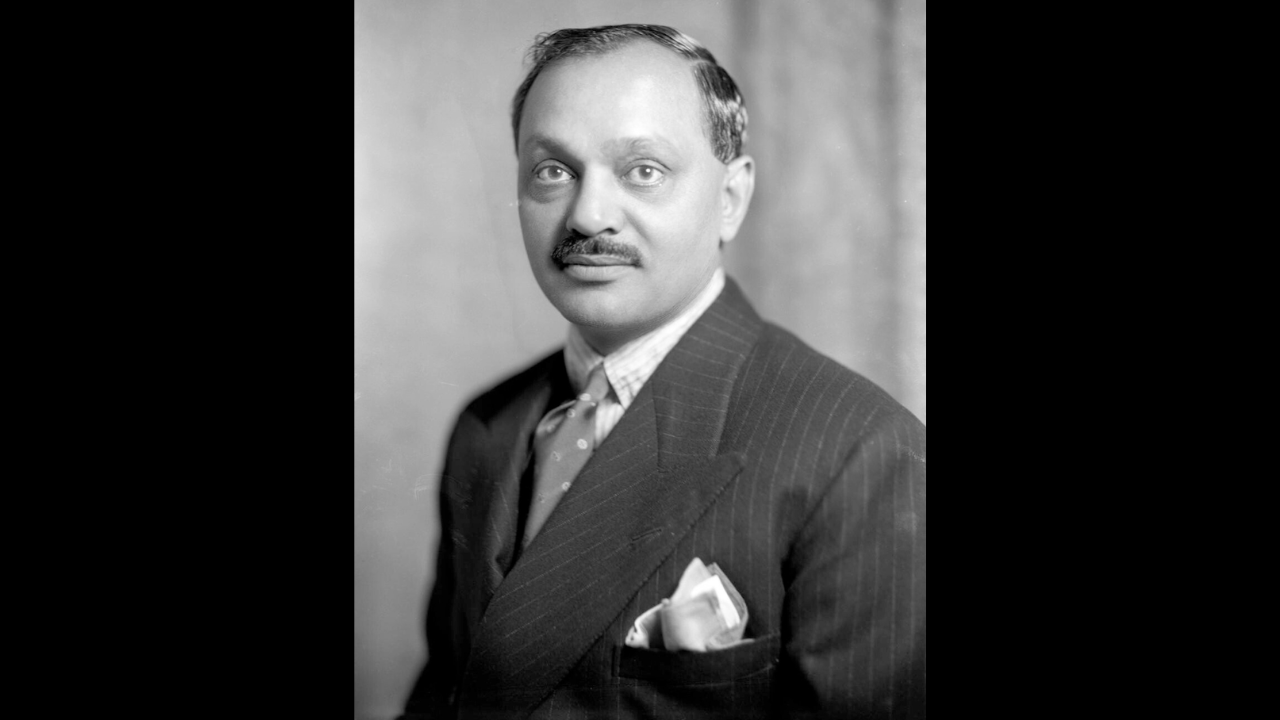
Image Courtesy: WikiMedia Commons
When we talk about World War II, only heart-wrenching episodes of destruction, barbarity and suffering come to mind. And rightly so. But amid all the devastation, small acts of kindness changed lives and created stories that continue to be remembered more than 75 years after the war. One such story unfolded in India in 1942, bringing two countries together in an unlikely chapter of history that came to be remembered as ‘Little Poland in India’.It all began when Germany invaded Poland in September 1939, followed by the Soviet Union’s invasion from the east just 16 days later. The two powers had previously signed the Molotov-Ribbentrop Pact, agreeing to divide Polish territory between themselves. Many thousands of Polish citizens were deported deep into the Soviet Union and many were forced into labor camps and temporary settlements. Among the displaced, hundreds of children were separated or orphaned from their families. There was not enough food and the living conditions were poor, diseases such as typhus, malaria and tuberculosis spread through the camps and their chances of survival were slim.However, in 1941, an amnesty under the Sikorski-Mayski agreement allowed Polish citizens to leave the Soviet Union. As a Polish army began forming, efforts were also made to locate children stranded in Soviet orphanages and bring them to safety. While some eventually found refuge in Mexico, New Zealand, Palestine and other parts of the world, India became home to the largest group of these young refugees.And this is where an Indian maharaja stepped in.
From Soviet orphanages to an Indian home
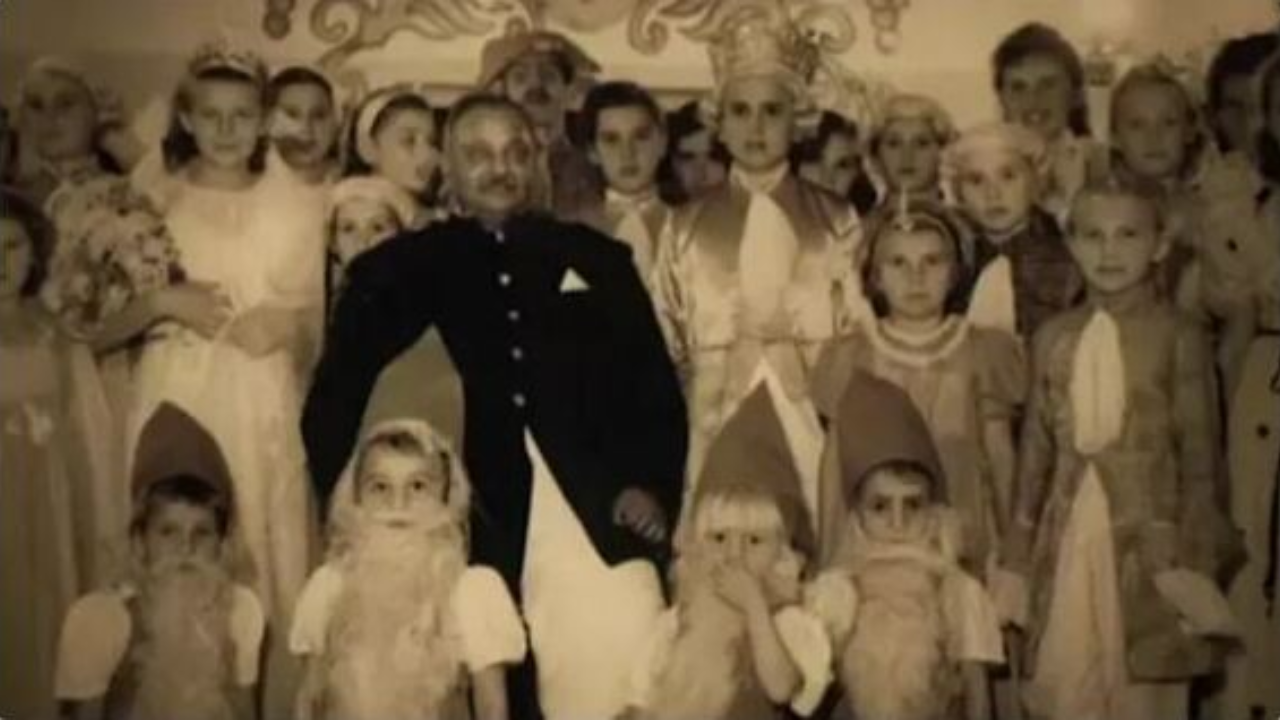
Maharaja Jadeja with Polish children on Christmas Eve | Image Courtesy: WikiMedia Commons
Maharaja Digvijaysinhji Ranjitsinhji Jadeja, popularly known as Jam Sahib, was the ruler of Nawanagar, a princely state in present-day Gujarat. Born on 18 September 1895 in Sadodar, he was the nephew and successor of the celebrated cricketer KS Ranjitsinhji, who had played for England. Having studied at Rajkumar College, Malvern College and University College London, Digvijaysinhji also served in the British Army for over two decades before becoming the ruler of Nawanagar in 1933.His public responsibilities extended well beyond his princely state. He was knighted in 1935, served as president of the Chamber of Princes from 1937 to 1943 and was also involved in Indian cricket administration. During the Second World War, he served on the Imperial War Cabinet, the National Defence Council and the Pacific War Council. This gave him a close understanding of the international crisis unfolding around him.When he learnt about the plight of the Polish children, he volunteered to provide them with shelter. With assistance from the Anders’ Army, the Red Cross, the Polish consulate in Bombay and British officials, the children began their journey to India.For many, the journey itself was an ordeal. The first group of 170 children travelled from Ashgabat in present-day Turkmenistan to Mashhad in Iran, where they underwent quarantine. They were then transported through Afghanistan by experienced Sikh truck drivers along a difficult road to Quetta before eventually reaching British India. Many children had arrived severely malnourished and were battling illnesses after years of displacement.The children initially reached Bombay in April 1942, with some sent to a sanatorium in Panchgani for tuberculosis treatment. Others were eventually taken to Balachadi, a coastal settlement near Jamnagar, where the maharaja had arranged a home for them.As the children arrived, the maharaja welcomed them with a promise that would define their stay in India. They were no longer to consider themselves orphans. He would be their Bapu, or father, and they would be Nawangarians.
A little Poland in Gujarat
Compared to the uncertainty and suffering they had left behind, Balachadi must have felt like an entirely different world. The maharaja arranged dormitories, giving every child a separate bed, along with food, clothing and medical care. The guest house of his summer palace was converted into a school, while a special library stocked with Polish books helped the children retain their language and cultural identity.The settlement was home to children ranging from 3 or 4 years old to teenagers. Over its four and a half year existence, around 1,000 children passed through Balachadi. It was managed by Polish caretakers, teachers and volunteers, with military chaplain Fr Franciszek Pluta overseeing the settlement. Doctors Kirit Ashani and Anant Joshi, appointed by the maharaja, looked after their health.But Balachadi was not simply a place to eat, sleep and recover. The children were encouraged to return to the ordinary business of being children. They attended school, formed a scout troop, learnt music and staged plays for religious and national celebrations. An orchestra was established with help from musicians belonging to the maharaja’s own ensemble, while a clubroom equipped with a radio and gramophone gave them somewhere to spend their free time.Sports were equally important. The children played football, volleyball and hockey, and even went camping. Their football team once managed to beat a side from the nearby Indian Navy base. The maharaja also made it a point to attend their performances and reward young actors with 1,001 rupees. The extra rupee, he explained, was an advance payment for their next good show.Of course, life was not without its difficulties. A malaria outbreak in 1942 had to be brought under control, and the settlement had relatively few adults supervising hundreds of children. Former residents later recalled their adventures, from night-time swimming and cliff-jumping to running barefoot through fields where cobras and scorpions could be found.The maharaja also went beyond his personal contribution to ensure the settlement could continue operating. He persuaded fellow princely rulers, including those of Patiala and Baroda, to support the cause. A Polish Children’s Fund was established in Delhi, receiving contributions from private donors, businesses and the Indian Red Cross. The effort eventually raised the equivalent of millions of euros for the children’s welfare.
A farewell that became a lifelong memory
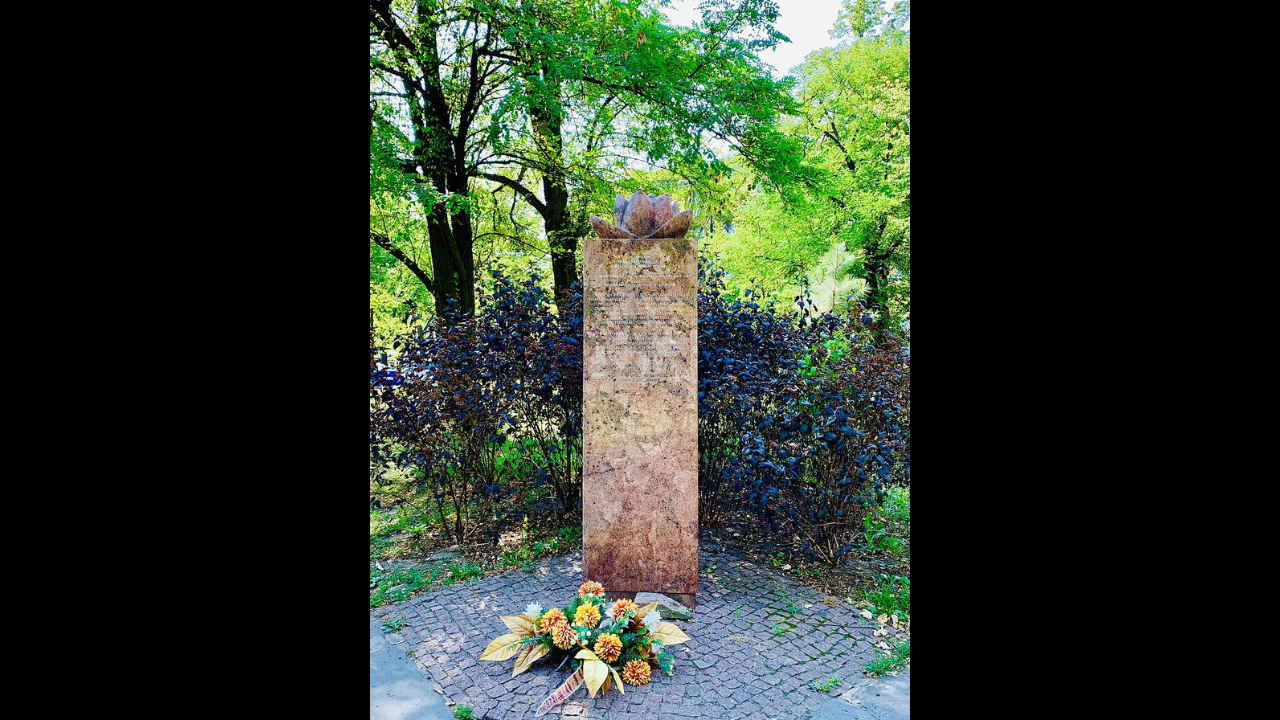
Memorial in Warsaw | Image Courtesy: WikiMedia Commons
When the war ended in 1945, the children faced another difficult transition. They would have to leave the home they had built in India and return to Europe. For many, however, Poland was no longer the place they remembered, and some had no surviving relatives to return to.The separation was heartbreaking for both the children and the maharaja. Those without families were given legal foster parents, including the maharaja himself, Father Pluta and British official Geoffrey Clarke. Some children eventually moved to schools in the United States, while others returned to Europe.Digvijaysinhji never asked for financial compensation for his generosity. His only wish, expressed in a conversation with Polish general Władysław Sikorski, was that a street in liberated Poland be named after him. Unfortunately, this recognition did not arrive during his lifetime.It was only after Poland’s political transformation in 1989 that the country began formally acknowledging his contribution. In Warsaw, a square was named in his honour, later becoming the Square of the Good Maharaja in 2012. A monument was also erected, and he was posthumously awarded the Commander’s Cross of the Order of Merit of the Republic of Poland. A school in Warsaw also carries his name, with its walls decorated with images of Indian monuments, classical dance and culture.Even decades later, former residents of Balachadi remembered India as their second home and the happiest period of their childhood. Their gratitude has also been passed down through generations, with Polish families continuing to organise events commemorating the maharaja’s kindness.And if you ever find yourself in Warsaw, you might just come across the Square of the Good Maharaja, a little reminder that sometimes the greatest legacies are not built on kingdoms, but on the lives we choose to save.