
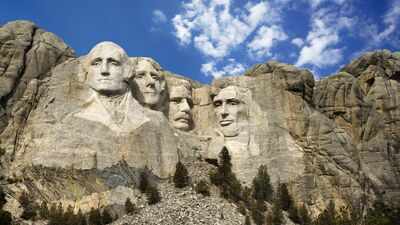
The history of America has been remarkable with events impacting the entire world since the very beginning. The Declaration of Independence, adopted on July 4, 1776 declared all men to be equal along with making “Life, Liberty and the pursuit of Happiness” unalienable rights. This declaration became the basis of human rights in the modern world. From the innovation of democracy, international consensus on trade to pioneering the global governance system; the United States has had an important role in shaping the current world order. The Presidents of the United States were responsible for the majority of this progress, gaining them global recognition.One such recognition provided to four of the US Presidents at home is edged in rock. Gutzon Borglum chose four US presidents, who in his view led America through four of the most landmark events in American history. Today, Borglum’s creation stands proudly at Mount Rushmore, often known as the ‘Shrine of Democracy’ in South Dakota, reminding the significance that these men hold in America. However, the tale of these statues remaining incomplete is left unexplored. Dive into the fascinating history behind the monument and how money played a big role in it.
The original vision
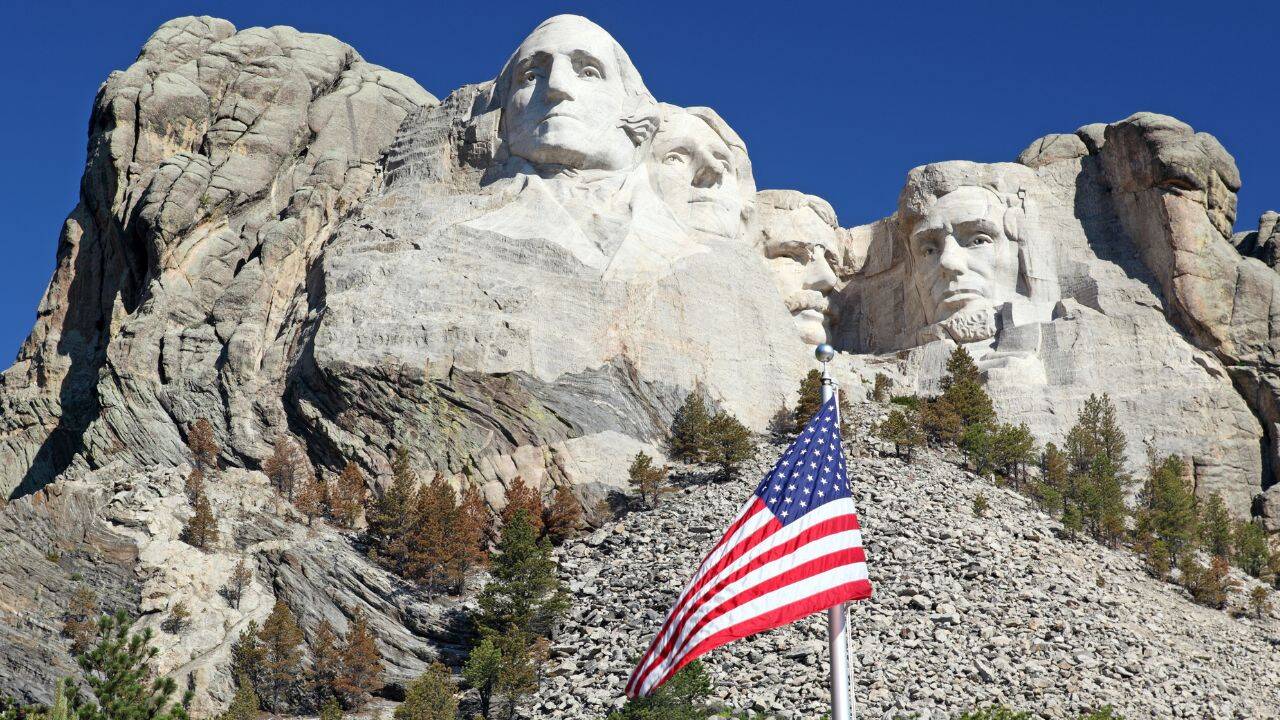
Mount Rushmore (Image Credit: Canva)
The Mount Rushmore National Memorial nestled in the pine covered forests of South Dakota was originally proposed as a giant artwork to bring more tourists to this remote area of Black Hills in the US. The idea was proposed by South Dakota state historian Doane Robinson in 1923 who had already found a sculptor, Gutzon Borglum. They had to get the permission to do the carving for which Senator Peter Norbeck and Congressman William Williamson drafted two bills for the United States Congress and the South Dakota Legislature each. After going through all legal formalities, the construction began in 1927. Then, the original intention was to depict the four presidents from the waist up and not just their faces.The monument was planned to display George Washington, the first US president represents the country’s founding; Thomas Jefferson, the principal author of the Declaration of Independence; Theodore Roosevelt, who represented the country’s industrial growth and emergence as an international power and Abraham Lincoln, who symbolises the preservation of America through the Civil War and the struggle to keep the country together.
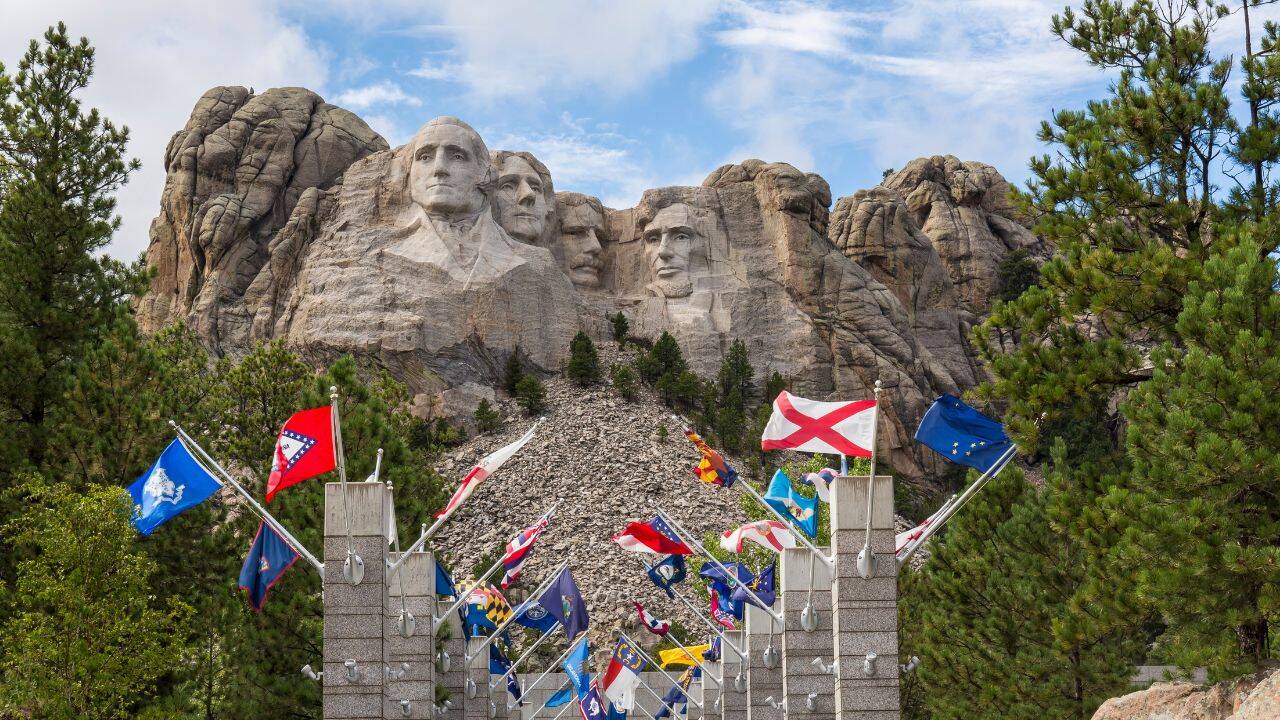
Avenue of Flags with Mount Rushmore in background(Image Credit: Canva)
Borglum never intended the presidents to be just floating heads. His original design called for enormous busts extending down to the waist, complete with shoulders, torsos and hands. Funding difficulties repeatedly interrupted construction, while weather, engineering challenges and the sheer complexity of carving granite slowed progress. More than 400 workers participated in the project, using dynamite to remove vast quantities of rock before refining the sculptures with drills and hand tools.
The unfinished dream behind the faces
The project faced recurring funding shortages and weather-related delays throughout its 14-year construction period. The total cost was approximately US$989,992, with much of the funding coming from the federal government. Borglum also wanted to build a Hall of Records behind the sculpture, intended to preserve documents and explain the story of the United States. However, Congress insisted that available funding be directed towards completing the main sculpture, and work on the hall stopped in 1939.
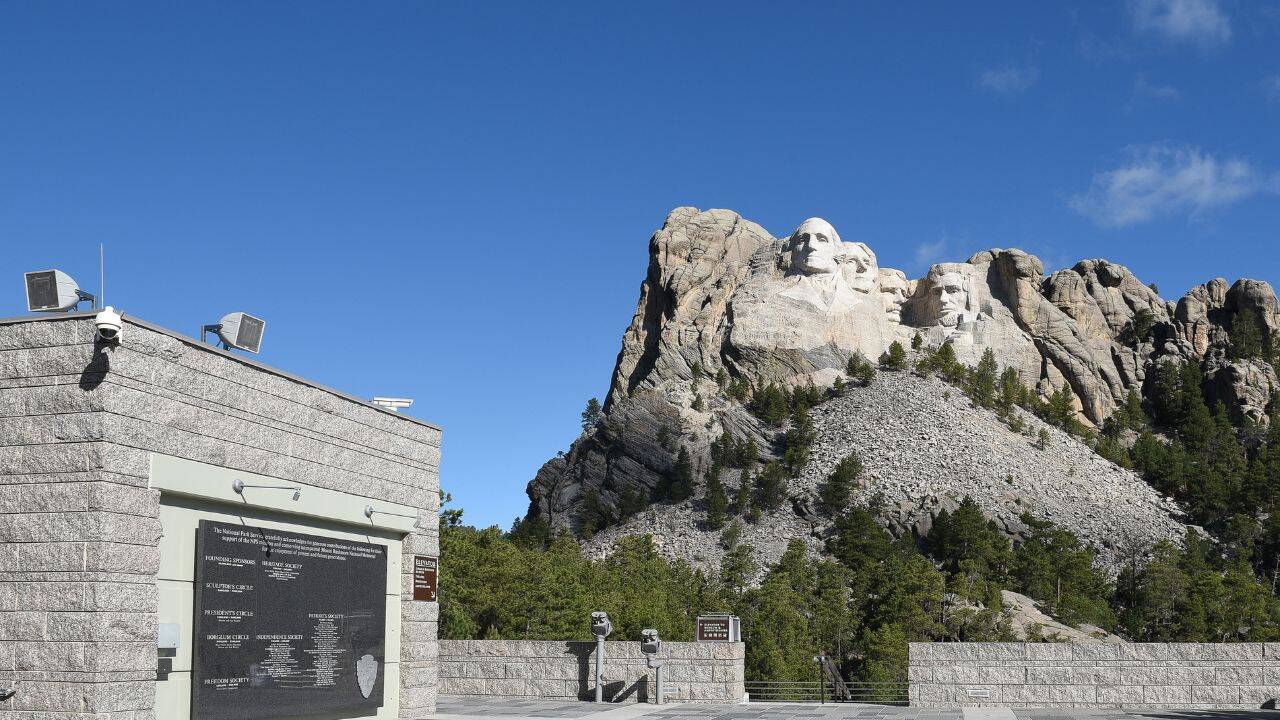
Mount Rushmore (Image Credit: Canva)
The sculpture was turning out to be remarkable but then in 1941, two events stopped the work on the mountain entirely. The death of the primary sculptor Gutzon Borglum left his son Lincoln Borglum to oversee the remaining work. But the second reason was responsible for the incompleteness. By 1941, the world war was consuming funds which were coming from restricting funds to any other operation. The funds that were already allocated had been exhausted. Therefore, on October 31, 1941, the memorial was officially declared complete.
A landmark with a complicated past
There is another layer to the story that deserves attention. Mount Rushmore stands in the Black Hills, a region sacred to the Lakota people and other Indigenous communities. The land’s history is inseparable from broken treaties, territorial disputes and the expansion of the United States. The monument’s patriotic message therefore exists alongside a much more complicated history of land, identity and belonging.
Visiting Mount Rushmore today
A visit to Mount Rushmore is about more than stopping for a photograph. Walk along the Avenue of Flags, take the Presidential Trail for closer views of the sculpture, and spend time at the visitor facilities that provide an opportunity to understand the construction process. The surrounding Black Hills also offer scenic drives and hiking.Closest airport is the Rapid City Regional Airport (RAP) is about 23 miles (a 40 to 45-minute drive) from the memorial.Admission: Entry to the Mount Rushmore National Memorial itself is free, but on-site parking requires a fee of $10 ( approx ₹947) for standard vehicles and motorcycles, $5 ( approx ₹473) for seniors (62+), and is free for active-duty military.Perhaps the most fascinating thing about Mount Rushmore is that its unfinished appearance has never stopped it from becoming one of America’s most recognisable landmarks.