
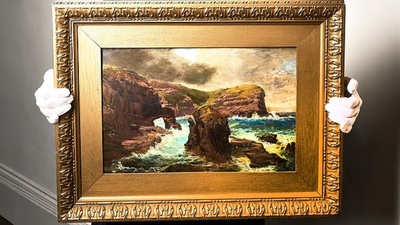
Paintings, much like the stories they tell, can sometimes survive long after the people who created them are gone. They travel through generations, pass from one owner to another and find themselves in places far removed from the galleries and collections where one might expect to find them. Some are carefully preserved, while others spend decades hanging unnoticed on walls, their significance lost to time. Yet, every once in a while, an ordinary discovery brings one of these forgotten works back into the spotlight, reminding us that the value of art is not always immediately apparent.Something rather remarkable happened when a British shopper walked into a charity shop in Bracknell, Berkshire, and came across a landscape painting priced at just £20. What appeared to be an inexpensive purchase turned out to be a long-lost work by 19th-century artist Nicholas Chevalier, which had remained unaccounted for in records for around 160 years. Now identified as Cape Schanck, Victoria, the painting is expected to fetch up to £20,000 when it goes under the hammer in December.According to a report by James Podesta, published in The Independent on November 20, 2026, the painting was discovered earlier this year by a shopper browsing a charity shop in Bracknell, Berkshire. After purchasing it for £20, the buyer showed the artwork to an auction specialist, who suspected it could be a long-lost work by Nicholas Chevalier. Further research confirmed the attribution, and the painting is now set to go under the hammer at London’s Olympia Auctions on December 9, with an estimated value of up to £20,000.
How a £20 charity shop painting was identified as a lost masterpiece
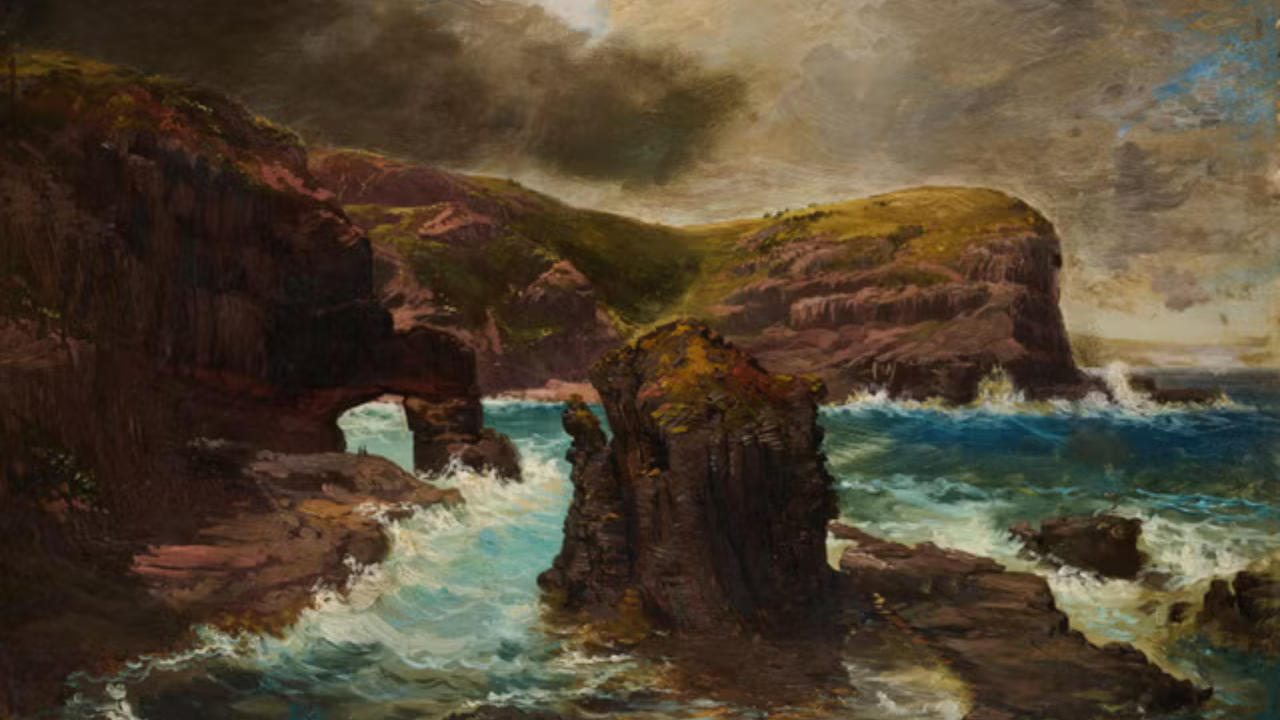
The lost 1862 oil painting by Russian-Swiss artist Nicholas Chevalier (Olympia Auctions/BNPS)
When the buyer first came across the painting at the charity shop in Bracknell, there was little to suggest that it was anything more than an inexpensive landscape artwork. After purchasing it for £20, however, the shopper decided to have it examined by an expert, setting in motion a discovery that would bring a long-forgotten work of art back into the public eye.The painting was eventually brought to the attention of Olympia Auctions, where specialists recognised that it could be an important work. The auction house then consulted Simon Gregg, an Australian art expert who had spent years researching the works of Nicholas Chevalier. Gregg recognised the landscape as Cape Schanck, Victoria, a painting that had been missing from the known record of the artist’s work for approximately 160 years.The discovery was particularly significant because the painting had previously been listed as having an unknown whereabouts in Gregg’s catalogue of Chevalier’s works. Its reappearance offered an opportunity to reconnect a surviving artwork with the history of the artist and his time in Australia.
Who was Nicholas Chevalier, the artist behind the rediscovered painting?
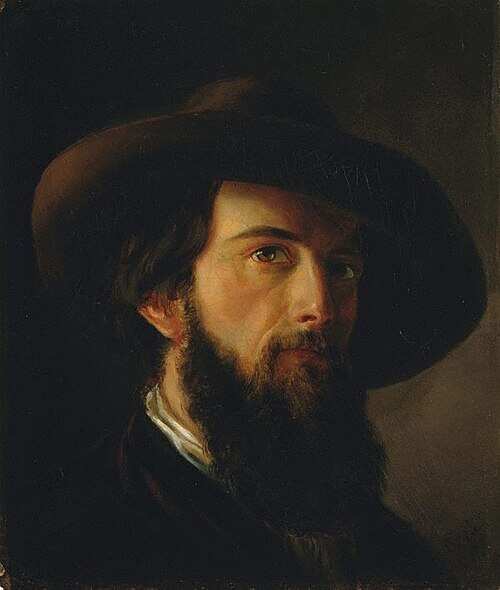
Nicholas Chevalier self-portrait (Wikimedia Commons)
Nicholas Chevalier became known for his landscape paintings depicting the varied natural scenery of Australia during the 19th century. His works often captured rugged coastlines, expansive skies, mountain ranges and dense vegetation, with particular attention to the details and atmosphere of the landscapes he encountered. Rather than simply recording a location, his paintings sought to capture the scale and character of the natural environment.Cape Schanck, on the southern tip of Victoria’s Mornington Peninsula, was among the landscapes that attracted his attention. Chevalier painted the area several times, drawn to its distinctive coastal formations and dramatic scenery. The rediscovered Cape Schanck, Victoria, dated 1862, offers another glimpse into this interest. According to art expert Simon Gregg, Chevalier often made small oil sketches outdoors while travelling through the landscape, and the newly identified painting is believed to be one such original study.For Chevalier, these smaller landscape studies were more than preliminary sketches. They allowed him to capture a place as he encountered it, preserving the details of its natural surroundings before using such observations to develop larger studio paintings. The rediscovered work offers a rare glimpse into this part of his artistic process, particularly because most of his original oil sketches are believed to have been lost. Its return also restores an important missing piece to the historical record of his work.This is also what makes the painting particularly valuable to collectors. Its attribution to an established 19th-century artist, its connection to an important period in Australian landscape painting and its absence from the known record for more than 160 years all add to its significance. Olympia Auctions has consequently estimated that the painting could fetch up to £20,000 at the December 9 sale. While the final price will depend on the interest it attracts from bidders, its rediscovery has already made it a remarkable find in the art world.