
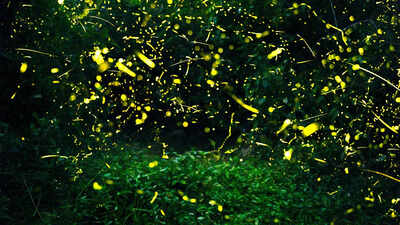
Fireflies represent different things for most people, but most popularly, represent hope in a world of darkness. For this one species of firefly, all hope was lost of spotting it again. Last seen in 1983, scientists had considered it lost to science. But, like a ray of hope dancing across a dark canvas, the firefly has been spotted again in Delaware and Virginia by Christopher Heckscher, a Delaware State University scientist.The firefly in question is the similar firefly, scientifically known as Pyractomena similis. Although it had not been recorded for more than four decades, it had not disappeared from the planet. It had been quietly flashing away somewhere, waiting for someone to recognise its distinctive pattern. And that is precisely what happened in the spring of 2026, when three sightings brought the little-known species back into scientific records.
A string of amber flashes gives it away
The first sighting was recorded on May 15, 2026, when an observer named Aljoscha Nern spotted male similar fireflies flashing over a meadow in Virginia. He shared his observation on iNaturalist, a community science platform where people can document and identify species. Another population was spotted in the same region approximately two weeks later.Meanwhile, Christopher Heckscher was conducting targeted surveys across Delaware and Maryland in search of the missing species. He visited Fair Hill Natural Resources Management Area in Maryland and White Clay Creek State Park in Delaware, but neither location yielded any results.On June 3, during his final night of surveys, Heckscher visited Brandywine Creek State Park in Delaware. As the evening turned into night and fireflies began emerging from the vegetation, he noticed something unusual. Among the familiar flashes was a quick, rhythmic sequence of amber-coloured lights.Most fireflies have their own flashing patterns, which they use to communicate with potential mates. The similar firefly’s signal is also distinctive. Males produce between 10 and 20 short amber flashes in quick succession, pause briefly and then repeat the sequence.Heckscher immediately recognised that this was unlike anything he had seen from other fireflies in the region. However, recognising a familiar flash pattern was not enough to establish the discovery scientifically. He collected a specimen and examined it under a microscope, looking at its genitalia for characteristics that could distinguish it from closely related species. The examination confirmed that it was indeed Pyractomena similis.He also estimated that between 8-12 fireflies were producing the distinctive flashing pattern in the meadow. This was particularly significant because it marked the first recorded sighting of the species in Delaware.
Why was it missing for so long?
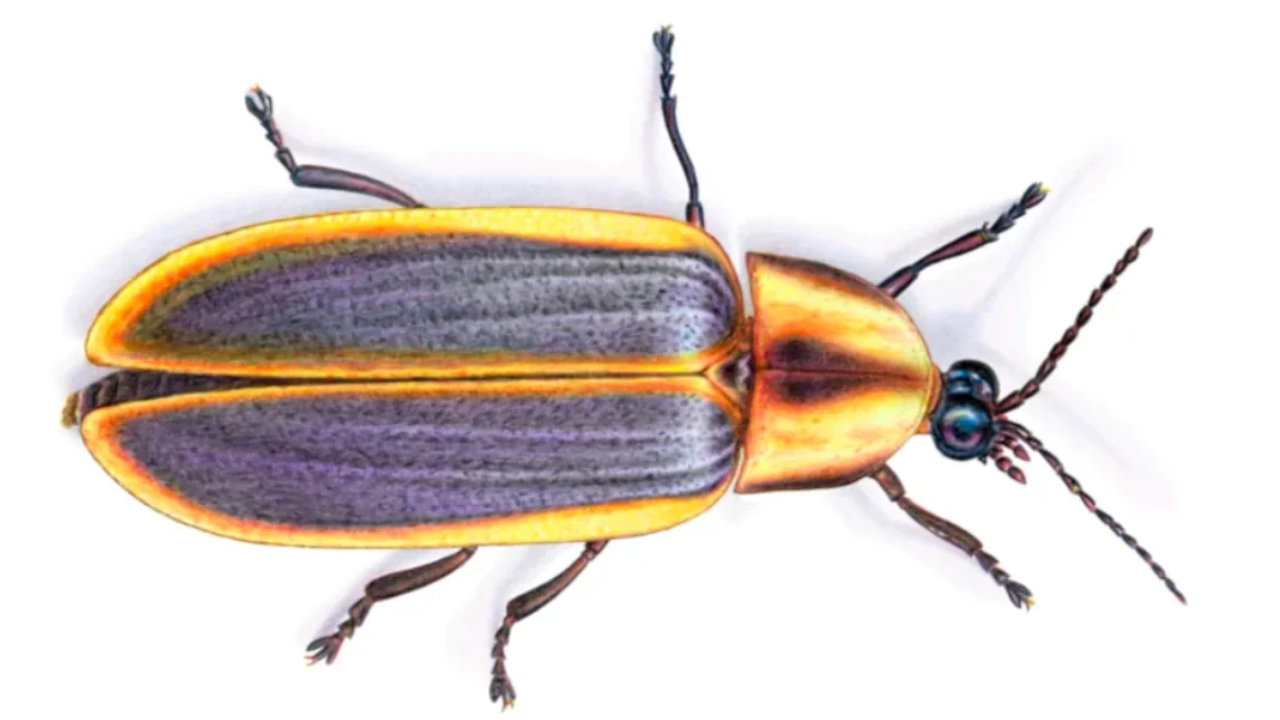
Illustration of Pyractomena similis by Mauricio Alvarez, @mauricio_alvarez_art / Re:wild
The similar firefly was historically recorded across parts of the eastern and southern United States, including Washington, D.C., Maryland, Virginia, South Carolina, Alabama and Mississippi. However, scientists had never studied it extensively, which meant that even basic information about its behaviour, population and habitat requirements remained limited.One of the few things researchers know is that the species prefers open fields and meadows close to water. Heckscher believes that the availability of such habitats could have something to do with why it became difficult to find.We imagine meadows to be endless stretches of open greenery, but natural meadows are not always easy to come by. Many are regularly mowed, converted into agricultural land or managed for livestock. The meadow at Brandywine Creek, however, had been allowed to grow naturally, with shrubs, brush and low vegetation providing the conditions the firefly appears to favour.Other factors could also have contributed to its disappearance from scientific records. The species has a relatively short breeding season, is nocturnal and may have lost parts of its natural habitat. It is also possible that scientists simply were not looking for it in the right places.
Not the only firefly missing from the records
The rediscovery comes alongside a wider study published in the Journal of Lost Species, titled ‘Extinguished or overlooked? An examination of lost firefly species of the US and Canada‘. The research examines 28 firefly species that have not been recorded in the wild for at least a decade.Of the approximately 178 native firefly species known in the United States and Canada, these 28 account for around 16%. In other words, nearly one in six native firefly species in the region has gone missing from scientific records.However, missing from the records does not automatically mean extinct. Researchers point out that some species may simply have been overlooked because of insufficient surveys, difficulties in identifying them or a lack of information about where they live.This is where community scientists can make a difference. Platforms such as iNaturalist allow nature enthusiasts, photographers and amateur naturalists to share sightings that researchers might otherwise miss. The Virginia discovery itself is an example of how an observation made by someone outside a formal research team can contribute to scientific knowledge.Heckscher’s own research has also contributed to the understanding of fireflies in the region. His publications include the discovery and description of Photuris mysticalampas, a firefly found in the peatland floodplain forests of the Delmarva Peninsula in 2013, as well as research describing four new North American firefly species in 2021 and two new Mid-Atlantic species in 2023.The latest discovery is, therefore, not about finding one little insect after 43 years. It is a reminder of how much we still have to learn about creatures that are often considered familiar.Scientists now hope to conduct further surveys across Delaware and neighbouring regions to understand where the similar firefly lives, how large its population is and whether other populations remain undiscovered. Protecting the natural meadows it depends on will also be important, particularly as urban development, habitat changes and artificial lighting continue to affect wildlife.For now, the similar firefly has officially returned to the scientific record. And perhaps its little amber flashes will encourage scientists to look a little more closely at the other species that might still be hiding in plain sight.