
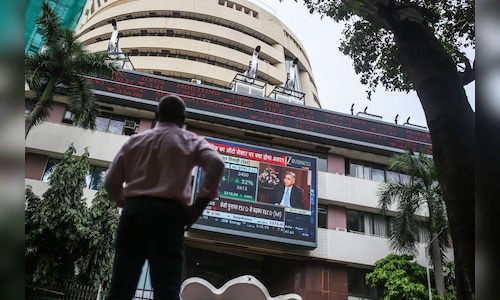
“Making new highs of 27,000–27,500 could be difficult. The next four to five months will likely be choppy,” Arora said in an interview to CNBC-TV18, cautioning that investors should temper return expectations in the near term.
His comments come even as Dalal Street ended the week on a firm footing. Despite a decline on Friday, both the Nifty and the Sensex gained nearly 1% for the week. However, the rally lacked breadth, with banking stocks underperforming and the banking index falling about 2%. Gains were led by pharma, IT, and oil and gas stocks, while PSU banks remained a drag.
Arora said the recent rally—from around 22,000–22,500 to 24,500—was somewhat surprising and not fully backed by fundamentals. He flagged that while the March quarter may remain largely insulated, the real impact of ongoing geopolitical tensions and supply disruptions is likely to show up in the June quarter, with possible spillover into the September quarter.
“The main pressure will come in Q1, with a possible spillover into Q2,” he said. Earnings growth expectations for the Nifty, which were earlier pegged at 15–17%, could now be trimmed by 5–6 percentage points, bringing them closer to 10–12%. With a large part of the index expected to deliver only moderate growth, he added that achieving mid-teen earnings expansion would be challenging.
On the global front, Daniel Morris of BNP Paribas Asset Management highlighted a growing divergence between oil prices and equities. “We have seen a breakdown in the correlation between oil prices and equities,” he said, noting that while Brent crude has surged about 20% from early April lows, global equities have remained broadly flat.
Morris pointed out that the resilience in US markets is currently offsetting weakness elsewhere. Strong economic data and a solid earnings season have supported equities, with the S&P 500 expected to deliver around 18% year-on-year earnings growth. Importantly, this growth is not limited to technology stocks but is visible across sectors.
Also Read | Why foreign investors are quietly pulling back from India
However, he warned that market breadth remains narrow and leadership concentrated. “Opportunities are more likely to be sector-specific rather than broad-based,” Morris said, adding that once the earnings season concludes, investor focus could shift back to geopolitical risks, particularly in the Middle East.
Overall, both experts indicated that while markets have shown resilience so far, the combination of earnings downgrades, narrow leadership, and geopolitical uncertainty could keep returns capped and volatility elevated in the coming months.