
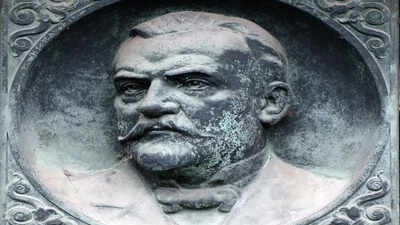
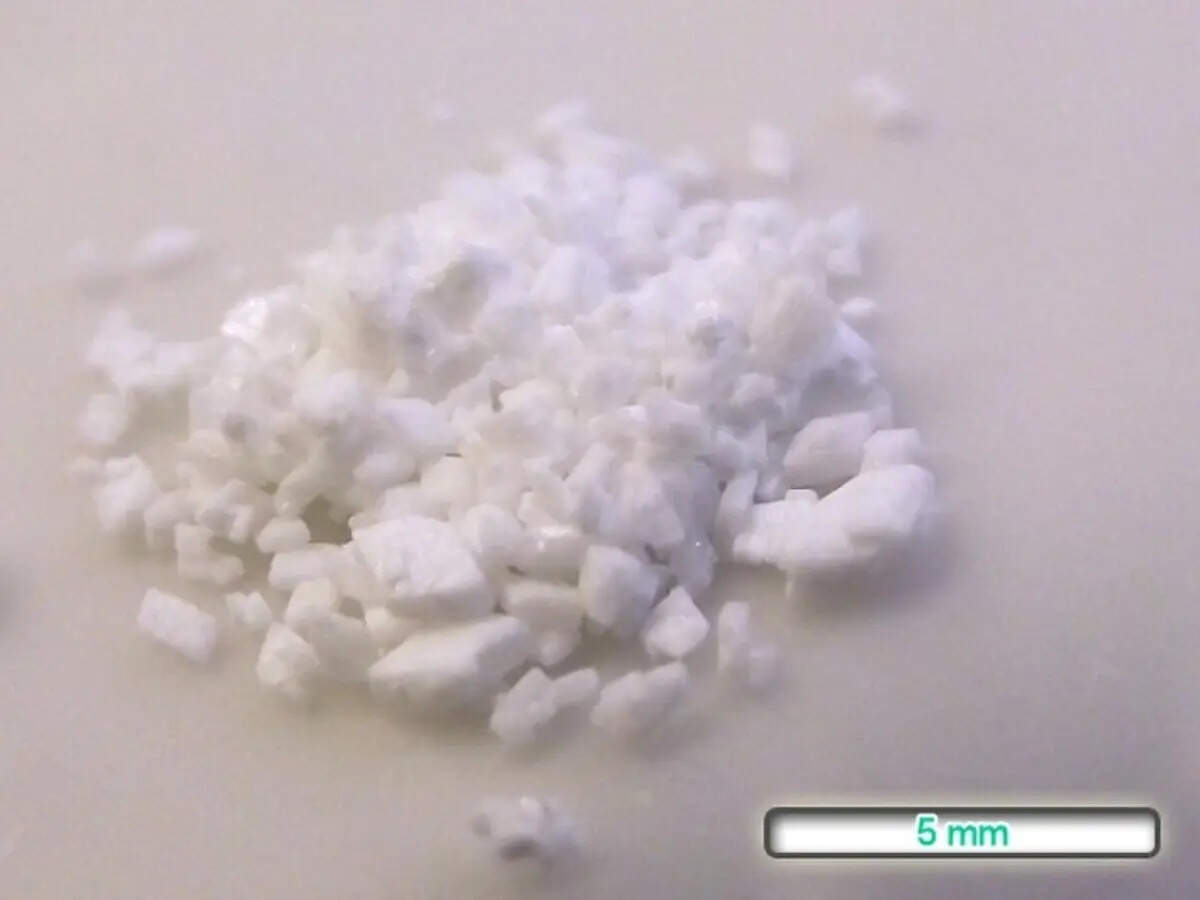
The odd flavor detected while eating dinner sparked one of the greatest innovations in the modern food industry. In 1879, Constantin Fahlberg, a chemist, was experimenting in Ira Remsen’s chemistry laboratory in Johns Hopkins University. He noted that his hands, or perhaps the dinner roll he touched, had an odd sweet taste. It was this discovery that led him to develop the first commercially used artificial sweetener called saccharin.It is an exciting story that makes sense and also seems like a coincidence. An unremarkable hand washing moment turned out to be the initial step in producing a food item that found its way into households, restaurants, and weight-loss products worldwide.An odd sweet taste discovered by accidentAccording to the American Chemical Society (ACS), while researching some coal-tar derivatives, Fahlberg detected a sweet taste in his fingers and managed to discover which one was responsible for the sensation. It turned out to be saccharin.A second version of this story is narrated by Remsen himself, recorded by ACS. His account involved biting into a dinner roll, licking one’s fingers after eating it, and discovering that the unusual sweetness was caused by chemicals manipulated in experiments in the laboratory beforehand.The specifics may differ a little from one source to another, but the main idea remains consistent. One minor occurrence in a laboratory was the origin of the discovery of saccharin. This story is evidence of scientific discoveries arising due to careful study of seemingly trivial facts.Significance of saccharinThis chemical compound was not confined to a scientist’s notes for long. According to the historical overview indexed on PubMed, saccharin is a low-cost sugar substitute which soon became commercially significant. The reason why saccharin gained importance lies in its simplicity. It is a non-caloric alternative to sugar, which can be used as a substitute for regular sugar when supplies are scarce.Saccharin soon became the world’s first commercially manufactured artificial sweetener and laid the foundation for sugar substitutes widely used today. The ingredient was also popular during World War I and World War II due to the lack of access to sugar during that time. The article discussing sugar substitutes mentions that the affordability and abundance of saccharin made it useful during wartime rationing.
C. Fahlberg brought lab chemicals to the dinner table, and this opened the door to modern sugar substitutes. Image credit – Wikimedia
Saccharin gave birth to artificial sweetnessThe significance of saccharin does not lie in the one ingredient alone. Saccharin is considered the birth of the artificial sweetener market by historians and food experts. An article published in PubMed mentions that saccharin was the tipping point when scientists started considering synthetic compounds as artificial sweetness instead of sugar.This revolution had an impact on the entire food industry. Companies started searching for more sugar substitutes after realizing that they can produce sweetness artificially without relying on sugar. Gary Reineccius, a food scientist from the University of Minnesota, has stated in academic studies that artificial sweeteners have transformed how businesses design flavors and lower calories from processed foods.Saccharin had an impact on future food safety regulations. Governments and researchers have studied the sweetener throughout the years, researching any potential hazards to health as well as the safe intake amount.Modern aspects of the saccharin storySaccharin remains relevant to today not only due to the coincidence but also due to the nature of scientific investigation that led to such a discovery. The story about hand washing or licking the hands stays relevant due to its memorable plot and visuals. However, history tells us that the actual process had some details. It turns out to be an important part of the story as no discovery takes place without mistakes and experiments.According to the information provided by the National Center for Biotechnology Information, there were some references to the year 1878 instead of 1879 regarding the saccharin discovery. But the basic facts stay the same. Fahlberg discovered the sweetener while working at Johns Hopkins.How a minor slip up created a revolution in food historyThe accidental discovery of Saccharin was initially based on the perception of an unusual taste in experiments done in a lab setting. With time, it grew into a food component that helped to develop new concepts in the contemporary food industry.Additionally, this accidental discovery illustrates another major principle of scientific development. Progress is not always planned and intended, but rather results from random discoveries that happen by chance and require further investigation.Today, after more than a century since its creation, Saccharin retains its place within the history of artificial sweeteners. This historical fact still plays an important role due to a combination of several key factors.