
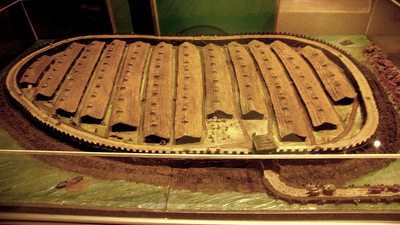
Historical narratives at their very best rarely originate within the controlled confines of a lab or museum. Often, they occur purely by chance and the discerning eye for a piece of evidence that seems somewhat out of place. It was in the summer of 1933 when a local school teacher called Walenty Szwajcer took his class out for a field trip on the marshes of the shores of Lake Biskupin in Poland. Due to some recent irrigation works in the area, water levels were abnormally low at the time.To an observer not well acquainted with the area, they would simply have looked like old pilings for a pier or just rotten wood from some forgotten farm. But what Szwajcer saw was that the stakes had been arranged in such a way that they couldn’t be anything but man-made. The archaeologist realised then that there might be something much more impressive hidden beneath the muck. It all began with that day’s walk into a historic project.The location was not only a place where history had been buried for many years. It was well protected in such a way that the history remained perfectly intact by the waters of the lake and peat bog, which hid it for more than two thousand years. A trip to the site for a school project turned out to be one of the biggest discoveries of the century that completely revolutionised our understanding of how the prehistoric people lived in the area.The art of urban design and engineering in ancient timesThe discovery in Biskupin became famous not just for its scale but mainly for the amount of planning and technology used by the ancient community. As described in The History of Research on the Lake Biskupin Peninsula, published by the Archaeological Museum in Biskupin, the settlement was definitely not a random collection of primitive huts. Discoveries made during the excavations organised by Józef Kostrzewski from 1934 to 1939 revealed a very well-planned and organised settlement surrounded by huge defensive walls made of wood and soil.Such a fortified settlement was established on a wet island, showcasing the remarkable knowledge of engineering and protection at that time. The community had round streets and rows of houses, which were almost identical in appearance. Moreover, the level of precision was such that it implied the existence of a highly organised and collective society. It was a fortress constructed for survival purposes. The residents managed to utilise the lake as a moat, providing a safe place that was not only a lively village but also a strong military fortification. It offered an insight into how people organised themselves in the area long before the advent of written sources.
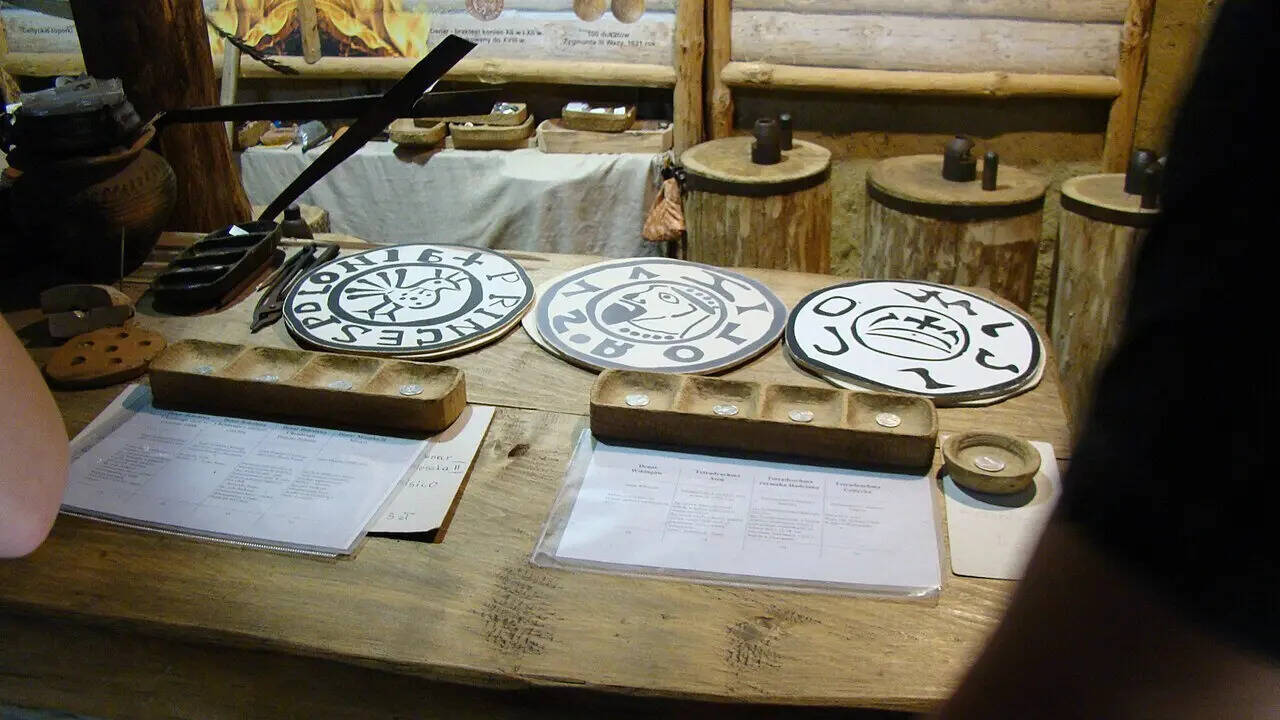
The settlement offered a unique glimpse into life between the Bronze and Iron Ages. Today, Biskupin stands as a significant archaeological open-air museum, reminding us of forgotten civilisations beneath ordinary landscapes. Image Credits: Wikimedia Commons
Preserving a civilisation between two erasTo accurately identify how such a wooden settlement could survive for so many years, a scientific analysis of the wood needed to be performed. According to one scientific paper called State of preservation of historic wood from fortified settlement of the Lusatian culture in Biskupin, the answer was found in the chemistry of the wood. In particular, the lake offered unique conditions that preserved the timber from deteriorating due to the lack of oxygen and other environmental factors.The research explains that this allowed archaeologists to see the settlement almost exactly as it looked in the eighth century B.C. This era was a delicate transition between the Bronze Age and the Early Iron Age. Biskupin serves as a perfectly preserved time capsule of that threshold. The site’s importance went far beyond the academic world. In the years leading up to World War II, Biskupin became a powerful symbol of national identity.The idea that a highly organised, advanced civilisation had thrived on this land thousands of years ago provided a sense of pride and historical continuity. Today, Biskupin is one of the most famous archaeological open-air museums in the world. Visitors can walk the same streets that the ancient residents did, seeing the reconstructed houses and massive walls that the schoolteacher first glimpsed as mere stakes in the mud.This serves as proof of the reality that our environment is not always what it seems to be. At times, taking a stroll along the lake might actually be a journey above the roofs of a forgotten kingdom. This is because it is astonishing to know that for over two millennia, the people living within this fort have been forgotten. One can only imagine how many other spectacular revelations are waiting to be unearthed just below the surface of seemingly ordinary environments.