Some sayings survive for hundreds of years not because they sound poetic, but because people keep proving them true generation after generation. Human habits change very slowly. Technology evolves, lifestyles become faster, and priorities shift, but people still struggle with many of the same things their ancestors struggled with. One of those habits is the desire to chase everything at once. This old Japanese proverb captures that idea through a simple image that feels surprisingly relevant even today.“He who runs after two hares will catch neither.”On the surface, the picture is easy to imagine. A hunter spots two hares running in different directions. Instead of choosing one and staying focused, he becomes tempted by both. He changes direction, divides his attention and tries to reach two targets at the same time. In the end, he catches nothing. The lesson sounds obvious when described this way, yet people often repeat the same mistake in everyday life without even realising it.The interesting thing about old proverbs is that they rarely remain limited to the situations they originally described. Hunting may have been the image used centuries ago, but the real message travels far beyond that. Today, people may not be running after hares, but many are running after too many goals, too many distractions and too many expectations at the same time.
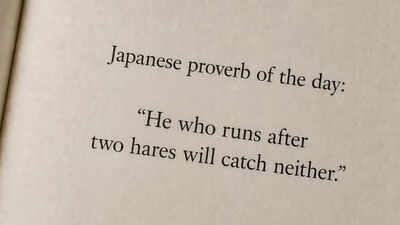
Japanese proverb of the day
“He who runs after two hares will catch neither.”
Meaning behind the Japanese proverb
At its core, this proverb appears to be talking about focus and the cost of divided attention. It suggests that when people spread themselves too thin, progress begins to weaken. Energy becomes scattered, concentration becomes inconsistent, and results often become disappointing.Many people assume that doing more automatically means achieving more. Modern life sometimes encourages that belief. People are often told to multitask, build several skills at once and pursue every opportunity that appears in front of them. The idea sounds productive because activity itself can create the feeling of progress.But movement and progress are not always the same thing.Someone can stay busy all day and still feel as if nothing important has moved forward. Someone may begin learning a new skill and abandon it halfway because another opportunity suddenly seems more exciting. Someone else may start several projects with enthusiasm, but struggle to finish any of them because attention keeps shifting.The proverb quietly suggests that success often depends less on chasing everything and more on staying committed long enough for effort to produce results.
Why modern life makes this lesson feel even more relevant
Centuries ago, distractions existed, but they looked different. Today, distractions have become almost endless. People wake up and immediately see messages, updates, videos, advertisements and information competing for attention. Opportunities appear constantly, and many of them seem exciting enough to pull people in new directions.Someone opens social media and sees one person launching a business. Another person appears to be travelling across the world. Someone else seems to be learning new skills while also building a successful career. Gradually, a feeling begins developing that perhaps everyone else is moving ahead in multiple directions at once.That feeling creates pressure.People begin thinking they must do everything immediately. They feel they should pursue several ambitions simultaneously because choosing only one path begins to feel limiting. Ironically, trying to keep every possibility alive sometimes weakens all of them.Attention is not unlimited. Time is not unlimited. Energy is not unlimited either.The proverb seems to understand something about human nature that remains true even today. People can only give complete effort to a limited number of things at any given time.
Why choosing one direction often feels difficult
Focusing on one thing sounds simple when explained in theory. In reality, many people find it uncomfortable because choosing one direction sometimes feels like giving up another.Someone choosing one career path may wonder whether another choice would have been better. Someone focusing on one goal may worry about opportunities being missed elsewhere. Human beings naturally dislike uncertainty, so keeping several options open can feel safer than fully committing.There is also another reason people struggle with focus. New things often feel exciting because beginnings create energy and curiosity. The early stages of any goal usually come with enthusiasm. Difficulties appear later. Progress becomes slower. Results stop arriving quickly.That is often the moment when people begin looking toward another possibility.The second hare suddenly starts looking attractive.The problem is that every path eventually reaches a difficult stage. Constantly changing direction sometimes means repeatedly returning to beginnings while never staying long enough to experience meaningful results.
Why the proverb continues surviving after so many years
Some old sayings disappear because they become tied to a particular time or place. Others continue surviving because human behaviour remains remarkably similar across generations. This Japanese proverb seems to belong to the second category because people continue facing the same challenge it describes.People still become distracted by possibilities. People still fear missing opportunities. People still believe they can divide attention endlessly without consequences.Its lesson feels simple, but simplicity can sometimes be deceptive.The proverb does not suggest limiting dreams or abandoning ambitions. Instead, it seems to offer a reminder that goals usually need patience and concentrated effort. Choosing where attention goes may matter just as much as working hard.Because sometimes catching one hare requires resisting the temptation to run after two.