
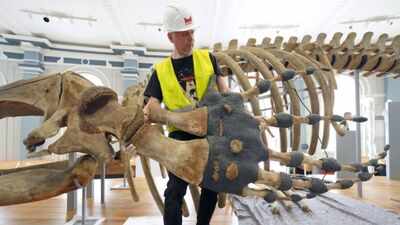
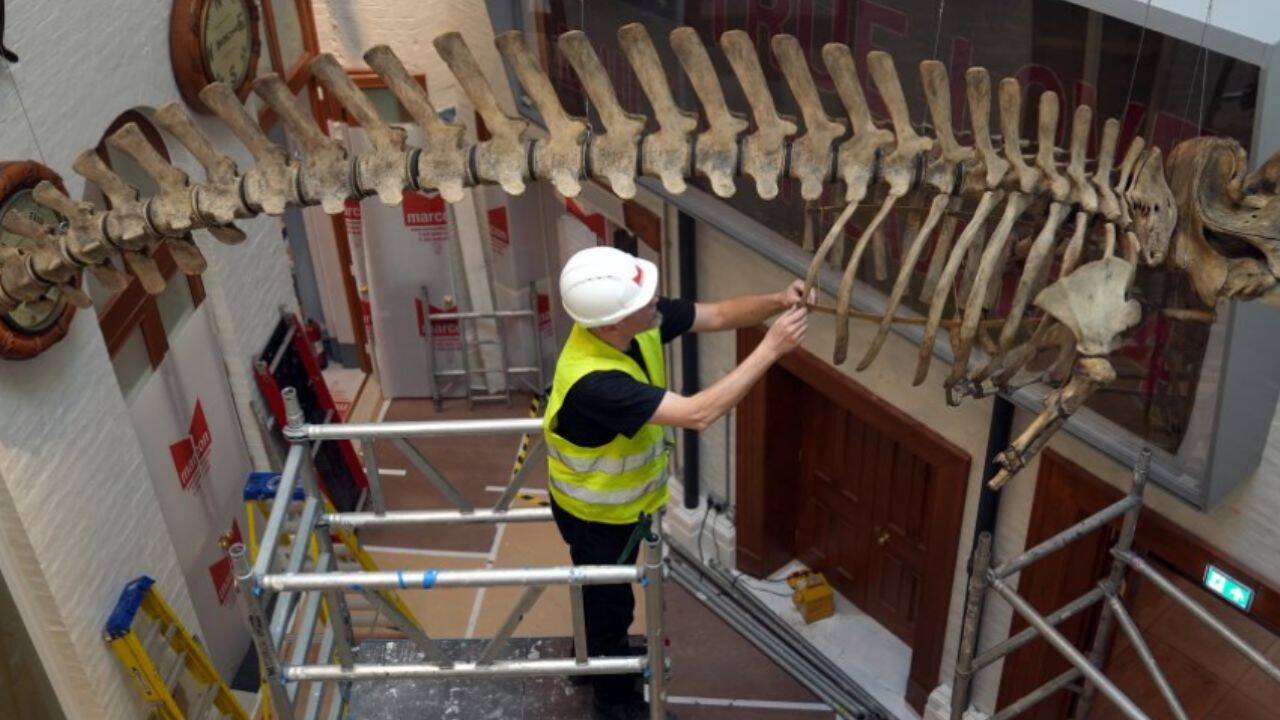
A whale skeleton that is nearly 120 years old has returned to a museum in Hull, England. This time, visitors will be able to do more than just look at it. The 40-foot-long skeleton, made up of 168 bones, was removed from Hull Maritime Museum in 2020 for cleaning and conservation. As reported by BBC, it spent six years in storage while the museum was being refurbished. Now, it has been put back on display in the museum’s new Age of Sail gallery by specialist whale conservator Nigel Larkin. The museum is due to reopen in August, with the whale skeleton as one of its main attractions.
PC: BBC
How the North Atlantic right whale skeleton returned to Hull Maritime Museum
According to the BBC, the story of whale skeleton began off the coast of New York in 1907. The young North Atlantic right whale was caught alongside its mother, making the skeleton 117 years old today. It was later given to the city of Hull by the University Museum of Zoology in Cambridge and became part of the collection at Hull Maritime Museum. It is the largest single object in the museum.In 2020, the skeleton was carefully taken apart as part of a major museum refurbishment. It was moved to Shropshire, where conservation experts cleaned and preserved all 168 bones. After spending six years away from public view, the skeleton has now returned. Specialist whale conservator Nigel Larkin spent five days putting it back together.
What visitors will see when Hull Maritime Museum reopens
When Hull Maritime Museum reopens in August, visitors will be able to experience the whale skeleton in a completely new way. Instead of only looking at it from the outside, they will be able to crawl through a specially built tunnel inside the whale’s rib cage. This will help visitors understand just how large the animal was.Hull City Council leader Mike Ross said the skeleton’s return is an important moment for the museum. He said it is one of the museum’s most valuable and delicate objects, and that it is great to see it back where it belongs. He also said the museum will tell the whale’s story in new and engaging ways, helping visitors understand why this species is so important.Today, the North Atlantic right whale is critically endangered. Scientists believe fewer than 400 remain in the wild. A species that was once widely hunted in 1907 is now close to extinction, making the skeleton in Hull an important reminder of its history.