
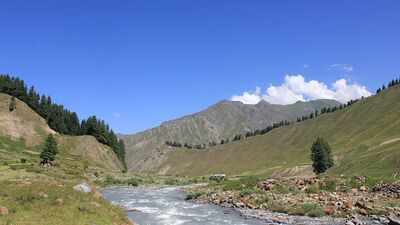
The love story of fictional characters Qais Bhatt and Laila in the film Laila Majnu (2018), featuring the song “O Meri Laila”, was an ode not just to the story of Laila-Majnu but also to the peaks of Kashmir. The fantasy of adventuring to explore the unknown behind “that” peak stayed with Majnu when Laila couldn’t. Such is the beauty of Kashmir’s vast valleys and enormous mountains. They make one stop and wonder about the unexplored love stories hidden in these mountains.One such story is that of the poetess Habba Khatoon, also known as the “Nightingale of Kashmir”. She was a legendary 16th-century poetess whose love story has become the inspiration behind the naming of one of the peaks in Kashmir’s Gurez Valley.Recently, traveller Ram Kishore (@ramkishore.1), shared a post about his visit to Gurez Valley. Titled “Hawaon mein ghuli ek dastaan: Gurez ki vaadi aur Habba Khatoon,” the post reflected on the valley’s striking landscape and the enduring legend of Habba Khatoon. His account described the peak as more than a mountain, connecting its beauty with the poetess’s story of love, separation and longing.His post drew attention to Gurez as a destination in itself where natural beauty and folklore come together. It also allows travellers to experience Kashmir beyond its famous touristy landmarks. It was a reminder that some journeys are not just about discovering new places but also about connecting with the local stories, poetry and emotions.Who is Habba Khatoon?Kashmir has been a land of fertility and rich culture. From famous religious scholars to artists and poets like Mahmud Gami, Arnimal, Mahjoor and Rasool Mir, many have enriched the field of literature through their texts and lyrics. Habba Khatoon is one of the foundational figures of Kashmiri literature and folk tradition. Known as Zoon, she showed an interest in singing and composing poetry from childhood. This interest later led her to meet the love of her life when the ruler of Kashmir, Yusuf Shah Chak, is said to have found her singing under the shade of a chinar tree.But before becoming royalty, she is said to have suffered a difficult life with her first husband. She was married to Aziz Lone, a peasant. According to popular accounts, Aziz was an apathetic man who did not respond to Zoon’s love and devotion. She worked hard to get noticed by her husband by working in the fields and maintaining the home. However, her mother-in-law and her husband reportedly found opportunities to taunt and mistreat her. In her song, Tche Kyoho Vaatiyo Myaeni Marnai (What do you stand to gain by my death?), she demands an explanation for her torment, saying, “Teli yikha yil travnam mazaro; Tche kyoho vatiyo myaeni marnai?” It translates to “Will you only come to visit my funeral? What do you stand to gain by my death?”
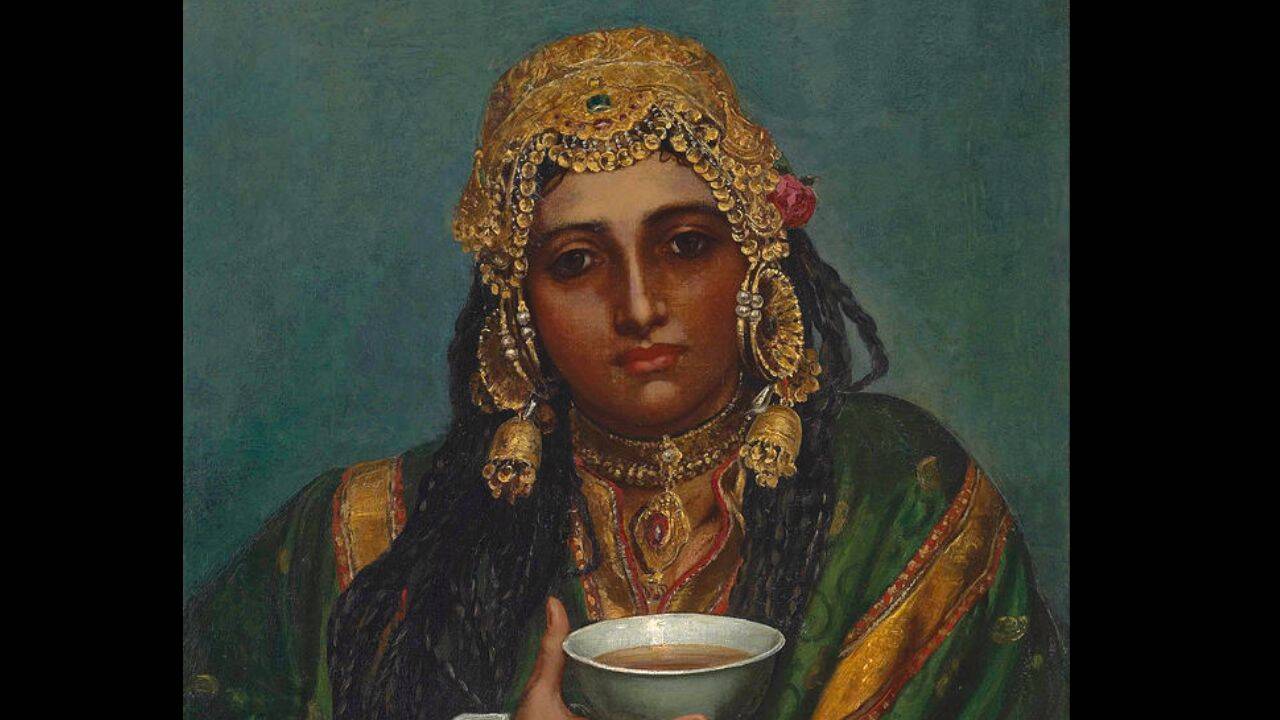
Habba Khatoon (Image Credit: Wikimedia Commons)
According to popular accounts, the two spent a period happily in love before being separated under unfortunate circumstances. The villain of their lives was the Mughal emperor Akbar. After unsuccessful attempts to bring Kashmir under Mughal control, Akbar’s forces eventually captured the region. Yusuf Shah Chak was imprisoned and sent into exile in Bihar. While historical accounts document the political dispute between the rulers, Habba Khatoon’s story largely survives through Kashmiri folklore and oral tradition.This incident is said to have changed Habba Khatoon’s life. She lost interest in worldly things and led an ascetic life thereafter, according to popular accounts. She is believed to have wandered around the valley singing songs in the memory of her beloved, whom she never saw again. To commemorate her, a peak in Gurez Valley is named Habba Khatoon Peak.The poems of Habba Khatoon, such as Harmukh Bartal and Walo Myaeni Poshey Madano, were not systematically recorded in written manuscripts during her lifetime. They survived through centuries of oral folklore, becoming an important part of the living oral tradition of the valley. Harmukh Bartal is a song associated with her longing for her beloved, expressing grief and bitterness as well as resignation to her circumstances. She is said to sing, “Harmukh Bartal za’gai Madano, Ye dapham te laa’gayo!” which translates to “I will wait at the gates of Harmukh, for you, my love; whatever you ask, I will offer!”
The valley of literature
The gorgeous Gurez Valley is one of Kashmir’s most enchanting places to experience. It lies close to the Line of Control (LoC), which is one reason it has remained relatively less explored than other tourist destinations in Kashmir. The Kishanganga River, also known as the Neelum River downstream, flows through the valley. The valley is inhabited by the Dard-Shin community, which has made rich contributions to the region’s cultural and literary traditions. Its people speak Shina and live in traditional wooden houses reminiscent of the architecture found in neighbouring Gilgit-Baltistan.How to reach Gurez Valley
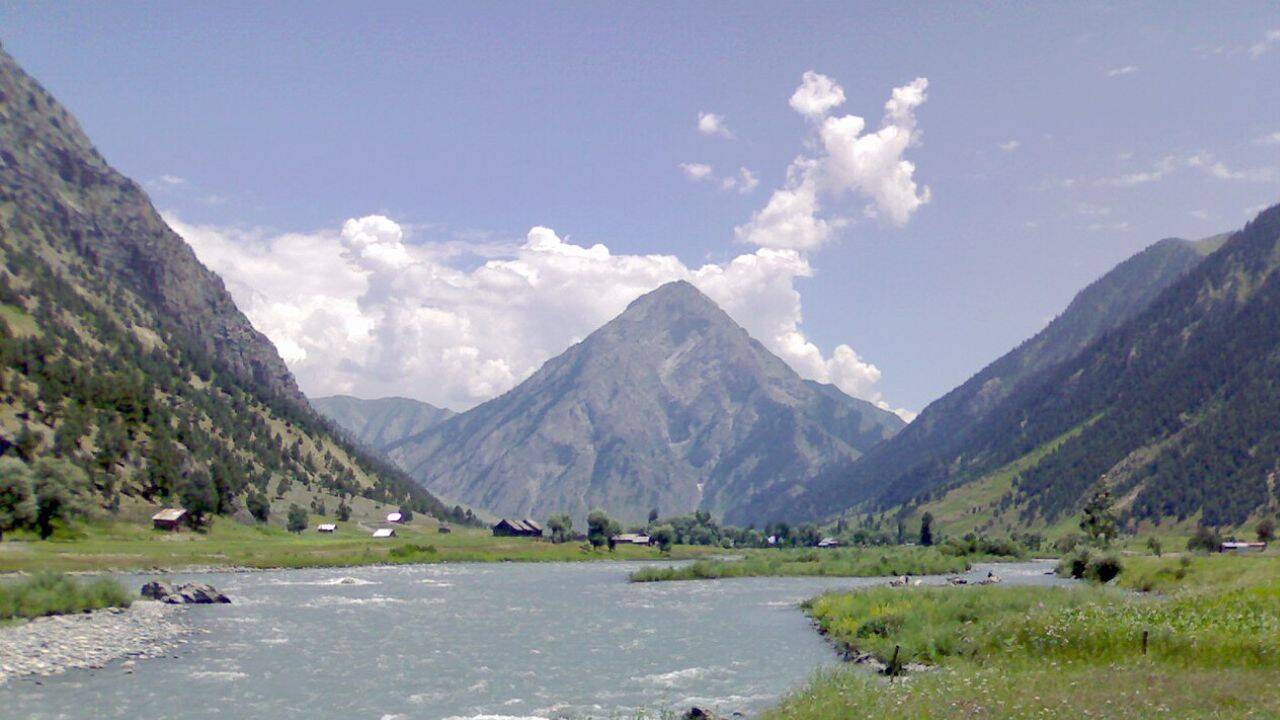
Habba Khatoon Peak, Gurez Valley, Kashmir (Image Credit: Wikimedia Commons)
The nearest airport is Sheikh ul-Alam International Airport in Srinagar. Gurez is approximately 123–140 km from Srinagar by road, depending on the starting point and route. Hire a taxi or travel via Bandipora and the scenic Razdan Pass to reach Dawar, the valley’s main settlement, in around five to seven hours, depending on road conditions. Travellers arriving by train can reach Sopore, one of the nearest railway stations, and continue by road. The route is seasonal, as heavy snowfall can close Razdan Pass during winter. Check local road conditions before planning your journey.So next time you plan Kashmir, add Gurez to the itinerary.