
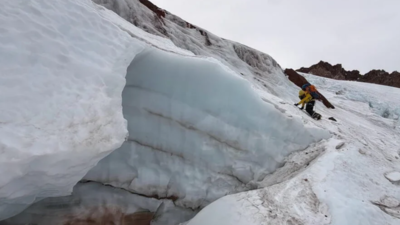
A 39-year-old man from Florida has been rescued from California’s Mount Shasta after spending two nights stranded on a glacier with a serious leg injury, as freezing temperatures and powerful winds prevented rescuers from evacuating him by helicopter. Reports by CBS Sacramento, the San Francisco Chronicle and SFGATE detailed the multiday operation, which involved U.S. Forest Service climbing rangers and more than 30 additional search-and-rescue personnel. The climber was brought to safety on Tuesday, October 20, after a rescue team carried him across hazardous mountain terrain to a location where a helicopter could reach him. He was subsequently taken to hospital for treatment of his leg injury and frostbite affecting his foot and leg.
How the climber became stranded on Mount Shasta
According to the Siskiyou County Sheriff’s Office and the U.S. Forest Service, the man reached the 14,179-foot summit of Mount Shasta at around 3 p.m. on Sunday, October 18. He was descending via the Avalanche Gulch route when an incorrect GPS route led him towards Whitney Glacier, on the mountain’s northern side.At approximately 12,600 feet, he fell through a snow bridge covering a crevasse and fractured his leg. Unable to continue safely, he called 911 at around 5 p.m., prompting authorities to launch a search-and-rescue operation.The climber was poorly equipped for the conditions. Officials said he was wearing sweatpants, a sweatshirt and running shoes, with only trekking poles and limited food and water. He did not have the appropriate clothing or equipment for an unexpected overnight stay in the high mountains. Temperatures on the glacier dropped below freezing, while strong winds and poor visibility made it difficult for rescue teams to reach him before nightfall.
Rescuers spent a night on the mountain with him
Two U.S. Forest Service climbing rangers eventually reached the injured man on Monday morning. They provided medical assistance, including treatment for frostbite and the onset of hypothermia, and helped him move away from the exposed glacier. Attempts to evacuate him by helicopter were unsuccessful because of the severe weather. The rangers consequently remained with him through Monday night, spending a second night at approximately 12,500 feet alongside the injured climber.Meanwhile, the Siskiyou County Sheriff’s Office mobilised more than 30 additional search-and-rescue personnel to carry out a ground evacuation. The operation required teams to negotiate steep terrain, loose rocks and hazardous mountain conditions as the man’s condition worsened.
Teen rescuers joined the difficult extraction
Among those involved were members of the Marin County Sheriff’s Office Search and Rescue team, including young volunteers who took part in the demanding climb. According to reporting by SFGATE and KTVU, members of the team ascended the mountain carrying rescue equipment and used technical rope systems to manoeuvre the injured climber across steep, rocky sections. The rescuers transported him towards the saddle between Mount Shasta and neighbouring Shastina Peak, where a helicopter could potentially land.The ground operation was complicated by winds reaching 50 to 60 mph, freezing temperatures and the risk of rockfall. The teams had to work carefully across exposed terrain while trying to get the climber to a safer elevation. Additional rescue personnel reached the man on Tuesday afternoon and helped move him further down the mountain. During a brief improvement in the weather, a California Highway Patrol helicopter reached the team near Shastina Peak and airlifted the climber to safety.
Mount Shasta’s changing conditions raise safety concerns
Mount Shasta, in Northern California, is the state’s fifth-highest peak and the second-highest in the Cascade Range. Although some routes are accessible to experienced hikers and climbers during favourable conditions, the mountain can become considerably more dangerous as winter weather approaches.The incident also highlights the risks of relying exclusively on electronic navigation when travelling through remote alpine terrain. An incorrect route can lead climbers onto glaciers or other areas where specialist equipment and technical skills are necessary. Officials recommend that climbers research their routes carefully, check seasonal conditions and carry suitable clothing, navigation backups, emergency supplies and equipment for snow and ice. Reaching the summit should never take priority over making a safe descent. The Florida climber’s name and hometown have not been released publicly. His rescue brought an end to a multiday operation that required rescuers to endure the same freezing conditions and dangerous terrain while working to bring him off the mountain alive.