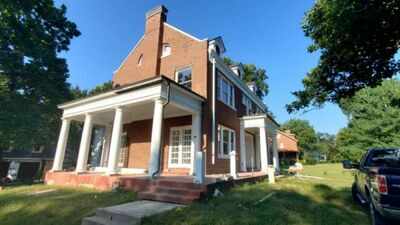
When Fred Parry’s late wife, Mary, first saw the stately 1914 mansion on West Broadway in Columbia, Missouri, she fell in love. Years later, after her death, Parry found himself facing a choice: let the historic home be redeveloped or step in to save it. He chose the latter, buying the property with the goal of preserving its character and restoring it as a single-family residence. But as crews began peeling back layers of paint and plaster, they uncovered far more damage than anyone had anticipated: rotted framing, compromised structural members and other issues that would eventually add about $150,000 to the restoration bill. His story, as told to the Columbia Business Times, is part love letter to a house, part cautionary tale about historic renovation. Read on to know more:A house tied to a love storyThe mansion, known locally as ‘The Belle of West Broadway’, sits on a prominent corner just west of downtown Columbia. Built in 1914, it features classic early-20th-century details: tall columns, wide porches, high ceilings, hardwood floors and ornate woodwork that reflect the craftsmanship of the era.For Mary Parry, the house was more than just architecture. She had long admired it and often spoke about how much she loved its design and presence on the street. After she passed away, Fred Parry found himself drawn back to the property, not only as a preservation project but as a way to honour her memory.Buying to save, not to flipWhen the house came up for sale, Parry knew there was interest from developers who might convert it into apartments or split the lot. Rather than risk losing its historic character, he decided to buy it himself with the intention of restoring it as a single-family home and keeping its original footprint intact.His plan was not to create a perfect museum piece, but a liveable home that respected the building’s history while meeting modern standards for comfort and safety. That meant keeping key features, such as the grand staircase, original mouldings and fireplace surrounds, while updating systems like electrical, plumbing and insulation.The moment the real work beganLike many historic renovations, the project started with optimism and a budget based on what could be seen during walkthroughs and inspections. But once contractors began opening walls, removing old additions and stripping away decades of paint and patchwork, the true condition of the house emerged.Crews discovered things like: Rotted wood framing in key structural areas; compromised floor joists and beams that needed reinforcement or replacement;water damage that had spread further than surface signs suggested; and outdated and potentially unsafe electrical and plumbing runs hidden behind walls.What had looked like a straightforward restoration quickly turned into a major structural rehabilitation.The $150,000 surpriseParry estimates that the hidden damage uncovered during restoration added roughly $150,000 to the overall cost of the project. That sum went toward: replacing and reinforcing structural members to ensure the house was sound; addressing long-term water intrusion and moisture issues; and upgrading systems to meet current building codes while minimising impact on historic features.For a homeowner operating on a fixed budget, that kind of mid-project escalation is stressful. But Parry says he never considered cutting corners. “If you’re going to do this, you do it right,” he told the Columbia Business Times, reflecting the mindset of many historic preservationists who see themselves as stewards rather than flippers.Balancing preservation and practicalityRestoring a 110-year-old mansion is not just about fixing what’s broken; it’s about making choices that balance historical integrity with modern living. In the Belle of West Broadway, that has meant: Preserving original woodwork, doors and hardware wherever possible; repairing rather than replacing historic windows when feasible; adding insulation and weatherproofing in ways that don’t damage character-defining features; and designing kitchens and bathrooms that feel contemporary but respect the scale and style of the house.The goal is for the home to function well for today’s occupants while still feeling like a 1914 mansion when you walk through the front door.Why houses like this matterFor Columbia, the Belle of West Broadway is more than one man’s project. It’s part of a small but significant collection of early-20th-century homes that give the city’s older neighbourhoods their character. When houses like this are demolished or radically altered, the streetscape changes in ways that can’t easily be reversed.Parry’s decision to buy and restore the mansion helps keep that architectural heritage intact. It also sets an example for other owners of historic properties, showing that preservation is possible even when the costs and challenges are significant.Lessons for anyone considering a historic homeParry’s experience offers several takeaways for anyone thinking about buying and restoring an older house:Expect the unexpected. Even thorough inspections can miss problems hidden behind walls and under floors.Budget for contingencies. A common rule of thumb is to set aside 10–20% of the projected renovation cost for surprises; in very old homes, that may still be conservative.Work with contractors who understand historic construction. Techniques and materials used a century ago don’t always align with modern building practices, and inexperienced crews can inadvertently cause more damage.Be clear on your goals. Are you aiming for a museum-quality restoration, a comfortable family home with historic character, or something in between? Your answer will guide countless decisions.A home with a futureAs restoration work continues, the Belle of West Broadway is slowly returning to the kind of condition its original builders would recognise, while gaining the updates needed for another century of use. For Fred Parry, the project is both a labour of love and a tribute to his late wife, whose admiration for the house helped set everything in motion.In a time when many older homes are torn down or stripped of their character, this mansion’s survival is a small but meaningful victory for preservation. And for anyone who drives past West Broadway and notices the fresh paint, repaired porches and cared-for gardens, it’s a reminder that behind every historic house there’s often a story of someone who chose to save it.
What aspect of ‘The Belle of West Broadway’ do you find most appealing?
3k+ users shared opinion today
5k+ users already voted today
3k+ users shared opinion today