
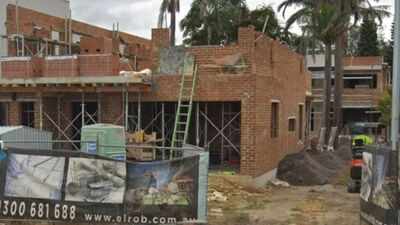
A Sydney homeowner who hired a relative to construct two houses for almost $1.5 million has won a substantial legal battle after a court found serious problems with the building work. The dispute involved Elrob Construction Group and homeowner Sami Haddad, whose builder was also his wife’s uncle. After examining the construction contracts, expert reports and claims from both sides, the New South Wales District Court ruled in Haddad’s favour, ordering the building company to pay more than $346,000 in compensation and other amounts.
Court orders builder to pay around $346,000 over defects in two Sydney houses
The New South Wales District Court in Elrob Construction Group Pty Ltd v Haddad handed down its decision on 24 September 2025. The ruling said the dispute was over two double-storey brick houses with flat roofs built on land at Sans Souci in Sydney.In 2017, homeowner Sami Haddad signed two building contracts with Elrob Construction Group. The initial value of each contract was $678,220 (excluding GST) for a combined total of $1,492,084 (including GST).Elia Elrob Boujaoude, the company’s principal, was responsible for the building work. He was also Haddad’s wife’s uncle, making the dispute particularly complicated because of the family connection.The contracts covered the construction of two separate houses, identified as 55 and 55A. The land was intended to be subdivided so that each property would have its own allotment. Haddad planned to live in one of the houses.According to the judgment, construction began around August 2018, and Boujaoude said the work had been completed by early November 2019.
How did the building dispute between the relatives begin
The relationship between Haddad and Boujaoude became strained after problems emerged with the construction. In August 2020, Haddad lodged a complaint with NSW Fair Trading, alleging that the houses contained defective and unfinished work.The situation had already attracted attention from the building certifier. On 18 September 2020, the certifier issued a list of outstanding work that needed to be completed before an occupation certificate could be issued. This meant the properties had not met all the requirements for formal approval for occupation.A rectification order was subsequently issued against Elrob Construction Group on 15 December 2020, requiring attention to the defective and incomplete work.The ‘news,’ which covered the court dispute, described the condition of the properties as particularly poor. Problems reportedly included improperly installed pipes, cracked brickwork, inadequate painting, unfinished kitchens and bathrooms, exposed electrical wiring and missing flooring. Building debris and other unfinished work also contributed to the condition of the houses.The defects were not limited to cosmetic issues. Some concerned the way essential parts of the properties had been installed or finished, raising concerns about their suitability for occupation.
What problems did the court identify in the properties
The court examined evidence from two building consultants, Anthony Capaldi and Mario Bournelis, who prepared reports and participated in a joint assessment of the disputed work.Their findings included cracks in rendered walls, poorly finished concrete, incorrectly installed drainage pipes and missing expansion joints in the brickwork.Some defects were relatively minor finishing issues, while others required more significant repair work. For example, experts identified issues with bathroom tiles where uneven grout lines resulted in finished surfaces that didn’t look consistent. The court also found insufficient waterproofing in wet areas and drainage problems that could allow water to intrude into parts of the buildings.In one case, the court considered the installation of downpipes that were not properly connected to the stormwater system. This arrangement meant that the homeowner had to monitor the rainwater tank and occasionally change pipe connections to prevent it from overflowing.The ruling also dealt with absent weep holes, which help manage moisture in masonry walls, and cracks occurring because no proper expansion joints were put in. These joints are important because if there is not enough space for movement the brickwork can expand and crack.The “news” report said that 127 defects and incomplete items were found at the two properties, indicating the extent of the construction problems.
The builder’s payment claim was rejected
Elrob Construction Group also attempted to recover additional payments from Haddad, arguing that it was owed money for changes made during the building process.The company submitted claims for variations, including additional work associated with the properties. It sought $89,958.15, including GST, for variations relating to one of the houses. It also made an alternative claim for payment based on the value of the work it said had benefited the homeowner.However, the court was not satisfied that the builder had established its entitlement to the additional amount. The court ultimately threw out Elrob’s claim and ruled for Haddad on the cross-claim of the homeowner.The judgment found the builder liable for defective and incomplete work that was in breach of the construction contracts and the applicable statutory warranties.
How much was the builder ordered to pay
On 24 September 2025, District Court Judge Susanne Cole ordered Elrob Construction Group to pay Haddad a total of $346,580.91 through three separate amounts.The largest portion was $226,446.39 in damages for defective and incomplete building work. The builder was also ordered to pay $25,000 in liquidated damages under the contracts because of delays in achieving practical completion.A further $95,134.52 was awarded as restitution. This related to money Haddad had previously paid following an earlier payment adjudication under the Building and Construction Industry Security of Payment Act.Together, these amounts brought the court-ordered payment to $346,580.91. The decision also meant that Elrob’s attempt to recover additional variation payments was unsuccessful.According to the NSW Government’s Building Commission, the Home Building Act 1989 provides statutory warranties covering residential building work. Homeowners generally have 6 years to commence proceedings for major defects and 2 years for other defects. These periods run from the completion of the building work, subject to additional provisions in certain circumstances.