
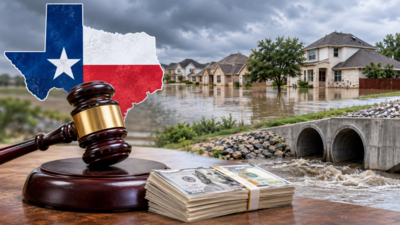
A major settlement involving a Texas land developer has brought renewed attention to complaints about how residential plots were marketed and financed in communities outside Houston. Colony Ridge Land LLC and its affiliates have agreed to pay $68 million to resolve lawsuits brought by federal authorities and the State of Texas over alleged deceptive sales practices and lending arrangements. The agreement also addresses concerns about flooding in the developments, with $18 million earmarked for drainage improvements. Other parts of the deal cover housing affordability, loan defaults, foreclosure prevention and law enforcement. The company will also face restrictions on selling newly developed residential plots directly to consumers.
How Colony Ridge came under federal and state scrutiny
Colony Ridge operates as both a land developer and a lender in the Houston area. Its business involved selling residential lots to buyers, with financing offered through loans arranged by the company itself. This model became the subject of legal scrutiny after concerns emerged over the way properties were advertised and the terms on which buyers were encouraged to purchase them.The US Department of Justice’s Civil Rights Division and the Consumer Financial Protection Bureau filed a lawsuit against the company in December 2023. The State of Texas brought a separate case in March 2024 through its Office of the Attorney General. Both cases raised allegations concerning the sale of land and the financing offered to purchasers.Federal investigators alleged that Hispanic consumers were deliberately targeted through advertisements and sales approaches that did not always give an accurate picture of the properties. The investigation also raised questions about whether prospective buyers were properly informed about flooding risks and the actual condition of the lots being offered.According to the Justice Department, the lending arrangements allowed buyers to take out seller-financed loans without a proper assessment of whether they could afford the repayments. Authorities argued that this exposed borrowers to a greater risk of falling behind on payments, with foreclosures adding to the financial difficulties faced by some households.
$18 million allocated to tackle flooding problems
Of the $68 million settlement, $48 million will go towards infrastructure across the Colony Ridge developments. Drainage work accounts for $18 million of that amount, while the remaining $30 million is intended for other infrastructure improvements.Flooding had featured among the complaints surrounding the properties. The federal investigation specifically pointed to alleged misrepresentations about flood risks during the sales process. The drainage allocation is intended to address damage to homes caused by severe flooding and improve infrastructure in the affected residential areas.The distinction between the two infrastructure allocations is important. The $18 million is specifically designated for drainage, while the additional $30 million covers broader improvements. The settlement does not describe the entire $48 million as flood-control funding.
New lending rules and measures to reduce foreclosures
The agreement also changes how Colony Ridge can assess buyers seeking financing for residential lots. The developer will have to introduce underwriting standards that take account of a borrower’s income, assets and existing debts before approving a loan.This requirement addresses one of the central concerns raised in the lawsuits: that loans were being issued without sufficient checks on whether purchasers could manage the repayments. Under the new arrangement, the company must consider a buyer’s financial circumstances rather than rely on the previous lending approach described in the investigation.There are separate obligations concerning borrowers who have already fallen behind on payments. Colony Ridge must establish a plan to help customers avoid default and work towards reducing the overall default rate. It will also have to introduce a policy aimed at reducing the number and frequency of foreclosures and deeds in lieu of foreclosure.Credit reporting is another part of the settlement. The company must develop a plan to address damage to borrowers’ credit arising from reports it made in connection with defaulted lot loans. This provision covers borrowers who have defaulted on loans issued by Colony Ridge.
Changes to property advertisements and buyer disclosures
The settlement places new requirements on how the developer describes the land it sells. Advertisements will have to provide accurate information about the properties and the loan terms attached to purchases. The agreement is intended to prevent buyers from being given an inaccurate impression of what they are paying for.Pre-sale disclosures will also have to clarify the actual condition of a property. In particular, the company must accurately state whether a lot or property is ready for someone to move into and whether it has access to all city services.
$20 million for law enforcement and a three-year development restriction
Beyond housing and lending, the agreement includes $20 million for increased law enforcement presence in the Colony Ridge communities. The money is intended to support public safety and help the developments comply with existing local, state and federal agreements.The settlement also places a significant restriction on the company’s future development activity. Colony Ridge must halt the development of new residential plats intended for direct-to-consumer sales for three years. This limits its ability to continue that particular model of residential land sales during the period covered by the agreement.There are also provisions concerning the documents buyers must present when purchasing land. The settlement refers to an intrastate land sales exemption under the Interstate Land Sales Full Disclosure Act (ILSA). Purchasers will be required to provide specified identification, including an unexpired Texas driver’s licence or state identification card, certain qualifying limited-term Texas licences, or an eligible passport accompanied by a valid visa.
What the $68 million agreement means for the lawsuits
The settlement brings together two rounds of legal action, one filed by federal authorities in December 2023 and another brought by Texas in March 2024. The Justice Department said the agreement followed coordinated work between its Civil Rights Division and the Texas Attorney General’s Office.The financial commitment is spread across several areas rather than being limited to compensation or infrastructure spending. It includes drainage and other improvements, tighter lending assessments, measures addressing defaults and foreclosures, changes to property advertising, and additional law enforcement funding.Disclaimer: This article is based on publicly available information released by the US Department of Justice. The allegations described in the lawsuits and the terms of the settlement have been reported as stated by the authorities. The Times of India has not independently verified the claims.