
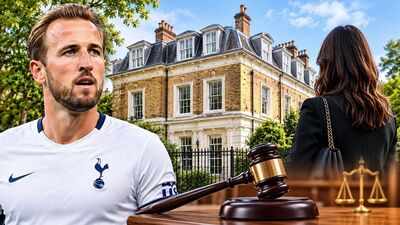
A £16.9 million deal to purchase a North London mansion previously rented by footballer Harry Kane collapsed after the prospective buyer failed to complete the transaction twice. The property was eventually sold for approximately £10.15 million, leaving its owner facing a substantial financial shortfall. The dispute between the seller, Regal BA Limited, and buyer Jun Zhang reached the High Court, where the judge examined the failed sale, the property’s eventual resale and the evidence used to assess its market value.
Why did the £16.9 million Harry Kane mansion sale collapse
Jun Zhang agreed to buy the North London property from Regal BA Limited for £16.9 million, according to a case summary by the Expert Witness Institute. However, the agreement failed because Zhang did not uphold the deal.The purchase failed, and another attempt to complete the transaction also failed. Regal BA Limited was unable to proceed with the agreed sale at the original price and had to look for another buyer.The dispute was subsequently litigated in Regal BA Limited v Jun Zhang [2026] EWHC 1446 (Ch). The problem was the financial impact of the failed deal, specifically the gap between the price set in the original contract and what was ultimately obtained when the property was sold to a different buyer. The mansion had previously been rented by England football captain Harry Kane. Its association with the footballer added a recognisable name to the property dispute.
What happened during the 2 failed completion attempts
The court judgment provides a detailed account of how the agreement unfolded. Regal had agreed to sell the 7 bedroom property called High Trees to Zhang on 23 March 2022. The contract valued the house at £16.85 million, with £50,000 extra for its contents.On the same day, Zhang signed a tenancy agreement and moved into the property with her partner, Stuart Onslow, and their two children. It then changed the original completion date to 27 September 2023 with a deposit of £1.685 million which would be lost if the purchase did not go ahead.But Zhang failed to close the transaction by the extended deadline. On 19 December 2023 Regal ended the agreement and kept the deposit.On the same day, the two sides entered into another agreement, but keeping the overall purchase price at £16.9 million. This time the deposit was increased to £2,527,500 and completion was set for 22 April 2024.The second attempt also failed. Zhang did not complete the purchase by the agreed date, and Regal served a formal notice giving her another 10 working days to fulfil the contract. That additional period expired on 8 May 2024 without completion. The second agreement was subsequently terminated, and Regal retained the new deposit as well.
How did Regal attempt to sell the mansion again
After the second failed transaction, Regal had to find another purchaser for High Trees. The company began marketing the property through specialist estate agents, including Sotheby’s International Realty and DDRE Global, with an asking price of £16.5 million.The marketing campaign involved outreach to potential buyers in the UK and internationally. The court judgment said this had resulted in some 10 to 12 viewings of the property but the agents had struggled to get an offer anywhere near the asking price.The market was also difficult for expensive London homes at the time. Feedback from potential buyers highlighted concerns about the property’s privacy, its position near the road and the absence of certain features, including a lift and a larger garden.One prospective buyer indicated that the property would be attractive at around £9 million to £10 million. Other interested parties decided against purchasing for reasons related to the house’s layout and location.Regal eventually agreed to sell the mansion to 16 Bishop Limited for £10,157,168.94. The transaction was completed on 12 September 2024, several months after Zhang’s second failure to complete.
Zhang challenged the resale price
Zhang accepted that Regal was entitled to compensation for the failed purchase but disputed the amount being claimed. Her argument was that the company had sold the mansion for considerably less than its actual market value.As reported by the Expert Witness Institute, Zhang’s property valuation expert estimated that High Trees was worth £14.75 million in September 2024. This was substantially higher than the £10.15 million resale price.Her legal team also questioned whether Regal had marketed the property for long enough to secure a better offer. They argued that the company had already been in discussions with the eventual buyer while the property was being advertised elsewhere.Another point raised during the proceedings concerned a separate proposed £3 million loan involving companies connected to the eventual purchaser. Zhang argued that the arrangement could have influenced Regal’s decision to accept a lower price.However, Regal maintained that the sale was conducted properly and that the resale figure reflected the offers available in a challenging market.
How did the High Court assess the evidence
Judge Hacon examined the marketing efforts, the competing property valuations and the circumstances surrounding the eventual sale. He concluded that Regal had given the mansion an appropriate period of exposure through two successive specialist estate agencies. The property had been marketed for a combined period of around 7 to 8 months.The judge also noted that the top end of the London property market was struggling in 2024. His feeling was that in delaying he was more likely to get a lower offer than a higher one.The court was not persuaded that Regal had deliberately sold the mansion below its available market value. It found that the property had been sold competently, through an open-market process and at arm’s length.
What compensation did the court award Regal
In its ruling, the High Court accepted Regal’s main claim for the difference between the £16.9 million contract price and the £10.1 million resale price. However, the amount was subject to deductions.The judge deducted the £2,527,500 deposit retained after the second failed completion. He also reduced the claim by £1 million because the original deal stated that Regal should have paid that amount toward Zhang’s Stamp Duty Land Tax if she had bought the property on time. After these deductions the main damages were approximately £3.22 million.The court also took into account other financial losses, such as interest paid on Regal’s outstanding loan from Deutsche Bank from May through September 2024. Judge Hacon allowed interest calculated on the reduced loan balance, taking into account that the company should have used both forfeited deposits to reduce its borrowing.Regal was also awarded £13,092.10 in professional fees connected with the resale, along with interest at 4% on the sums allowed by the court.