
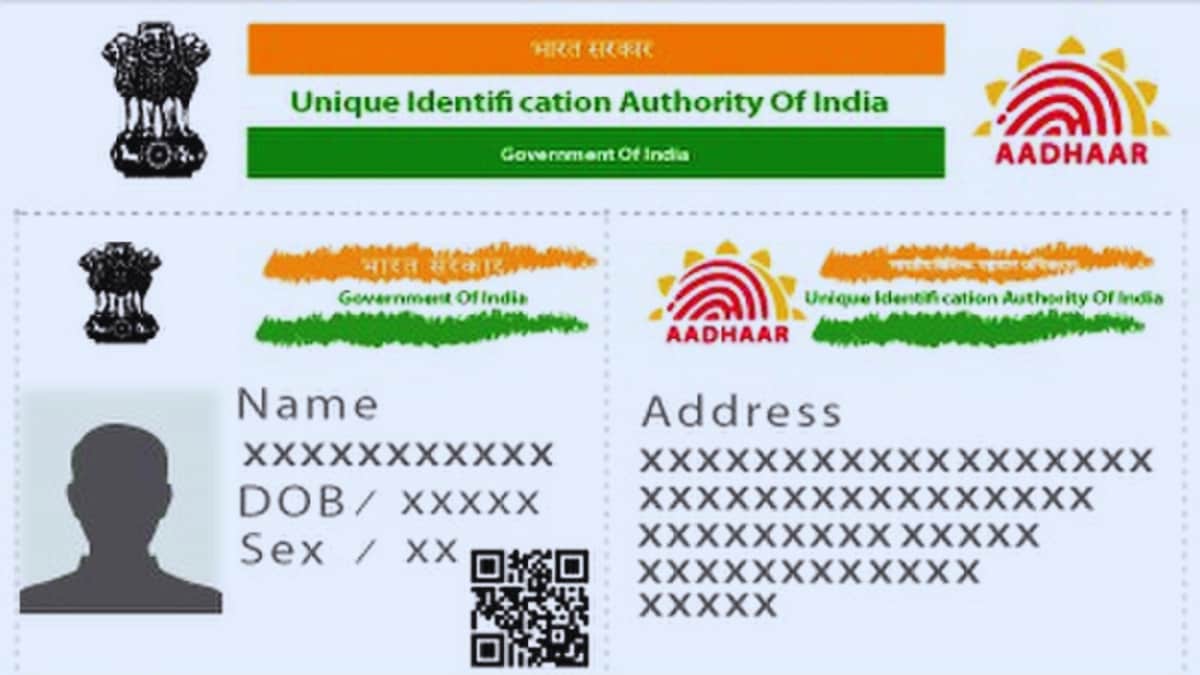
According to the notification issued by Neha Sharma, the Inspector General of Registration (Mahanirishak Nibandhan) for Uttar Pradesh, all subordinate registration offices and Assistant Inspectors General have been instructed to strictly comply with the new guidelines.
To prevent legal complications in property registrations, government schemes, and administrative procedures, the department has mandated five rules for all official evaluations:
Rule 1: Aadhaar cards must be accepted exclusively as valid proof of identity and address.
Rule 2: Family or parental details on the card cannot be treated as decisive or legally binding proof of a relationship.
Rule 3: For applications, schemes, or legal deeds requiring mandatory verification of a family relationship, authorities cannot make a final determination based solely on the Aadhaar card.
Rule 4: For relationship verification, departments must examine standard legally recognised documents under prevailing rules. These include birth certificates, family register copies (parivar register ki nakal), succession certificates, or relationship certificates issued by competent courts or authorities.
Rule 5:
Any mention of parental or spousal names on the card must be viewed purely as secondary informational context rather than established legal proof.
This state-level directive comes amid a broader nationwide tightening of documentation standards.
Notably, during a recent Passport Seva Divas, External Affairs Minister S Jaishankar and senior officials from the Ministry of External Affairs (MEA) strongly reinforced this legal boundary, explicitly clarifying that an Indian passport is strictly a travel document and not conclusive proof of citizenship.
Together, these developments stress a concerted effort across both state and central government levels to distinguish basic identification and travel protocols from absolute legal status and relationships.
ALSO READ | Aadhaar App crosses 3.1 crore downloads in 5 months of launch
The directive aligns state procedures with explicit guidelines from the Unique Identification Authority of India (UIDAI) and the Ministry of Electronics and Information Technology (MeitY).
The order states that the fundamental purpose of an Aadhaar card is to establish an individual’s identity and address, not to certify lineage or marital status.
Consequently, familial details prefixed with terms such as “C/o” (Care of), “S/o” (Son of), “D/o” (Daughter of), or “W/o” (Wife of) on the card are strictly informational in nature.
-With inputs from Kamlesh Srivastava, CNBC-TV18