
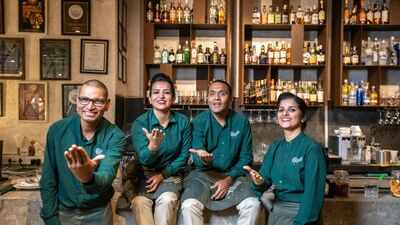
We go to restaurants for the perfect dining experience. Crisp white tablecloths, glittering cutlery, fine china, and impeccably dressed, polite servers who rush to your table at the blink of an eye, everything is designed to make you feel special. But what if the servers couldn’t speak? What if they couldn’t hear a word you said or understand what you were trying to tell them? Surely, that couldn’t happen in a restaurant, could it?For many people, a restaurant is simply a place to eat. For some, it can become a place where a life changes, where a person who was once hesitant to speak up within their own family becomes an earner, a professional and someone who finally has “a voice in the family.That is the story behind Ishara, the modern Indian restaurant chain co-founded by Prashant Issar, which employs people with hearing disabilities in its front-of-house operations. What began with one restaurant has now grown to nine Isharas across five cities in India. In a world where people with disabilities are often considered “misfit”, an MBA in the UK, a Facebook video about a restaurant in Canada and a desire to build a profitable business with a social purpose eventually came together to create Ishara.How the idea began“I was in the UK and very settled. I had been there for about 10 years when I decided that I wanted to educate myself further. I went on to do an MBA at a family business school. Academics had never really been my thing. I was not the academic kind in school and college. But this time around, it came back with a vengeance. I decided that I wanted to go for it and educate myself as much as I could. During those two years, I came across certain values at the family business school that really aligned with me. I remember thinking that whenever I started my own company, these would be the values of my company. The first was that it is important for businesses to generate wealth for society in addition to the individual and the second was that integrity and commitment are more important than capability and skill. Those two values stayed with me, ” says Issar.
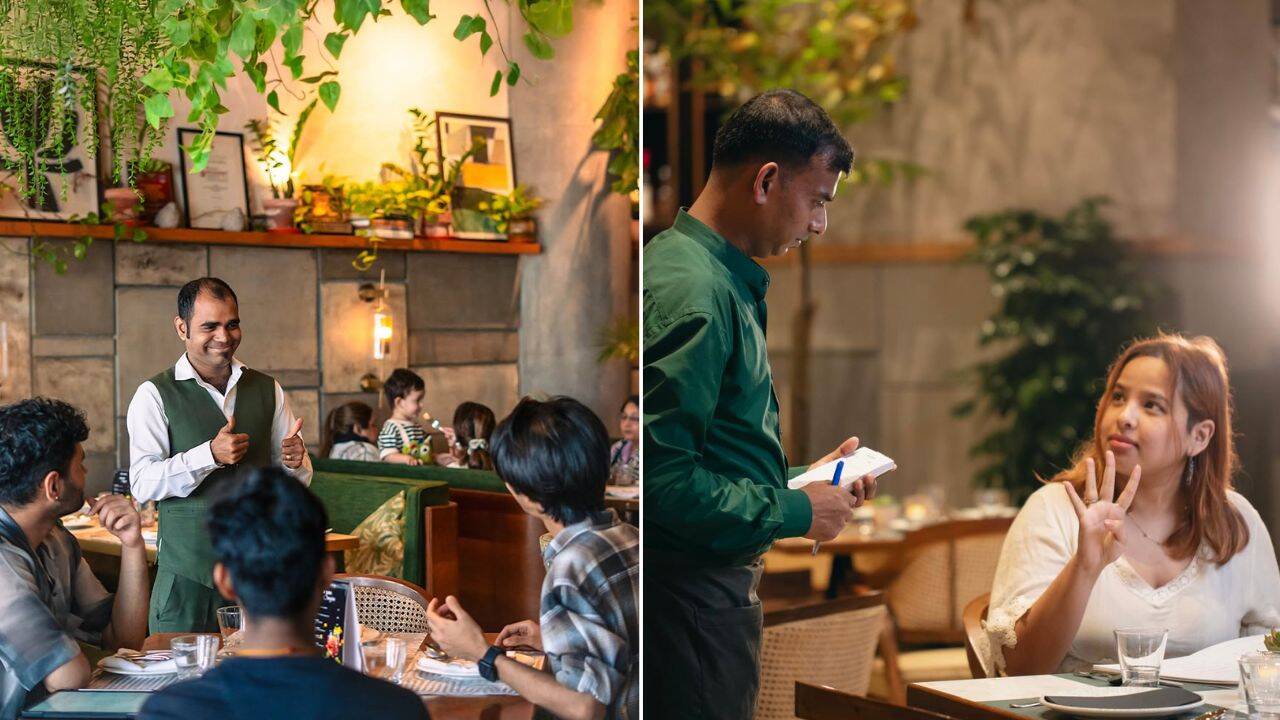
Team interacting with customers
After returning to India worked for about two years before taking the entrepreneurial plunge. I then started Strategy, a company I ran from home, with its name inspired by the two principles I had acquired. That is when I came across a video on Facebook about a restaurant in Canada called Signs. It had a concept similar to what we have at Ishara. When I saw that video, I immediately realised that this was something I wanted to explore. But I also felt that the model could be done differently.The restaurant in Canada was employing deaf people in the kitchen, in the front of house and everywhere. I felt that they were not necessarily suitable for the kitchen because a kitchen is about skill and experience, and it can also be a dangerous place for someone who cannot hear.”Finding the ‘right’ candidatesIssar started meeting people from the deaf community and the something happened that changed his perspective. He realised that they smiled more. They were more intuitive. They were more aspirational.Why the customer experience came firstOnce he started thinking about the restaurant, he realised that the interaction between a server and a customer is actually very important. You are ordering a dish without actually trying it, so you are putting your trust in the person serving you. If the server is not committed or not focused, the experience will suffer. “Sometimes we walk into a restaurant and the expression on the server’s face says, “Oh my God, another customer.” There is no smile. Embarrassingly, people don’t smile at all. Here I was meeting this bunch of people who were smiling even when they were communicating with me. That stayed with me. I felt the customer doesn’t come to a restaurant to be educated. The customer comes to a restaurant to have an experience. I wanted to give the customer that experience with minimal intervention, while ensuring that they got good-quality food and service.” says Issar.
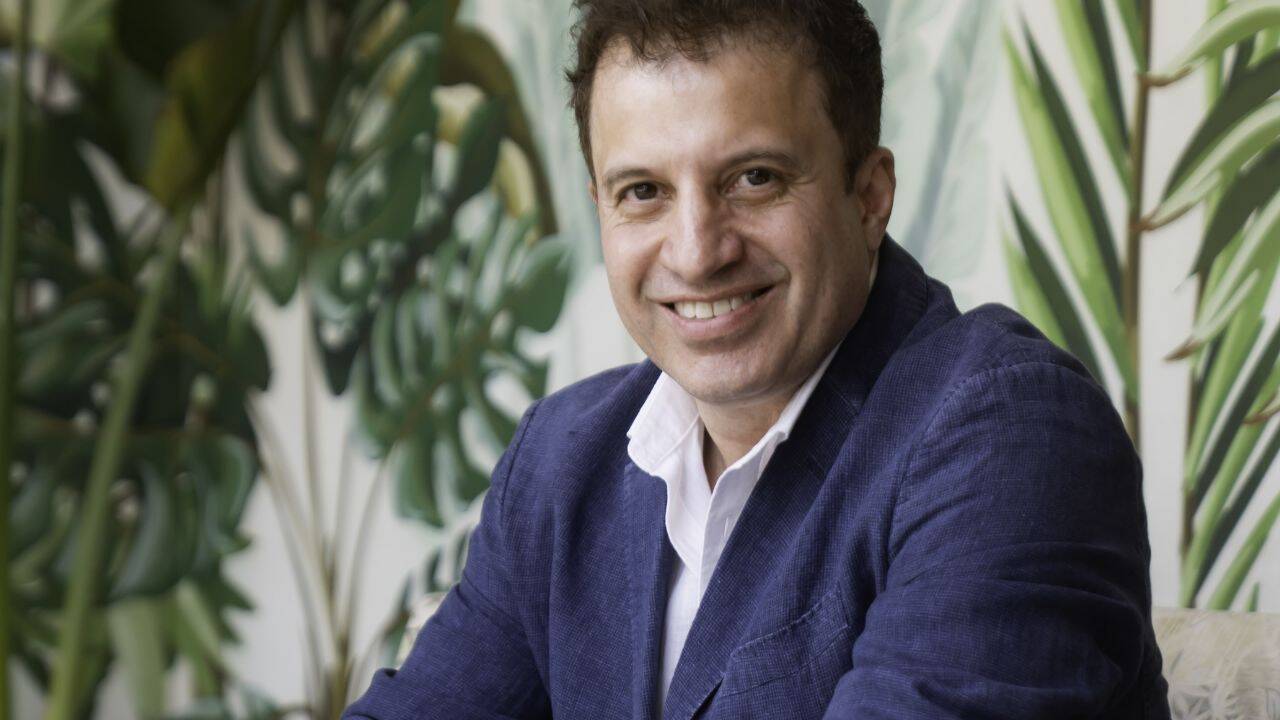
Prashant Issar
It was important to pay attention to minute detailsThe interaction between the server and the customer had to be simple and singular. Issar didn’t want it to become complicated.He went to a brand-identity consultant who was a good friend, Dave and they worked on how the interaction between the server and the customer could be made as simple as possible. That is when they came up with the idea for the menu. Every column would be a separate section of the menu. Each column would have a sign, and every row would have a corresponding number sign- one, two, three, four, five and so on. For example, for one of the sections, the sign was made by forming a ‘T’ with your fingers. The numbers were also represented through signs. And they put a very simple instruction on the menu: “We do not receive sign language. Just point at the menu.”Training the team“I also created a training programme with four modules because a lot of our staff had never worked before. The first module was about basic workplace discipline and life skills. It was about telling them that there has to be discipline, there has to be decorum and there has to be punctuality. We also taught them how to manage money. We got a bank to come and speak to them about financial independence, how to save, how to manage money and how to survive independently financially. The second module was simple English. Qualification was not a requirement for us. If you were deaf, officially determined by the government as having 40% or more hearing loss and you wanted to work, we would give you the opportunity. The third module was service etiquette, how to serve, from which side to serve, where to clear from and the basic principles of serving a customer. And the fourth was grooming. We wanted the entire team, both the boys and the girls, to understand the importance of grooming and presentation.”“I also realised something else: they don’t forget. That was a big moment for me. I began to understand that there was actually something very powerful about this workforce.”It all came a costHe knew that one of the biggest costs in a restaurant is recruitment and training. But the biggest cost is actually the cost of mistakes, because ultimately you lose the customer. In restaurant business, attrition is very high. The median is around 50%. Training is always an issue. One ends up getting new staff, training them for a year, and then they make mistakes that affect the customer experience.In Ishara, attrition was minimal because they found a place where they felt they belonged. They were also extremely focused on training, and they did not forget their mistakes. “If they made a mistake, they remembered it. That is when I started seeing the customer experience becoming more and more consistent. And ultimately, quality is determined by consistently delivering the product and service that the customer expects.“
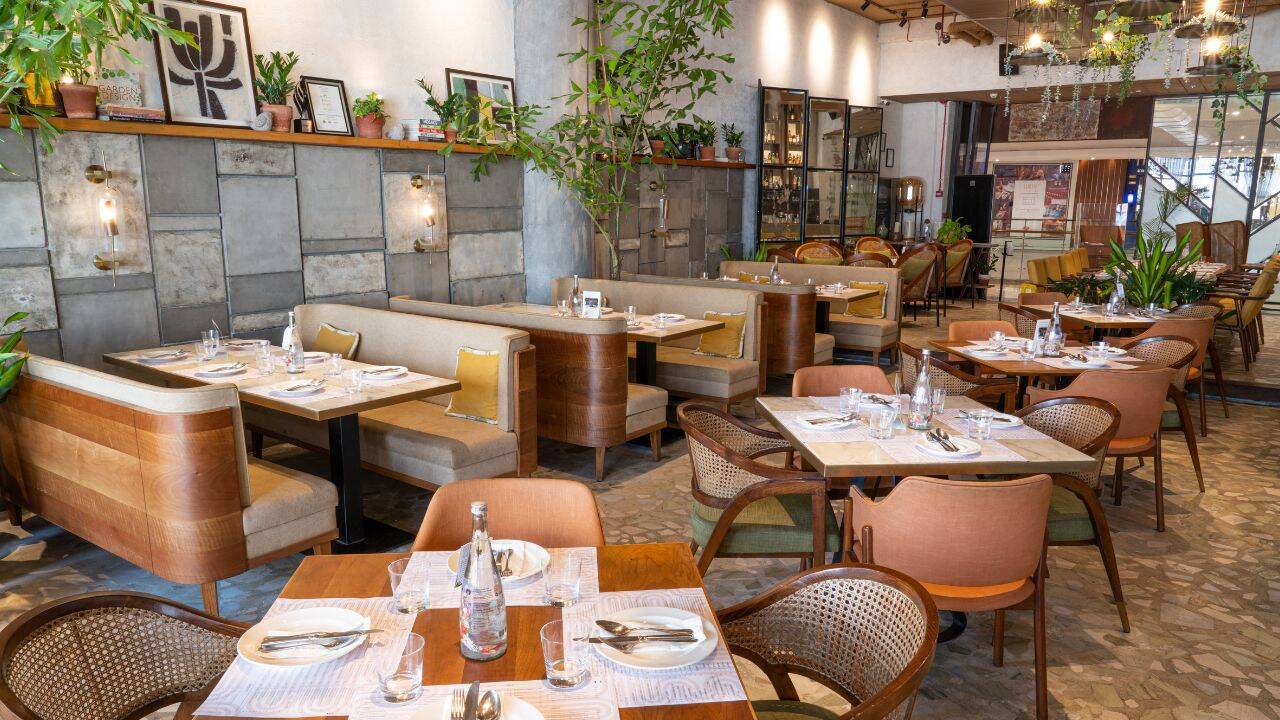
Ishara-the restaurant
Creating a different kind of restaurant experience but with no compromise on food“So we focused heavily on the sequence of service. As the customer came in and sat down, the manager would go to the table, introduce the concept and welcome them. He would show them the Ishara sign and teach them two or three basic signs so that they could participate in the experience. Everyone on the team has a sign name. So if a customer wanted to call a particular person, they could use that person’s sign name. If anyone from my staff needed to communicate something or needed help, they could simply come and call me. I also have a sign name.But while the service was central to the concept, I was very clear about one thing: the food had to work just as hard. I wanted Ishara to be a proper restaurant. It had to be clean, professional and serve good food. That is why I did not put deaf employees in the kitchen. The kitchen required a different set of skills and also had safety considerations. The idea was never to make the restaurant successful simply because it employed people with hearing disabilities. The restaurant had to stand on its own as a restaurant. The fact that our employees were deaf was part of the experience, but it was not the only experience we were offering.”They are a happy lot!Issar also realised that they are happy people. And he started wondering why. “They have a simpler world. For many of us, communication has become very complicated. We are constantly on WhatsApp, on social media, reading messages, interpreting what someone means and, very often, trying to read between the lines. But when you communicate with them, they take the sentence for what it is. They communicate through sign language, and they don’t necessarily read between the lines,” says Issar.For Ishara’s employees, the job has meant more than a monthly salary. It has meant confidence, independence and the joy of being able to contribute to their families. People who once struggled to find their place have found not just work, but a sense of belonging. And perhaps that is what makes their story so moving, sometimes, all it takes is one opportunity for someone to discover their own worth.