

Yellow Leaf Hammocks, the handmade hammock company founded by the Los Angeles couple Joe Demin and Rachel Connors, began as a side hustle run from the back of their Volkswagen. Started in 2011 and funded from its own sales, the business reached $1 million in monthly revenue in 2023 and passed $30 million in lifetime sales by 2024. The American husband and wife built the brand on hammocks handwoven by women in Thailand and, by 2024, had sold to more than 100,000 customers. Demin worked in real estate finance and Connors in nonprofit fundraising while they built the company together.
How a holiday in Thailand and a hammock outside a hut inspired Joe Demin to start Yellow Leaf
According to Entrepreneur, the idea took shape in 2011, when Demin went on holiday to Thailand and found a hammock he considered the world’s comfiest outside a tiny hut on an island in the Andaman Sea. The company’s own website says the discovery came during an impromptu motorcycle adventure, and that the hammocks were unlike anything he had seen or felt before.He bought as many as he could fit in his backpack and headed home with a business plan written on an airsickness bag. There he teamed up with Connors, now his wife, to establish the business. Demin wanted to back the weavers’ vision and build a brand that captured the relaxed feeling of that first hammock.
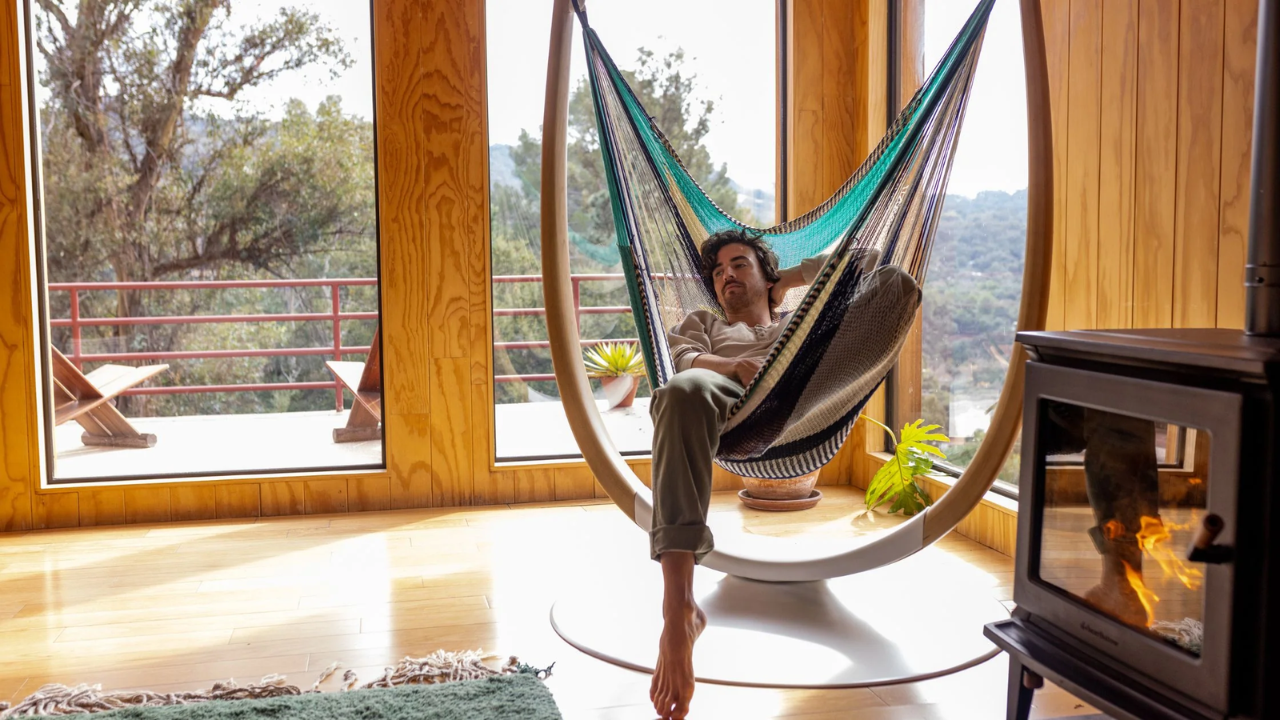
Image: Yellow Leaf Hammocks
Meet the Mlabri craftswomen of Northern Thailand who handweave every Yellow Leaf hammock
Yellow Leaf Hammocks’ website says each hammock is handwoven by expert craftswomen of the Mlabri Tribe, a name that translates to “the people of the yellow leaves”, in the hills of Northern Thailand. Across three weaving communities, the company says it creates jobs for mothers and cuts out the middleman so that money goes directly to its weavers.It argues that jobs for women matter especially, citing research that women spend up to 90 per cent of their income on their families’ health, nutrition and education. It adds that becoming breadwinners builds self-esteem, improves women’s standing in their communities, and lets them pool resources to improve local infrastructure. The weavers it profiles include Song, a dedicated mother who prioritises her children’s schooling, and Daeng, one of the few Mlabri men to weave hammocks.
How a tent at a weekly arts market and reinvested profits delivered the first 1,000 hammock sales
The couple took those first hammocks to a weekly arts market near their home, put up a tent and met their first customers face to face. Each week they reinvested their profits in inventory for the next fair. They sold their first 1,000 hammocks that way, asking buyers what they wanted and which parts of the brand story resonated.Money was tight. Demin and Connors chose to build the brand through revenue rather than chase investment, wanting to reach a certain level of success before approaching investors so they could protect their mission. The business was cash-flow positive from the start, though growth was slow, and it generated about $100,000 in its first year. Along the way, they taught themselves everything from textile engineering and wholesale pricing to coding a website.

Image: Yellow Leaf hammock
How the pandemic hit the wholesale business and a Shark Tank appearance sparked a switch online
After going through a business incubator, the couple focused on getting picked up by retailers. They collaborated with names including CB2, Anthropologie and Tommy Bahama and built what Connors considered a strong wholesale operation. The pandemic then devastated their business with brick-and-mortar retailers.When the chance came to appear on Shark Tank in 2020, they moved quickly to become an online business. Within months, they had changed from a wholesale company into a direct-to-consumer brand, which let them communicate more directly with customers and build deeper relationships with their fans.
How the company’s mission grew from helping a couple of dozen weavers to training hundreds
The mission began small, with Demin and Connors hoping to help a couple of dozen women. By 2024, they had trained hundreds of weavers and employed hundreds of full-time artisans in rural Thailand. Some weavers’ children had gone on to college on the strength of hammock income.Demin and Connors told Entrepreneur that building a social enterprise that changes weavers’ lives is the most fulfilling part of the work, while Connors enjoys the creativity and daily hustle of entrepreneurship. Their advice for aspiring founders starts with a simple rule: “know your numbers”. Demin calls them the lifeblood of a company, since a great product or meaningful mission counts for little without profitability. Connors urges founders to stay close to customer service and to ask customers for their opinions and ideas, because that is where direct insights come from.