
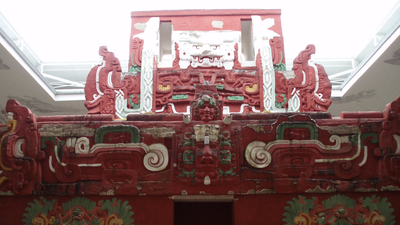
There were many practices done back in the day that were harmful for people, without them even realising it. But few still continue to cause that harm, even without us doing them today.In this case, a striking red pigment used by the ancient Maya to decorate their temples, artefacts and burial chambers may have left behind a rather unpleasant legacy.A new study published in Science Advanceshas found that the mercury-rich mineral used to produce this pigment contaminated lakes across the Yucatán Peninsula in Mexico. The contamination persisted for centuries, with mercury levels high enough to damage aquatic organisms across multiple levels of the food chain. And while the Maya stopped using the pigment long ago, traces of their activities remain buried beneath the water.
What did the ancient Maya use mercury for?
What was the red pigment used for?
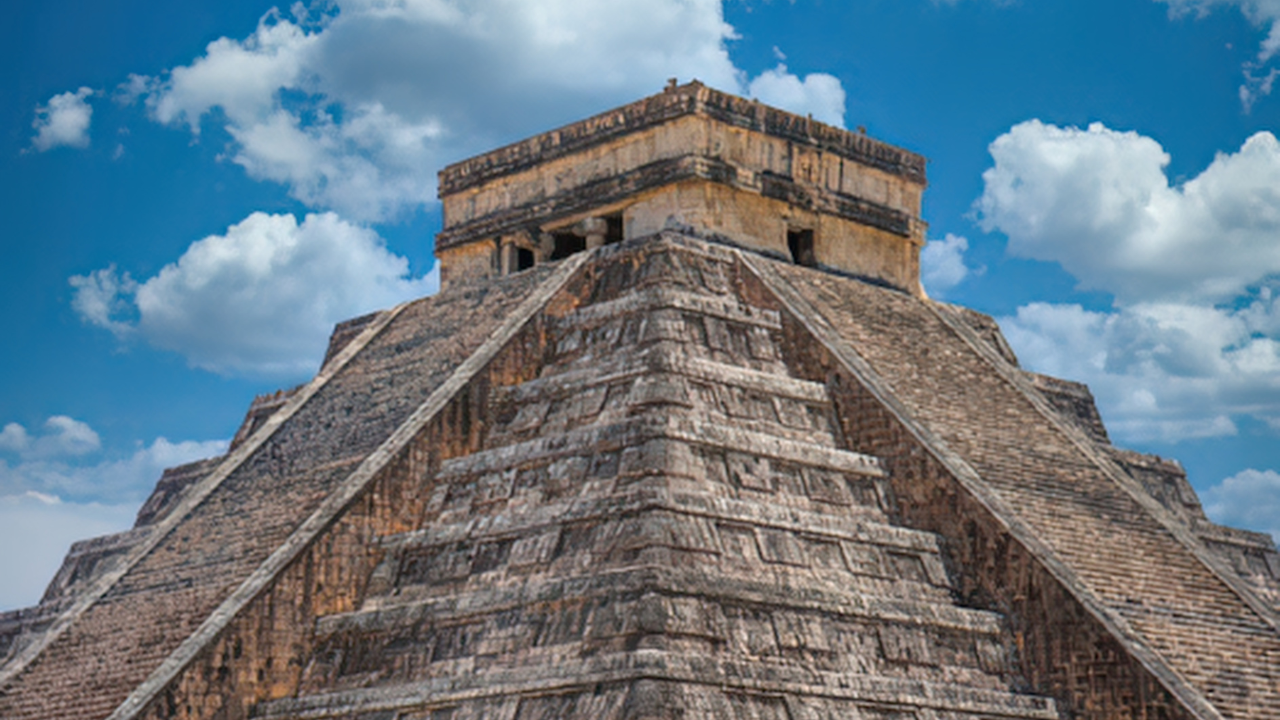
The ancient Maya civilisation flourished across parts of present-day Mexico, Guatemala, Belize, Honduras and El Salvador. Known for their impressive architecture, intricate writing system, advances in mathematics and understanding of astronomy, the Maya also placed considerable importance on colour and symbolism.One of their prized materials was cinnabar, a naturally occurring bright red mineral made primarily of mercury sulphide. Its vivid colour made it particularly valuable for decorating murals, temples, pottery and other objects. However, its significance went beyond aesthetics. The colour red was associated with blood, life and the soul, making cinnabar an important material in religious ceremonies and funerary practices.It was also used in burials, where powdered cinnabar was sometimes scattered over the deceased and their belongings. The mineral was considered precious enough to be traded across considerable distances, particularly in areas where it was not naturally available.What the Maya could not have known was that the beautiful pigment they were handling contained mercury, a highly toxic heavy metal. Over generations, the mineral would have found its way into the surrounding soil through its use in buildings, ceremonies and burials. From there, rainwater and natural runoff could carry traces of mercury into nearby lakes and reservoirs.
How has this mercury affected aquatic life?
To understand just how much of the mineral had accumulated over time, researchers collected sediment cores from beneath lakes near two ancient Maya cities on Mexico’s Yucatán Peninsula: Coba and Xcach.The team examined layers of sediment that had accumulated over centuries, looking for changes in mercury concentrations and biological evidence of the organisms that once inhabited these waters.The findings revealed several significant mercury spikes. At Xcach, contamination was recorded between approximately 125 and 200 AD, followed by another rise around the same period as the one at Coba. A further spike occurred between 535 and 820 AD. At Coba, mercury levels began rising around 250 AD and remained elevated for roughly 150 years.Some of the concentrations recorded were among the highest found at ancient Maya sites, exceeding modern sediment toxicity thresholds by considerable margins.But mercury contamination was not the only thing the researchers discovered. The sediment samples also contained biological markers showing that several groups of aquatic organisms had declined or disappeared during periods of high mercury concentration. These included bacteria, algae, cyanobacteria, shelled organisms such as snails and ostracods, and non-biting insect midges. In other words, the contamination was not affecting just one species. It had spread through multiple levels of the aquatic food chain, disrupting the ecosystem as a whole.This also raises questions about the health of the people who lived around these lakes. Mercury exposure can damage the brain and central nervous system, as well as the kidneys, lungs and heart. Although the study does not directly establish how much mercury entered the bodies of ancient Maya residents, researchers suggest that people may have been exposed through contaminated drinking water or fish.The findings also add another environmental concern to the conditions faced by Maya communities during the Classic Period. Droughts, deforestation and soil erosion had already placed considerable pressure on their surroundings. Mercury contamination may have been another contributing stressor, although researchers caution that there is no direct evidence linking it to the eventual decline of Maya cities.
Previous studies had already raised concerns
This is not the first time researchers have discovered traces of ancient Maya mercury use in the environment. Earlier investigations at sites such as Tikal in Guatemala had already revealed substantial contamination in the soil and water reservoirs.A 2020 study of Tikal’s ancient reservoirs found mercury concentrations as high as 17 micrograms per gram in certain sediment samples. Several samples exceeded the modern threshold used to identify heavily polluted sediments, with some recording levels more than ten times that benchmark.Researchers suspected that cinnabar used in the city’s temples and ceremonial spaces had gradually entered its water reservoirs through runoff. This was particularly concerning because these reservoirs were important sources of water for the city’s inhabitants.A 2022 review published in Frontiers in Environmental Science, which examined mercury measurements from 10 ancient Maya settlements, further established how widespread the problem could be. 7 of the 10 sites had recorded at least one location with mercury concentrations exceeding modern environmental toxicity benchmarks.More recently, a 2024 study at Ucanal in Guatemala found that mercury concentrations in ancient water reservoirs during the Terminal Classic Period were around 300% higher than levels recorded in earlier periods.Together, these findings suggest that mercury contamination was not an isolated incident at one or two cities. It was a much broader environmental consequence of a material that had been used across the Maya world for centuries.
A legacy that outlasted the civilisation
The ancient Maya were remarkably skilled at understanding and shaping their environment. They built sophisticated cities, developed elaborate water-management systems and created works of art that have survived for centuries. Yet, their use of cinnabar also reveals how a material valued for its beauty and cultural significance can have consequences that are not immediately visible.The latest research does not suggest that mercury alone brought down the Maya civilisation. It does, however, offer another perspective on the environmental pressures that existed during its final centuries. Perhaps the most unsettling part is that the pigment’s effects did not disappear when the temples were abandoned or the ceremonies stopped. The lakes continued to hold traces of what had entered them centuries earlier, preserving a record of the damage in their sediments.Some ancient practices leave behind monuments, stories and beautiful works of art. Others leave something rather less desirable. The Maya’s prized red pigment managed to do both.