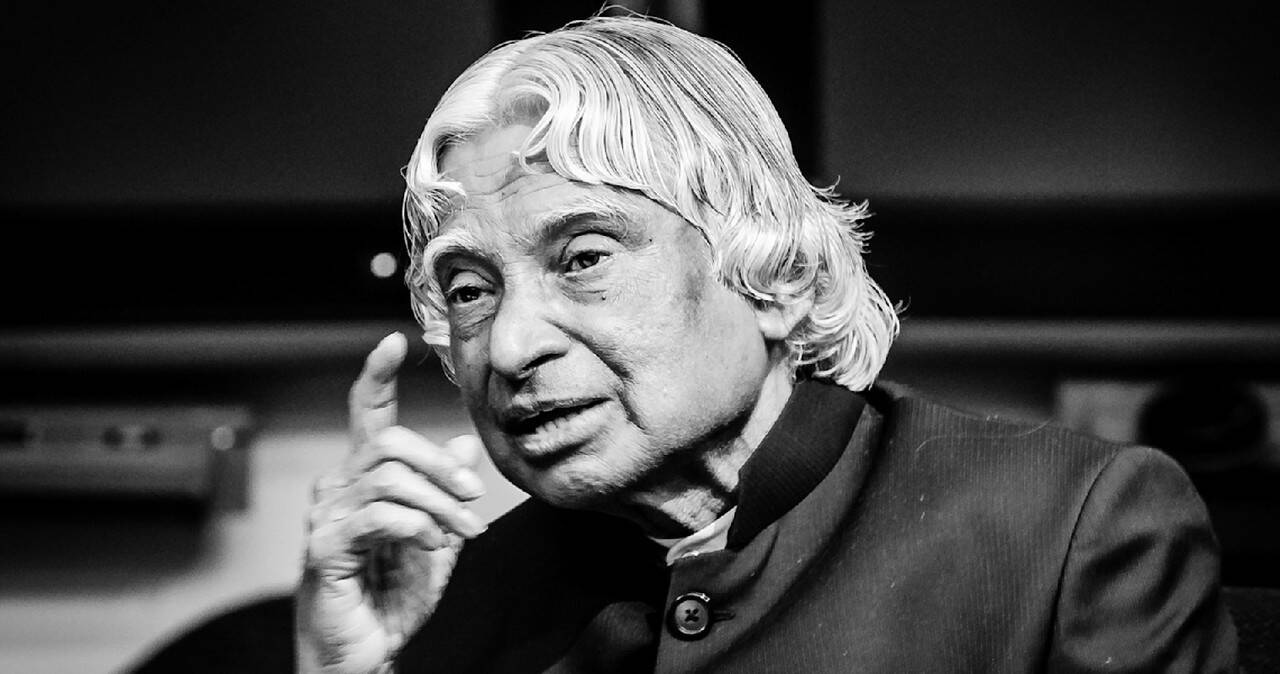
When people speak about Dr APJ Abdul Kalam, they often focus on the scientist who helped shape India’s missile programme or the President who inspired millions of young minds. But long before he became the “People’s President,” he was a young boy growing up in the temple town of Rameswaram, learning life lessons from two parents who had little wealth but an abundance of values. In his autobiography Wings of Fire and in later reflections, Kalam repeatedly credited his parents, Jainulabdeen and Ashiamma, for shaping the principles that guided his life. They did not leave behind a parenting manual or raise him through extraordinary privileges. Instead, they created an environment defined by simplicity, discipline, generosity and respect for others. Those lessons stayed with Kalam long after he left home. Here are some of the parenting values that stood out.
They taught him that character mattered more than comfort
3 Jul 2026 | 12:38
How do you teach children about money and financial responsibility?
Kalam was born in 1931 into a modest Tamil Muslim family in Rameswaram. His father, Jainulabdeen, owned boats that ferried pilgrims while also serving as an imam at the local mosque. The family lived simply and had limited financial resources after earlier generations had lost much of their wealth.
In Wings of Fire, Kalam described his father as a man with little formal education but immense wisdom, honesty and self-discipline. Rather than focusing on material success, Jainulabdeen taught his children to value integrity, humility and inner strength. These lessons would later become central themes in Kalam’s speeches and books.
Hard work was expected, not rewarded with praise
Kalam’s childhood was far from comfortable. To help support the family, he distributed newspapers before going to school. The work demanded discipline and responsibility at an age when many children would simply be attending classes.There is little evidence that his parents treated this responsibility as extraordinary. Instead, hard work was presented as a normal part of life. Kalam would later write that success comes through sustained effort rather than shortcuts, an idea that echoed the work ethic he experienced at home.
His mother taught generosity through everyday actions
Kalam often wrote with deep affection about his mother, Ashiamma. Although the family was not wealthy, she was known for feeding guests, neighbours and pilgrims who came to their home.
In one of his recollections, Kalam remarked that more outsiders often ate in their house than members of the family themselves. Hospitality was not reserved for special occasions. It was woven into everyday life. Watching his mother share food despite limited means taught Kalam that generosity is measured by willingness to give, not by how much a person owns.
They raised him without a sense of entitlement
Kalam grew up without luxury, but he never described his childhood with bitterness. Instead, he often reflected on it with gratitude. His parents encouraged education, honesty and self-reliance rather than expecting life to become easier because of circumstances. There is no evidence in Kalam’s writings that he was made to feel entitled to success or special treatment. Instead, he believed opportunities had to be earned through learning and perseverance.That mindset remained visible throughout his public life, even after becoming President of India, when he became known for his simple lifestyle and accessibility.
Respect for every faith began at home
One of the defining features of Kalam’s childhood was growing up in a deeply diverse community. Although his father served as an imam, he maintained close friendships with leaders of other faiths. Kalam recalled evenings when his father, the chief priest of the Ramanathaswamy Temple and a Christian priest would meet to discuss community issues over tea.Kalam also studied alongside Hindu classmates and often spoke about the influence of teachers and friends from different religious backgrounds. This environment helped shape his lifelong belief that religion should unite rather than divide people.
They encouraged values more than ambition
There is no record of Kalam’s parents pushing him towards becoming a scientist, engineer or President. Their focus appears to have been on developing qualities that would serve him regardless of his career.Discipline, honesty, compassion, humility and respect were repeatedly reinforced through daily life rather than formal lessons. Later in life, Kalam often told students that success without values has little meaning, a philosophy that reflected the home in which he grew up.
Simplicity remained a lifelong habit
Perhaps the strongest evidence of his parents’ influence can be found in Kalam’s own lifestyle. Despite receiving India’s highest civilian honour, serving as President and becoming one of the country’s most admired public figures, he remained known for living simply. He owned relatively few personal possessions, devoted much of his time to teaching and preferred interacting with students over political ceremony. Many who worked with him remarked that he carried the same humility into public office that had shaped his childhood.
The legacy of two ordinary parents
Dr APJ Abdul Kalam’s story is often celebrated as one of extraordinary achievement, but its roots lie in an ordinary household where values came before status. His parents did not have wealth to pass on or influential connections to open doors. What they gave him instead was far more enduring: the discipline to work hard, the humility to stay grounded, the generosity to help others and the conviction that respect and integrity matter more than personal success.Decades later, those lessons continued to define the man millions came to admire. Kalam’s achievements belonged to science, education and public service, but the principles behind them were first learned at home, from parents who believed that the greatest inheritance a child can receive is not privilege, but character.