
New Delhi: The end was emblematic of the entire campaign. Anish Bhanwala, India’s lone entry in men’s 25m pistol event, nailed only 11 of 15 by the end of the third series in the final, finishing seventh out of eight shooters, bringing the curtain down on an underwhelming run.
With 15 medals (3 gold, 8 silver, 4 bronze) out of India’s overall tally of 65 (10, 23, 32) as of Thursday, shooting has been India’s second best discipline in Japan, behind athletics’ 24 (1-9-14). Shooting and athletics are the only sports that have delivered a double-digit medal haul with Indian shooters finishing only behind leaders China.
With 27 medals (16, 7, 4), China again were the best shooting nation, a record they have held since 1978 Bangkok.
Viewed in isolation, India’s numbers do not scream emergency, but it is pertinent to put the 15 medals in perspective, especially considering that underperformance in shooting has proved critical to India’s below-par returns overall.
“We are often expected to deliver first day, first show, and frankly, we take pride in it. How shooters fare generally dictates how the entire contingent will fare,” then rifle coach Suma Shirur had told this correspondent three years ago in Hangzhou where Indian shooters delivered their best ever result, winning 22 medals, including 7 gold. China won 29 shooting medals to finish on top but the gap seemed to be narrowing.
The early impetus given by shooters propelled India to a historic 106 medals. India will fall way short of that number this time.
The biggest disappointment has been the rifle and pistol teams, despite being formed after a rigorous process of trials where many youngsters pipped established names. That included 10m air pistol world champion Samrat Rana, world championships medallist Anjum Moudgil, Paris Olympics medallist Swapnil Kusale, and Hangzhou champions Sift Kaur Samra (50m 3 Positions) and Palak Gulia (10m air pistol).
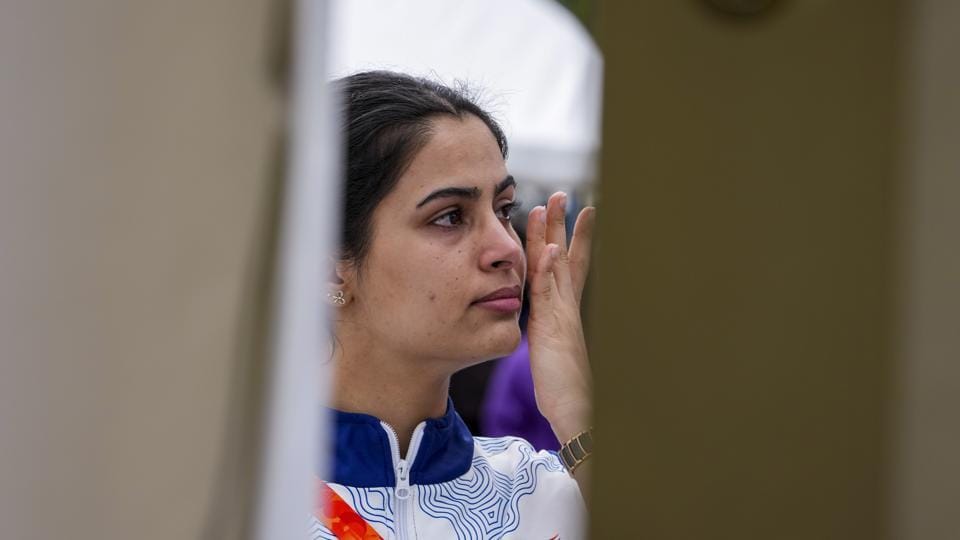
Paris Olympics double medallist Manu Bhaker, competing in her third Asiad, failed to win a medal. Suruchi Singh, the breakout star of Indian shooting, didn’t medal in an individual event but only had a mixed team bronze with Kamaljeet Singh.
India had only five individual medals—two in men’s 10m air rifle (Himanshu Singh’s silver and Rudrankksh Patil’s bronze), one in women’s 10m air rifle (Elavanil Valarivan’s silver), one in women’s 25m pistol (Esha Singh), and the solitary gold from Neeru Dhanda in women’s trap.
“It’s not the performance we were expecting. We had high hopes, but it is what it is. We will go back to the drawing board and analyse the results,” national coach Samaresh Jung said.
After the Paris Olympics, the shooters were divided into two groups, with one consisting of elite prospects. NRAI also introduced a Moving Average Method that took into account performances from the previous year and said the latest five scores would be considered with the average of the best four forming the final score. The method had its detractors, but the shooters came around.
“I don’t think selection policy is to be blamed here… The responsibility rests with shooters, coaches and the support staff,” national rifle high-performance coach Manoj Kumar said. “Last time, we had Aishwary Pratap Singh Tomar, who had won medals in both his events (rifle 10m and 50m 3P) but he couldn’t deliver this time. These things happen. The margins in rifle shooting are extremely small,” he said.
That said, once again shooters’ handling of nerves under pressure came under the scanner. In the women’s 10m air rifle final for instance, Elavenil conceded her lead to finish second as her opponent shot a Games record to snatch gold.
“There is definitely the need for shooters to step up in the finals. The gold was there for the taking for both Elaveil and Rudrankksh (in men’s 10m air rifle final) and both lost to nerves,” former rifle shooter Joydeep Karmakar said.
Ronak Pandit, the 25m pistol national coach, agreed. “Look, all the coaches and athletes worked extremely hard. We did countless simulations and match scenarios, trained for every eventuality but you can’t really dictate what a shooter does in the final. Esha could do it, but the more experienced ones couldn’t,” he said, referring Rahi Sarnobat and Manu Bhaker.
“Rahi and Manu are accomplished shooters and will come back stronger, but there’s also a need for a dispassionate assessment. We’ll have a debrief once we are in India. These things are common in our sport, shooting is one of the most inconsistent sports,” Pandit said. Unless, of course, if you are a Chinese, especially Sheng Lihao, who won three gold.
“There’s a lot to learn from him. He is an anomaly; no one has been able to figure out how he does it so well, and so consistently. I have tried to pick his brains, but he’s quite inscrutable,” Rudrankksh said admiringly of Lihao.