
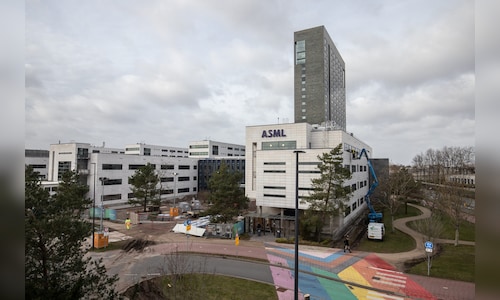
Net sales jumped to €8.8 billion ($10.4 billion) as opposed to the anticipated €8.5 billion. Net profit rose to €2.8 billion as opposed to the anticipated €2.5 billion. Before this, the business projected that its first-quarter sales would range from €8.2 billion to €8.9 billion.
In contrast to a prior estimate of €34 billion to €39 billion, the Dutch company stated that it now projects net revenues for 2026 to be between €36 billion and €40 billion.
Taiwan Semiconductor Manufacturing Co. (TSMC), one of its largest clients, announced record first-quarter sales last week as the market for AI chips keeps growing.
Memory chip prices have reached previously unheard-of heights due to a persistent shortage of the component. Data centres and AI systems depend heavily on memory. Consequently, Samsung and SK Hynix, two South Korean companies, intend to increase production capacity, necessitating ASML equipment.
Also Read: WPI inflation rises to 3.8% in March on fuel, primary articles; core pressures build
In the first quarter, memory accounted for 51% of ASML’s net sales of its new tools, up from 30% in the prior quarter. Taiwanese consumers made up 23% of sales, while South Korean consumers made up 45%.
However, ASML is dealing with its own difficulties, such as difficulties in China, where export regulations prevent it from shipping its most cutting-edge machinery. A bipartisan group of US lawmakers filed a bill earlier this month that would even prohibit the shipment of ASML’s less sophisticated machines to China. The legislative process in the United States still needs to approve that statute.
In the first quarter, system sales to China decreased to 19% of total sales, down from 36% in the December quarter.