
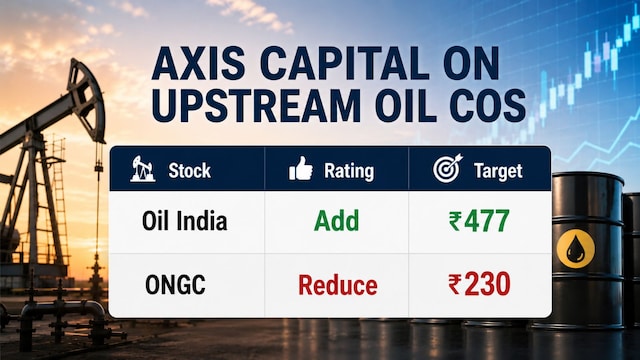
Speaking to CNBC-TV18, Amit Murarka, Executive Director at Axis Capital, said the brokerage sees the best opportunities in the distribution segment, where valuations have turned attractive after a prolonged period of weakness.
“The city gas space is our absolute top pick in the oil and gas space right now,” Murarka said.
Among upstream companies, Axis Capital prefers Oil India over ONGC. The brokerage expects Oil India to deliver annual production growth of 3-3.5% CAGR, helped by infrastructure development in the North-East and expansion of its subsidiary Numaligarh Refinery’s capacity.
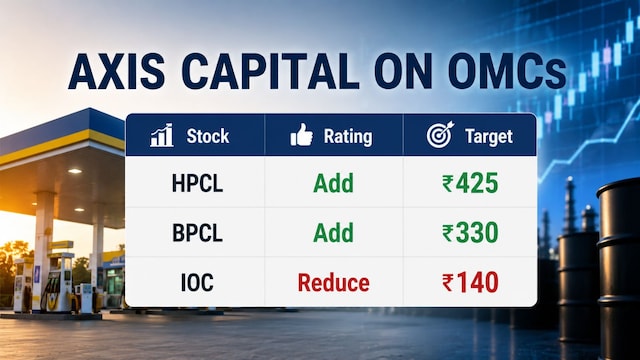
In the downstream segment, Axis Capital favours HPCL and BPCL over Indian Oil Corporation. The brokerage believes lower crude oil prices should support marketing margins, with HPCL likely to benefit the most because of its higher marketing volumes.
On gas utilities, the brokerage remains positive on both GAIL and Petronet LNG. However, Murarka believes Petronet LNG
could see a sharper recovery as LNG supplies normalise and volumes improve following the easing of geopolitical tensions.
The strongest conviction, however, lies in city gas distribution companies. Axis Capital believes several stocks in the segment have been overlooked amid concerns over higher gas costs and supply disruptions.
Axis Capital ranks Gujarat Gas as its top pick among city gas distributors, followed by Mahanagar Gas and Indraprastha Gas.
According to the brokerage, Gujarat Gas stands to benefit from a recovery in industrial demand from Morbi, improved LNG availability and synergies from the merger of its LNG trading operations. These factors are expected to support both volume growth and margins.
Axis Capital expects crude oil prices to average $85 per barrel in FY27 and gradually decline to $75 and then $70, as improving supply and slower demand growth driven by electrification and ESG trends weigh on the long-term outlook. The brokerage views the recent rise in oil prices as a temporary disruption.
The brokerage also noted that investors continue to favour distribution businesses such as oil marketing companies and city gas firms, though policy changes and regulatory uncertainty remain key concerns for the sector.
For the entire discussion, watch the accompanying video
