
A child who is always quiet, obedient, and careful may seem like every parent’s dream. But childhood was never meant to be perfectly controlled. From Krishna stealing butter to children today turning the house upside down in the middle of play, mischief has always been part of growing up. The real question is not whether children are mischievous, but whether parents know how to guide that energy without crushing it. In Hindu tradition, Lord Krishna is lovingly remembered as Makhan Chor – the butter thief. Stories of young Krishna stealing butter, teasing the gopis, playing pranks, and getting into trouble are among the most beloved tales of his childhood.Yet these stories are not remembered because Krishna was a perfectly obedient child. They are remembered because they capture something deeply human about childhood curiosity, playfulness, spontaneity, and the desire to explore the world. Children naturally test boundaries. They ask endless questions, experiment with things they have been told not to touch, make silly jokes, and sometimes do things simply because they want to see what happens next. That does not automatically make them badly behaved.
28 Jul 2026 | 16:22
How do you teach children about money and financial responsibility?
Mischief can be a sign of curiosity

A mischievous child is often an observant child. They notice things, experiment with possibilities, and look for reactions. A child who hides a parent’s phone, creates an unexpected drawing on the wall or invents a game with household objects may simply be exploring cause and effect. Of course, this does not mean every mischievous behaviour should be encouraged. Children still need to understand boundaries. But there is a difference between guiding behaviour and constantly suppressing personality. When every little act is met with anger, children may slowly learn that curiosity itself is something they should hide.
Children need boundaries, not fear
Allowing a child to be playful does not mean allowing them to do whatever they want. Parents can clearly explain what is acceptable and what is not. Breaking a toy deliberately, hurting another child, or damaging something valuable should have consequences. But the response does not always need to be harsh. Instead of saying, “You are such a naughty child,” parents can address the specific action: “That was not okay because someone could have been hurt.” This small change matters. The first statement labels the child. The second teaches the child.
A playful child is not necessarily a disrespectful child

In many families, children are expected to be quiet around adults, never interrupt conversations, and follow instructions without questioning them. While respect and discipline are important, children also need opportunities to laugh, joke, imagine, and express themselves. A child who makes funny faces, tells silly stories, or plays harmless pranks is not necessarily becoming disrespectful. Sometimes, what adults call “naughtiness” is simply a child being comfortable enough to be themselves. The goal should be to teach children when and where certain behaviour is appropriate rather than making them feel guilty for having a playful personality.
What Krishna’s childhood stories can teach parents
The stories of young Krishna offer an interesting reminder that childhood has room for wonder and mischief. His playful nature is not remembered as a flaw that needed to be erased. Instead, it became part of the charm of his childhood stories. For modern parents, the lesson is not to romanticise every form of misbehaviour. It is to look beyond the immediate inconvenience and ask: What is my child trying to express through this behaviour? Are they bored? Curious? Seeking attention? Trying to connect? Testing independence? Or simply having fun? Understanding the reason can help parents respond more effectively.
Let children have a childhood
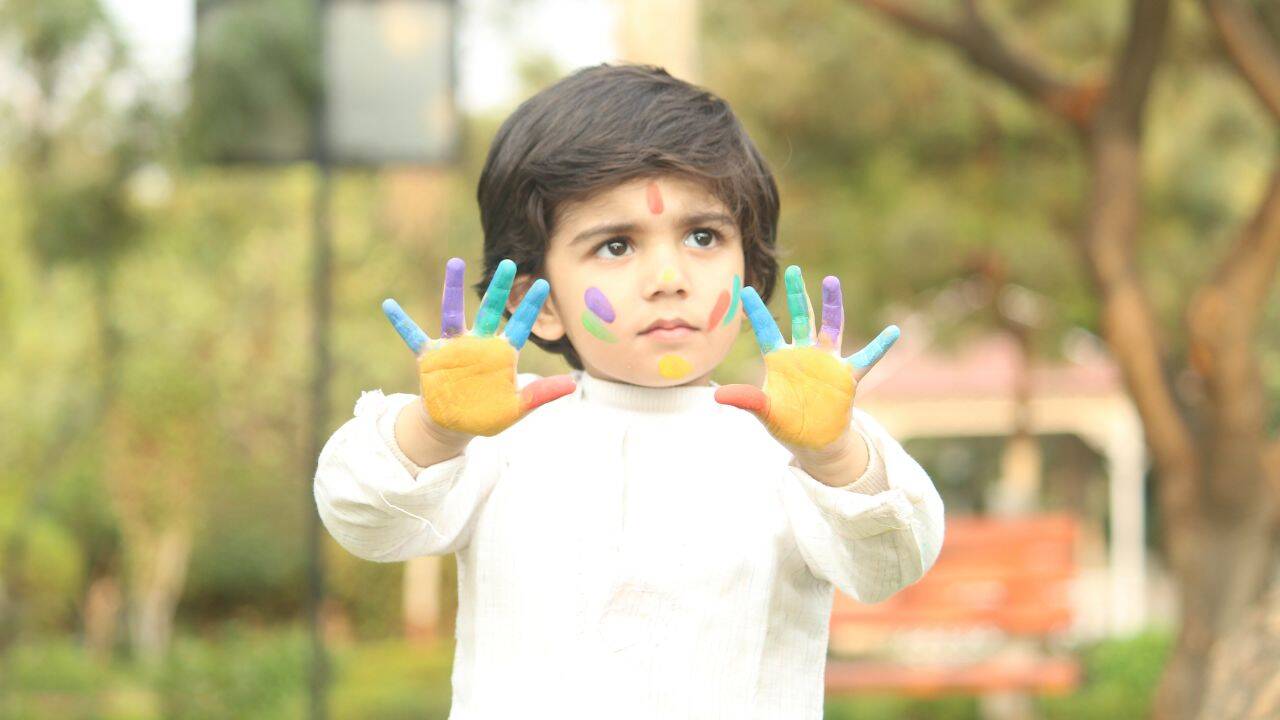
Today’s children already face enormous pressure to perform, achieve, and behave perfectly. They are often expected to excel academically, participate in activities, follow routines, and meet adult expectations from an early age. In such an environment, playfulness becomes even more valuable. Children need spaces where they can laugh loudly, make harmless mistakes, invent imaginary worlds, and occasionally be a little silly. They will eventually grow up. The mischievous games, messy rooms, and ridiculous jokes of childhood will not last forever. Perhaps, instead of trying to make children perfectly obedient, parents can focus on raising children who understand kindness, responsibility, and boundaries while still retaining their curiosity and joy. After all, a little mischief is not necessarily something to fear. Sometimes, it is simply childhood asking for permission to be childhood.