
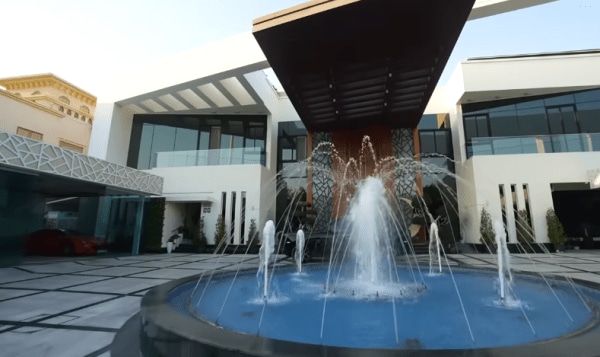
Rizwan Sajan, the founder of Danube Group, came into the spotlight after his family’s appearance on the Netflix show Dubai Bling. With an estimated reported net worth of nearly Rs 20,000 crore, Rizwan’s lavish 40,000-square-foot Dubai mansion — complete with a private pool, towering fountains, and girls dressed as mermaids — offered a glimpse into a lifestyle few get to witness. But behind the extraordinary wealth and luxury, lies a surprisingly humble start. The drive to build this massive empire began with something as simple as wanting to afford a samosa in his school canteen.
Born into a lower-middle-class family in Mumbai’s Ghatkopar area, Rizwan grew up understanding the value of every rupee. His father could barely afford his convent school fees, leaving him with only Rs 15 per month as pocket money. Speaking about those days, Rizwan once recalled how watching his friends enjoy snacks in the school canteen became the trigger that changed his life forever.
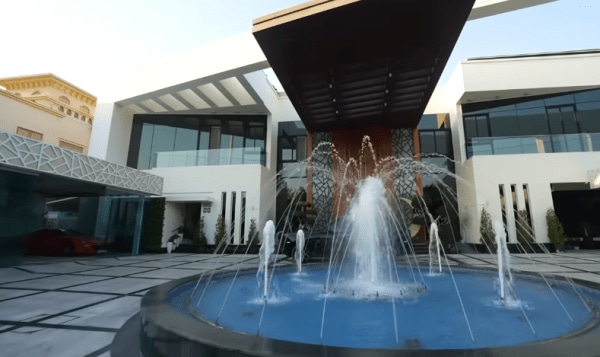 Entrance. (Photo: Curly Tales/YouTube)
“I used to finish my Rs 15 pocket money in one week. It was embarrassing when my friends would eat and I couldn’t. At 14, I started my first business just so I could afford samosas in the canteen,” he shared with Curly Tales.
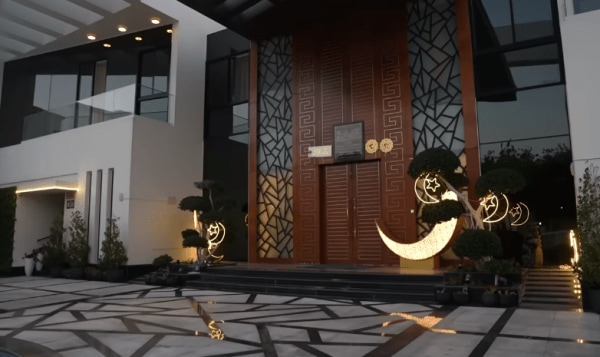 Main door. (Photo: Curly Tales/YouTube)
Armed with Rs 1,000 borrowed from his father, Rizwan bought school books from a wholesale market in Mumbai’s Masjid Bunder and resold them during the school season. Expecting to make just Rs 75, he ended up earning Rs 200 in profit. For the young boy who only wanted enough money to eat samosas, this felt like becoming rich overnight. “I became the rich guy and started feeding samosas to my friends,” he recalled with a smile.
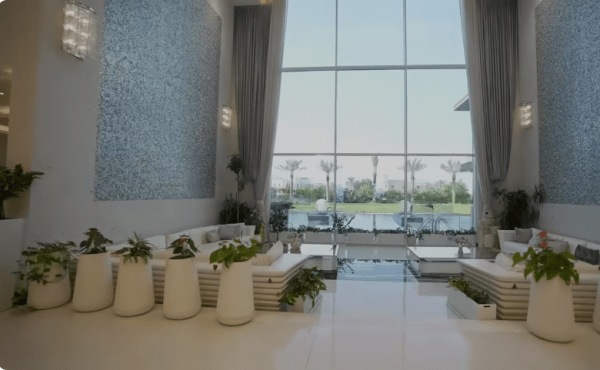 Sitting area. (Photo: Curly Tales/YouTube)
New season, new business
That first taste of earning changed everything. One season he sold books. The next, he sold rakhis during Raksha Bandhan. During Diwali, he sold crackers. Later, he even delivered milk for a salary of Rs 150 a month — until he lost the job after accidentally spilling the milk cans. But failure never frightened him.
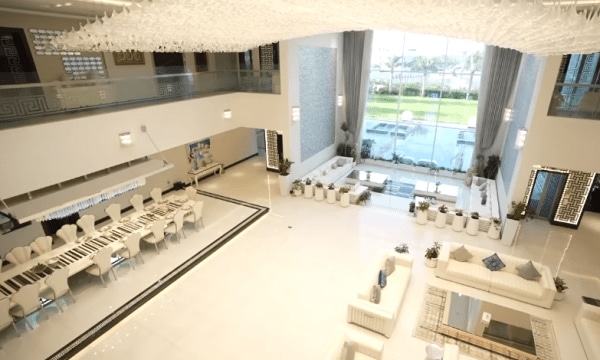 Living room. (Photo: Curly Tales/YouTube)
At just 18, after his father died, Rizwan moved to Kuwait for work. The Rs 18,000 monthly salary he received there felt like a jackpot for someone who had grown up counting every rupee. Yet, life tested him again during the Gulf War when Kuwait was invaded. Communication lines shut down, and terrified Indians desperately searched for ways to contact their families back home.
Rizwan found a new business during Gulf war
Where most saw panic, Rizwan saw possibility. If he had to travel to Iraq to send a telegram to his own family, why not do it for others too?
Story continues below this ad
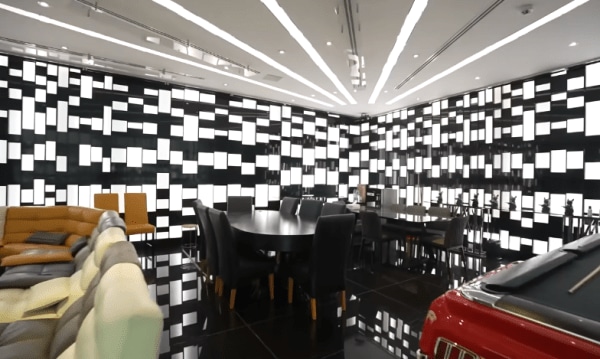 Gaming zone. (Photo: Farah Khan/YouTube)
Charging people five dinars per telegram, he collected hundreds of messages and risked travelling through military checkpoints during wartime to deliver them. The exchange rate difference between Kuwaiti and Iraqi dinars helped him make significant profits. “It was risky, but I saw a business opportunity,” he said.
 Home theater. (Photo: Farah Khan/YouTube)
Years later, when Rizwan moved to Dubai to start his own business, he had only 100,000 dirhams (around Rs 25 lakh INR in May 2026) in savings. He carefully divided every penny — giving 30,000 dirhams (around Rs 7.75 lakh INR in May 2026) to his wife to manage household expenses for six months, investing in a small office, purchasing a car on EMI, securing trade licences, and keeping enough aside for three months of salaries. He gave himself just three months to survive.
In the first month, he earned 5,000 dirhams (Rs 1.29 lakh). In the second, 10,000 (Rs 2.5 lakh). In the third, 20,000 (Rs 5.16 lakh). That was the moment he realised his business had begun to take shape. What makes Rizwan Sajan’s journey remarkable is not just the scale of wealth he created, but the mindset behind it. Even today, despite unimaginable success, he insists that money was never his true motivation.
Story continues below this ad
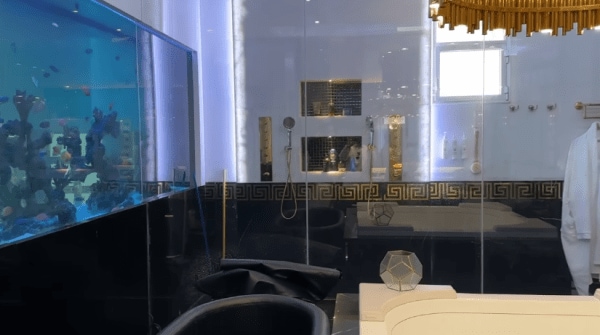 Adel’s bathroom. (Photo: Farah Khan/YouTube)
“Work motivates me. Money is just a byproduct,” he says. “I was born in a slum. Then we moved into a chawl. Today, I live in a 40,000-square-foot house. But even if you leave me in the middle of a jungle in Africa with nothing, I know I can build myself again.”
Inside Rizwan Sajan’s 40000 sq ft house
When Farah Khan visited Rizwan Sajan and his family’s lavish Dubai residence, she was left stunned by the sheer scale and luxury of the mansion. The grand entry itself featured a massive fountain, setting the tone for the opulence inside. One of the standout elements in the house was an oversized decorative book that showcased poetry written by Sana.
Speaking about the home, Rizwan shared, “We bought the plot, designed it, and built it ourselves.” He proudly added, “Most of the work and detailing in the house has been done by Adil and Sana.”
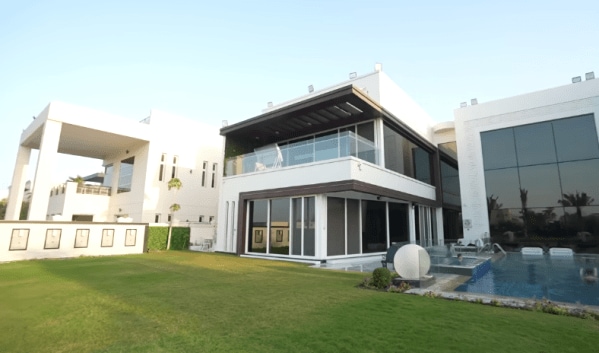 Pool area. (Photo: Curly Tales/YouTube)
The residence also features a giant custom-made aquarium and an elegant white piano placed in the living room. “The children play it,” Rizwan said. During the tour, Rizwan also revealed that Adil and Sana had tied the knot on a luxury cruise. “We had chartered the entire cruise,” he said. Reacting to this, Farah jokingly asked, “Did the Ambanis copy you?” Laughing, Rizwan replied, “I don’t know if they copied us, but we were the first ones to have a wedding on a cruise.”
Story continues below this ad
The house includes a dedicated private theatre with seating for nearly 20 people, giving it the feel of a premium cinema hall. Another room has been designed like a casino lounge where Adil and his friends gather to play poker, enjoy games, and host parties. Sana’s room is equally extravagant, featuring a massive television screen.
Even the washrooms reflect the family’s luxurious taste. One bathroom includes a built-in aquarium, a two-metre rain shower, and a Jacuzzi-style ice bath. Attached to the washroom is a sprawling walk-in wardrobe lined with Sana’s collection of designer handbags, luxury outfits, and shoes.
The family has also created a special playroom for their children. The spacious room includes tiny beds, carpets, toys, and a ceiling designed to resemble a glowing galaxy. Apart from that, the mansion houses a spa, family lounge, and even in-house masseuses for relaxation and comfort. Impressed by the scale of the property, Farah remarked, “It feels like you all have built a hotel.”
And much like the viral “food lift” once discussed by Tanya Mittal inside the Bigg Boss house, the Danube family’s mansion also has one. Technically known as a “dumb waiter,” the mini elevator is used to transport food and items between floors inside the house.