
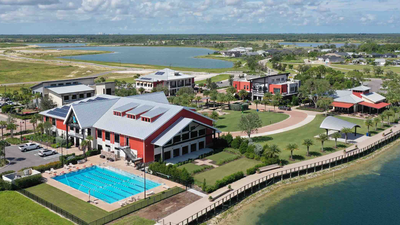
In a quiet corner of Florida, a town is redefining modern living. Babcock Ranch is a fully functioning community where clean energy is built into everyday life. Powered by a vast network of solar panels and planned around sustainability, the town is designed to generate more electricity than it consumes under normal conditions. At a time when cities are facing rising energy demand and climate risks, Babcock Ranch presents a working model of how future urban spaces could operate.
Florida town where sunlight powers everyday life
Unlike most cities that retrofit sustainability into existing systems, Babcock Ranch was planned from scratch. Developed by Kitson & Partners in partnership with Florida Power & Light, the project integrates energy, environment and urban planning into one framework.The town spans about 17,000 acres, with a large share of land preserved as natural habitat. This approach supports biodiversity while reducing environmental impact. Sustainability is built into the structure of the town rather than added later.At the centre of Babcock Ranch is a large solar installation operated by Florida Power & Light. Spread across hundreds of acres, it includes hundreds of thousands of photovoltaic panels that convert sunlight into electricity.The system has a capacity of about 150 megawatts, enough to meet the town’s needs and supply surplus energy to the wider grid. This allows the community to operate as an energy-positive system during many periods.The design relies on a centralised solar field connected to a smart grid, which improves efficiency and ensures stable distribution of power.
How the system works
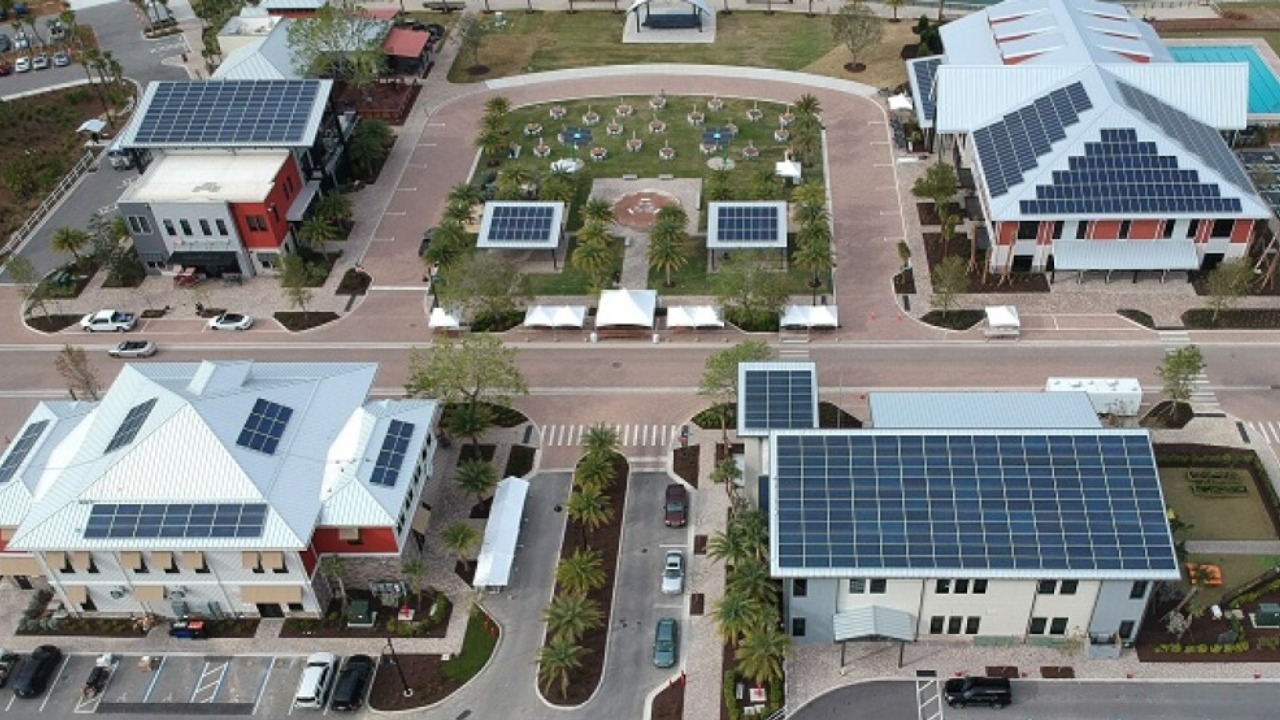
During the day, solar panels generate electricity that feeds into the local grid. Homes, schools and businesses draw power as needed. Surplus electricity is exported, while demand at night or during cloudy conditions is balanced through grid connectivity and limited battery support.Smart meters and monitoring systems allow residents to track energy use. This encourages efficient consumption and supports better energy management across the community.Reducing demand is as important as generating energy. Homes in Babcock Ranch are built to higher efficiency standards, with improved insulation, reflective materials and energy-saving appliances.The town layout supports walking and cycling, while infrastructure for electric vehicles is widely available. Public spaces also incorporate solar-powered features. These measures reduce overall energy use and complement the solar generation system.
Nature as infrastructure
Natural systems play a central role in the town’s design. Large areas of wetlands and green space have been preserved to manage water and maintain ecological balance.These areas help absorb excess rainwater, reduce flood risk and support local wildlife. The approach reduces reliance on purely engineered drainage systems and creates a more balanced environment.Babcock Ranch drew attention after Hurricane Ian affected large parts of Florida. While surrounding areas experienced widespread outages, the town remained operational.Underground power lines reduced exposure to storm damage. The energy system maintained stability, and the preserved landscape helped manage flooding. The town’s design proved effective under real conditions.
Rethinking urban living
Babcock Ranch shows that sustainability can be integrated into everyday life without compromising comfort or reliability. Energy systems, infrastructure and environmental planning work together as a single system.This integrated approach improves efficiency and prepares the town for future challenges such as climate change and rising energy demand.As cities look for ways to reduce emissions and improve resilience, Babcock Ranch provides a practical example. It demonstrates that large-scale renewable energy systems can support entire communities when combined with thoughtful planning.The town offers a clear direction for future development, where clean energy, efficient design and environmental balance are standard features rather than exceptions.