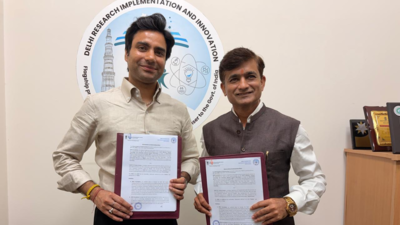
Access to timely medical diagnosis and reliable agricultural data remains one of India’s most persistent rural development challenges. This delay has measurable consequences. Conditions such as diabetes, anaemia, thyroid disorders and hypertension are frequently detected late in rural settings, contributing to higher complication rates and greater long-term healthcare costs. Government programmes, including the National Rural Health Mission and the Ayushman Bharat Health and Wellness Centres, have expanded the footprint of primary care over the past decade, but infrastructure gaps, workforce shortages and weak referral linkages continue to limit how quickly patients can be screened and directed to appropriate treatment.Artificial intelligence is increasingly positioned as a tool to close these gaps at scale. In healthcare, AI-assisted diagnostic tools are being explored as a way to bring primary screening closer to patients without requiring full laboratory infrastructure, a particularly relevant approach in regions where pathologists, radiologists and trained technicians remain scarce. In agriculture, AI-based advisory systems are beginning to translate raw soil-test data into specific, actionable recommendations that smallholder farmers can act on through mobile applications, building on the foundation laid by programmes like the Soil Health Card Scheme.These efforts also intersect with a broader national push to identify and develop human capital. As digital access expands into smaller towns and villages, there is growing interest in early-stage tools, including AI-driven assessments, that can help students understand their aptitudes and guide them toward suitable educational and career paths, an area that has historically received less attention in rural outreach than healthcare or agriculture.Delivering on this potential, however, depends on more than the underlying technology. It requires sustained collaboration between research institutions, government bodies and private innovators to move solutions from pilot studies to nationwide deployment, a process often referred to as a “lab to market” pathway. Public institutions such as the Delhi Research Implementation and Innovation (DRIIV) cluster, operating under the Office of the Principal Scientific Adviser to the Government of India, exist specifically to facilitate this kind of translation, connecting academic and industry research with the validation and piloting needed for real-world rollout.One recent example of this approach is a Memorandum of Understanding signed between DRIIV and AIVOT AI, a technology company working on non-invasive diagnostic tools and soil-data platforms. Under the agreement, the two organisations plan to pilot AI-based primary health screening in villages lacking laboratory infrastructure, alongside the wider rollout of a soil-advisory platform for farmers and an assessment tool intended to help students identify career-relevant strengths. The collaboration is framed as one contribution toward the government’s broader Viksit Bharat goals, which emphasise improving the ease of living through scalable science and technology solutions.“Bridging the gap between research and real-world implementation requires partnerships that bring technology, validation and on-ground deployment together,” a DRIIV representative noted, describing the rationale behind such collaborations.Whether AI-led tools of this kind can meaningfully bridge India’s rural healthcare and agricultural gaps will depend on their execution, specifically how reliably these technologies perform outside controlled environments and how effectively they reach the communities they are intended to serve. But as government, academic and industry stakeholders continue to test this “Triple-Helix” model of collaboration, initiatives like this one offer an early indication of how India’s rural infrastructure challenges might be addressed at scale in the years ahead.Disclaimer: The above content is non-editorial, and TIL hereby disclaims any and all warranties, expressed or implied, relating to it, and does not guarantee, vouch for or necessarily endorse any of the content.