Shunmugam suggests a special session exclusively for derivatives expiry as one possible solution, allowing derivative market participants more time to hedge their underlying positions. He says the pressure is particularly coming from thin order books and monthly settlements that can result in delivery.
This is an edited transcript of the interview.
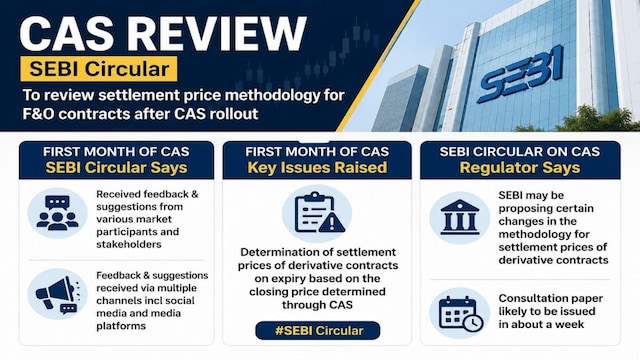
Q: SEBI is set to review the methodology for determining the settlement price of derivative contracts following the rollout of the closing auction session. This came in yesterday evening, and we’ve discussed it quite a bit, with some heated debates, since it was introduced on August 3. Now that SEBI is set to review it, what do you think is the most likely solution it will propose? Could you outline two or three possible solutions and, in your view, what would be the best way to address the issue?
A: In my opinion, I think there’s not a signal that closing auction session (CAS) is going to end here. So, CAS is going to remain there and they are going to strengthen the CAS, actually. That’s my opinion here, actually.
A few things which I can actually think about is, the CAS is based on the reference price, which is derived between 3:00 pm and 3:15 pm, and there is a band of plus or minus 3%, actually.
So, having said that, there may be slight tweaking. If 3% is more and 3% is creating more volatility, should we look at less than 2%, actually? So basically, you are talking about giving the market a 3% over the average that was discovered just about five minutes ago.
So that’s something SEBI, I speculate, they may talk about it. So that’s number one.
And number two, if you look at the mechanism as such, actually, people have been sitting aside and watching it rather than jumping into the well and participating in the market, actually.
Something like an imbalance order, which will go and sit there with the limit and that will be permitted, maybe in the last three-four minutes, when you don’t know when the market is going to shut, is something that I would expect that might be something they may propose in the consultation paper.
And in any case, this is a consultation paper. And what I would want is, like what they did with the change that happened in the CAS, sitting beside the market and watching what is going on with the CAS session, jump into this discussion and constructively contribute to the discussion rather than think about your own objectives.
Q: So, CAS is here to stay, what you said is, this is not a signal that CAS is going away. I don’t know if it means the same thing that this is a signal that CAS is here to stay.
A: CAS is going to stay here.
Q: Nobody said the problem was CAS. The problem was linking it to the expiry of Futures and Options (F&O) contracts on the cash price, basis the cash price. Specifically, what is the suggestion to solve that problem? One is a ban, but specifically to delink it. What’s the suggestion? What are you saying?
A: I don’t think they might delink CAS from that. So, one solution could be maybe having a special session for the derivatives expiry, like the UK has a special session for a derivatives expiry.
The problem has been in the monthly contracts and the weekly contracts, where one of the platforms has a very thin book.
So, if we have to then keep the CAS and still use the CAS too, then we need to strengthen the CAS mechanism.
Q: I’m just pressing you again. The first part, what you said, which is have a special session. Can you spell it out exactly what you mean by that? Like, do it when? Just the specifics of it will be helpful.
A: It is a special session exclusively for the derivatives expiry, actually. Those whoever have the position, they can come and participate in that particular special session.
And Britain has its market closed when this particular session is on. But I would suggest you can have the continuous market going on at the same time you have a special session, which can give the derivative market players for some time, some sort of a leeway to how to hedge their underlying positions and things like that. That’s number one.
And second, the derivatives, which is the quarterly derivatives in S&P 500, which go and settle on the special opening call auction that happens in the Nasdaq. So, having said that, that’s been done, you know, from the beginning when this contract had started becoming more active.
So, I mean, all of a sudden, moving a contract in India to an opening auction will also create a little bit of a problem as well.
Q: Special session for derivative contracts is what you said, which means the contracts expiring that day, you expire those only for those, right?
A: Yeah.
Q: At what? At 3:15?
A: No, 3:15 pm is going to be the close, which is for the passives, and if we want to separate the passives from the actives, 3:15 is our passives in the cash market from the derivative players.
Then, I would say that somewhere before the CAS, let’s say around 2:00, close the market, and discover the settlement price for the derivatives, and then make the continuous market go and operate. And then have a session for this one.
Watch the full conversation here

So, the pressure is coming in not from the cash-settled markets, but from the thin book that we have. And the pressure is also because of the monthly settlements, which have to end up in delivery.
Catch all the latest updates from the stock market here