NASA’s Webb telescope captured the Black Eye Galaxy in unprecedented detail; its opposing gas streams reveal a violent cosmic past

At first glance, Messier 64 looks like a classic spiral galaxy. Its bright centre is wrapped in sweeping arms, while a broad, dark band of dust cuts across one side of its nucleus, giving it the distinctive appearance that earned it the nickname Black Eye Galaxy. But beneath that familiar spiral shape lies something much…
Read More

An invasive insect first found in Pennsylvania in 2014 spread across 18 US states; Canada has now confirmed its first spotted lanternfly detection in Windsor, putting grape-growing regions on alert

Canada has recently confirmed the first detection of spotted lanternfly in the country. On September 15, 2026, the Canadian Food Inspection Agency (CFIA) confirmed the first detection of SLF in Canada in Windsor, Ontario. Movement restrictions have been placed to prevent the movement of regulated materials, including potentially infested plant materials. Moreover, surrounding areas are…

Read More

MIT’s robotic optics lab built a working laser cavity in 50 maneuvers and under 30 minutes; when researchers moved components, it realigned them automatically with micron-scale precision

Representative Image (AI-generated) A robot has assembled a working tabletop laser cavity in less than 30 minutes, handling the precise alignment usually done manually. Massachusetts Institute of Technology’s (MIT’s) researchers have developed a reconfigurable robotic optics laboratory that can pick up and position mirrors, lenses and other components, fine-tune them with micron-scale precision and even…

Read More

In 2025, California buried a gas pipeline 20 feet below Alameda Creek and removed its final 8-foot barrier; that same week, Chinook salmon reached this part of the watershed for the first time since the 1950s

Representative Image (AI-generated) A barrier that had blocked migratory fish for decades disappeared in California in 2025, and salmon soon followed the newly opened route. Crews relocated a Pacific Gas & Electric (PG&E) natural-gas pipeline and buried the new section about 20 feet below Alameda Creek near Sunol, then removed the concrete structure that had…

Read More

North America loses its monopoly on dinosaur fossils; fourteen tail vertebrae just turned up in Spain and experts have identified it as Diplodocus

Palaeontologists in Spain have discovered the first confirmed Diplodocus fossils outside of North America, marking the first-ever discovery outside the area. For 150 years, every confirmed bone of the animal came from one place, the Morrison Formation of western US. But recently, Sergio Sanchez Fenollosa and his colleagues found the same anatomical signature in a…

Read More

A new study found human activity adds more nitrogen than all natural sources combined in a quarter of the world’s coastal waterways, with the Gulf of Mexico among the major hotspots

Coastal waters that feed billions of people with food, jobs and recreation are being pushed past their limits by a surge of human-made nitrogen. A new studytitled ‘Coastal Nitrogen, Phosphorus, and Silicon Sources: Integrating Land, Sea, and Human Inputs’ led by Washington State University estimates that in about one in four of the planet’s coastal…

Read More
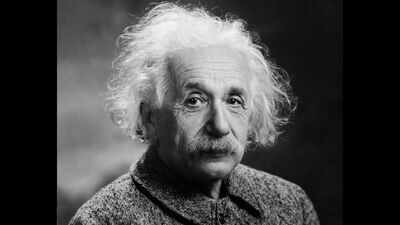
Quote of the Day by Albert Einstein: "Try not to become a man of success, but rather try to…" - powerful lesson about success and value |

Quote of the day by Albert Einstein: “Everything should be made as simple as possible, but not simpler” |

Quote of the day by Albert Einstein (Image: Wikipedia) In a world filled with complex ideas, endless information and constant demands for attention, simplicity has become a valuable skill. Albert Einstein’s famous quote, “Everything should be made as simple as possible, but not simpler,” reflects the importance of making things clear without losing their meaning….

Read More
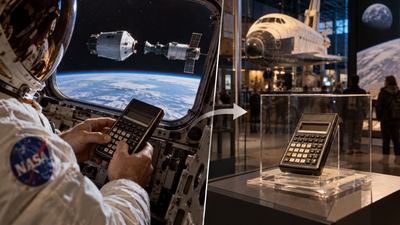
Nasa carried a pocket calculator on Apollo-Soyuz in 1975 as a backup for rendezvous calculations; 37 years later, it reached the Smithsonian |

Nasa carried a pocket calculator on Apollo-Soyuz in 1975 as a backup for rendezvous calculations; 37 years later, it reached the Smithsonian |

In 1975, Nasa sent an unusual piece of technology into orbit: a pocket-sized Hewlett-Packard HP-65 programmable calculator carried aboard the Apollo-Soyuz Test Project. It was not the spacecraft’s main computer, but a backup device programmed with rendezvous and guidance equations in case the Apollo Guidance Computer failed. The calculator travelled during a landmark mission that…

Read More
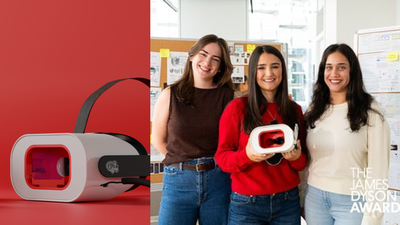
Three Harvard students built a low-cost headset that can screen athletes for concussions in about 60 seconds |

Three Harvard students built a low-cost headset that can screen athletes for concussions in about 60 seconds |

Radhika Saran, Cleo Pontone and Sophia DeVito, three students at Harvard University, have built Rumble Rims, a low-cost infrared eye-tracking headset that helps schools screen for possible concussions on the sideline in about 60 seconds. The system is designed to give coaches more objective information during sideline checks. The project has already earned the team…

Read More