Scientists solve mystery of black hole 'burps'; new study reveals when these cosmic objects launch powerful jets after eating stars |

Scientists solve mystery of black hole ‘burps’; new study reveals when these cosmic objects launch powerful jets after eating stars |

Image: European Space Agency When a star strays too close to a supermassive black hole, gravity can tear the star apart in what astronomers call a tidal disruption event. Some of the debris gets swallowed, while the rest can be blasted back out in powerful jets, sometimes months or years after the star is destroyed….
Read More
Scientists turned discarded fish scales into flexible biodegradable plastic film that breaks down in soil within 8 weeks |

Scientists turned discarded fish scales into flexible biodegradable plastic film that breaks down in soil within 8 weeks |

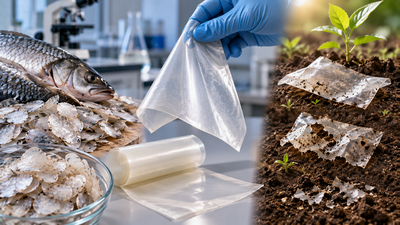
Scientists have turned discarded fish scales into a plastic-like material that can break down naturally in soil, Cyclo. Plas 2, the material is made from collagen fish scales and chitosan, creating a thin, flexible, translucent film. In tests, the material began breaking down after two weeks and biodegraded by the end of eight weeks. It…

Read More
Iberian lynx fell to just 62 mature animals in 2001; conservation has helped push its population above 2,000 |

Iberian lynx fell to just 62 mature animals in 2001; conservation has helped push its population above 2,000 |

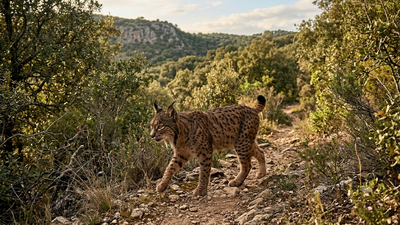
For much of the 20th century, the Iberian lynx was disappearing from the Spanish landscape. By 2001, only 62 mature animals were recorded, leaving one of Europe’s most distinctive wild cats perilously close to extinction. Since then, a sustained conservation programme has altered its trajectory. Reintroductions, captive breeding, habitat restoration and efforts to protect its…

Read More
Scientists used 2,430 fake caterpillars to study predators, but animals attacked even shapes that looked nothing like prey |

Scientists used 2,430 fake caterpillars to study predators, but animals attacked even shapes that looked nothing like prey |

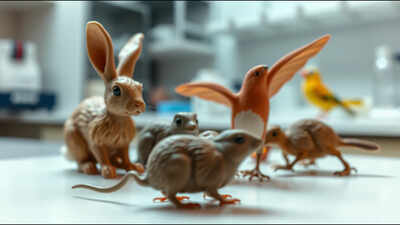
Representative Image of diverse plasticine models resembling prey, under scrutiny by researchers assessing animal interactions (AI Generated Image) For years, ecologists have used soft plasticine models shaped like caterpillars, fruit, bird eggs, snakes and frogs to study interactions between predators and their potential prey. The idea is simple: leave the models in a natural habitat,…

Read More
In 1996, scientists moved 38 Japanese macaques from Japan to Austria; 23 years later, there were 160 |

In 1996, scientists moved 38 Japanese macaques from Japan to Austria; 23 years later, there were 160 |

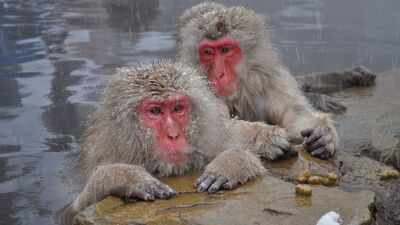
Japanese macaque. Image Credit: Wikipedia The relocation of 38 macaques from Japan to Austria in 1996 created a unique opportunity to follow a primate population from its first days in a new environment. The animals were moved from the Minoo-H group in Osaka Prefecture to Affenberg Landskron, a forested enclosure in southern Austria. Over the…

Read More
Meet Benjamin Davis, a 16-year-old student from Massachusetts who designed a low-cost machine to recycle 3D-printer waste and won $75,000 science award |

Meet Benjamin Davis, a 16-year-old student from Massachusetts who designed a low-cost machine to recycle 3D-printer waste and won $75,000 science award |

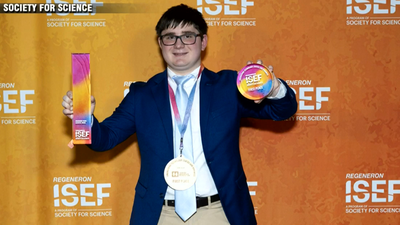
A 16-year-old student from Massachusetts has turned an everyday item into an award-winning recycling project. Benjamin Davis, a junior at Bishop Feehan High School in Attleboro, developed a desktop machine that processes 3D-printed waste and other plastics into reusable filament for 3D printers. His work earned him the $75,000 Regeneron Young Scientist Award at the…

Read More
Swiss scientists covered part of an Alpine glacier with sheep's wool, but the natural material slowed melting almost as well as synthetic covers |

Swiss scientists covered part of an Alpine glacier with sheep’s wool, but the natural material slowed melting almost as well as synthetic covers |

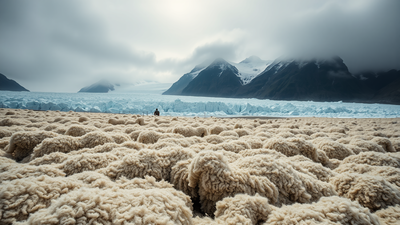
Representative Image of a Swiss glacier covered with sheep’s wool, showcasing environmental innovation in melting ice protection (AI Generated Image) As Switzerland’s glaciers continue to lose ice, researchers are testing an unusual material that could offer a more environmentally friendly way to slow melting in small, protected areas: sheep’s wool. The “Keep It Wool” project,…

Read More
Quote of the day by Stephen Hawking: "We are just an advanced breed of monkeys on a minor planet of…" |

Quote of the day by Stephen Hawking: “We are just an advanced breed of monkeys on a minor planet of…” |

Humanity has achieved extraordinary things, from exploring distant planets to developing technologies that have transformed everyday life. Yet, despite these accomplishments, our place in the universe remains remarkably small. British physicist Stephen Hawking often encouraged people to look beyond their immediate surroundings and consider the vastness of the cosmos. His thought-provoking words, “We are just…

Read More
Researchers turned waste eggshells into powder and replaced 10% of cement, producing stronger mortar after 28 days |

Researchers turned waste eggshells into powder and replaced 10% of cement, producing stronger mortar after 28 days |

Researchers have found that waste eggshells can be processed into a fine powder and used to replace part of the cement in mortar without reducing its compressive strength. A study tested calcined eggshell powder at replacement levels ranging from 2.5% to 12.5%. The strongest result came at 10%, where the mortar reached a compressive strength…

Read More
In 1992, scientists moved 30 pregnant skinks to a New Zealand island; years later, their population showed a genetic surprise |

In 1992, scientists moved 30 pregnant skinks to a New Zealand island; years later, their population showed a genetic surprise |

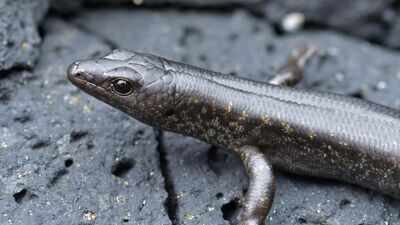
Egg-laying Skink (Oligosoma suteri) in New Zealand. Image Credit: Wikipedia A conservation effort in New Zealand took a surprising turn when 30 egg-laying skinks were moved from Green Island to Korapuki Island in 1992. The group consisted of 10 males and 20 gravid females (already carrying eggs). Years later, researchers compared the skinks on both…

Read More