8-year-old exploring ramon crater discovers rare 1,700-year-old statue fragment |

8-year-old exploring ramon crater discovers rare 1,700-year-old statue fragment |

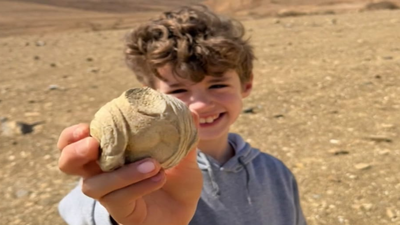
Eight-year-old Dor Wolynitz with the over 1,700-year-old statuette fragment he found in the Ramon Crater area, May 11, 2026. Image Credit: Akiva Goldenhersch/Israel Antiquities Authority An excursion with the family through the rugged beauty of Ramon Crater is usually about amazing views and the quiet of the desert. For 8-year-old Dor Wolynitz, the experience turned…
Read More
A 160-million-year-old ‘technicolour’ dinosaur fossil discovered in China with four wings and bird-like feathers |

A 160-million-year-old ‘technicolour’ dinosaur fossil discovered in China with four wings and bird-like feathers |

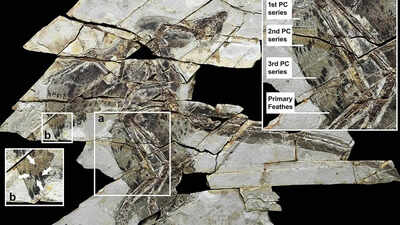
For years, the evolution of flight seemed fairly straightforward. Dinosaurs developed feathers, with some learning to glide, and eventually, birds appeared and mastered the skies. Now, a strange fossil from China is making scientists rethink that neat timeline. The feathered dinosaur Anchiornis huxleyi reportedly had four wings, colourful feathers, and a surprisingly messy moulting pattern…

Read More
Scientists found a hidden CO2 sponge beneath the South Atlantic seafloor |

Scientists found a hidden CO2 sponge beneath the South Atlantic seafloor |

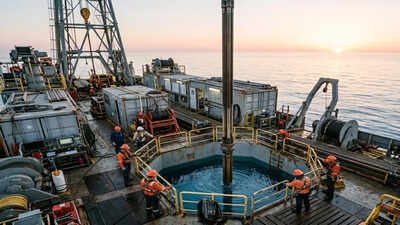
Scientists drilled into seafloor rubble and uncovered a hidden climate clue. Image credit – Gemini In the deep parts of the South Atlantic Ocean, researchers have uncovered a surprising geological feature embedded in fractured and broken volcanic rocks located below the seafloor. Far from looking like common debris, the rocks appear to hide geological sponges…

Read More
These 4-billion-year-old rocks found in Canada may reveal how Earth’s first continents formed |

These 4-billion-year-old rocks found in Canada may reveal how Earth’s first continents formed |

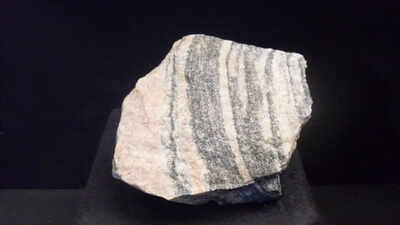
Hidden crystals inside ancient Canadian rocks are rewriting Earth’s early history. Image credit – Wikimedia In the northernmost part of Canada’s Northwest Territories, an area composed of old rock is recognised by scientists to be among the most significant geological formations in the world. The Acasta Gneiss, which comprises some of the oldest rocks on…

Read More
In 1856, a group of quarrymen in Germany tossed aside a few "deformed" bones and accidentally discovered Neanderthal 1 |

In 1856, a group of quarrymen in Germany tossed aside a few “deformed” bones and accidentally discovered Neanderthal 1 |

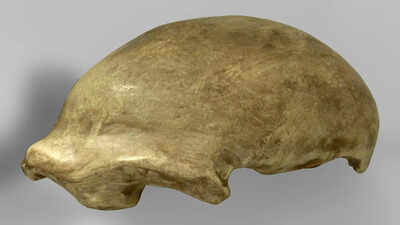
Miners in Germany’s Neander Valley unearthed peculiar bones in 1856, revealing evidence of a distinct human type. Image Credits: Wikimedia Commons Picture a cave made up of limestone, wet, and dark, situated in the valley of Neander in Germany. The year is 1856, and there are people excavating through the sediment layer in the cave…

Read More
In the 1750s, labourers digging a well near Herculaneum found "charcoal" rolls that were actually a lost Roman library |

In the 1750s, labourers digging a well near Herculaneum found “charcoal” rolls that were actually a lost Roman library |

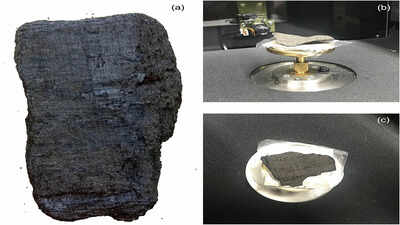
Ancient scrolls found near Herculaneum offer a glimpse into Roman intellectual pursuits. These papyri, carbonized by a volcanic eruption, were once thought unreadable. Image Credits: Wikimedia Commons Consider what it would be like to be a labourer in the mid-eighteenth century, digging through a tight and dank hole in the rock as you break apart…

Read More
In 1820, a Greek farmer clearing rocks in his field accidentally unearthed the Venus de Milo, revealing a lost fragment of the ancient Mediterranean world |

In 1820, a Greek farmer clearing rocks in his field accidentally unearthed the Venus de Milo, revealing a lost fragment of the ancient Mediterranean world |

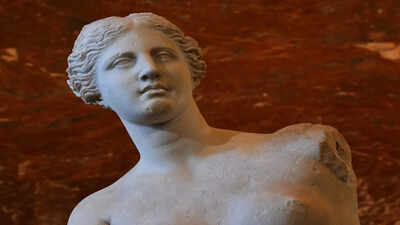
A farmer’s routine task in Milos in 1820 unearthed a remarkable marble torso, later identified as the Venus de Milo. Despite missing limbs, its discovery by French naval officers marked a significant archaeological find. Image credit: Wikimedia Commons Atop a mountainous area of the island of Milos, where winds blow freely, there was once a…

Read More
Quote of the day by Alfred Nobel: “A heart can no more be forced to love than a stomach can be forced to digest food by persuasion.” |

Quote of the day by Alfred Nobel: “A heart can no more be forced to love than a stomach can be forced to digest food by persuasion.” |

Alfred Nobel (Image: Wikipedia) Love, feelings and human connection have always been some of the most complicated aspects of life. For centuries, philosophers, scientists, writers and thinkers have sought to explain why people feel affection, attachment, trust or distance. Alfred Nobel made a very thoughtful remark on this point when he said, “A heart can…

Read More
Saudi Arabia’s scientists create NESCOD: A cooling system that works without electricity even in extreme heat |

Saudi Arabia’s scientists create NESCOD: A cooling system that works without electricity even in extreme heat |

Researchers at King Abdullah University of Science and Technology in Saudi Arabia have introduced NESCOD, a new passive cooling technology. This innovative system addresses the rising global need for cooling solutions without depending on energy-consuming air conditioners. Mechanically, NESCOD leverages the thermodynamic properties of endothermic dissolution to offer an eco-friendly alternative for communities that are…

Read More