Britain’s wasps are unusually scarce this summer; researchers cannot find enough for experiments, and the few seen are unusually small

Britain’s wasps are unusually scarce this summer; researchers cannot find enough for experiments, and the few seen are unusually small

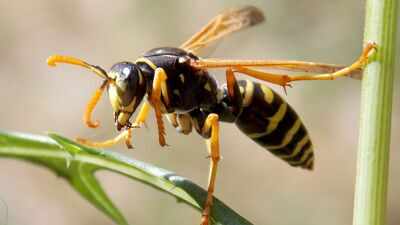
Britain’s summer is missing one of its most familiar insects. Wasps that usually gather around outdoor food, patrol gardens and become increasingly noticeable in late summer appear unusually scarce in 2026. The shortage has become so pronounced that researchers are struggling to collect enough insects for laboratory experiments, while the few wasps being seen appear…
Read More
In 2016, a Montana researcher picked up a rock half the size of a golf ball; 10 years later, scans showed dinosaur dung holding the finest feather yet found from the age of dinosaurs

In 2016, a Montana researcher picked up a rock half the size of a golf ball; 10 years later, scans showed dinosaur dung holding the finest feather yet found from the age of dinosaurs

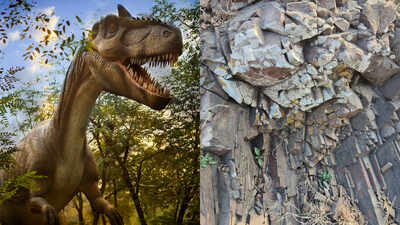
David DeMar Jr., a researcher with the University of Washington’s Burke Museum, discovered the unusual nodule while conducting fieldwork in northeastern Montana’s Hell Creek Formation. Sometimes, the most extraordinary discoveries are hiding in things that look utterly ordinary. In 2016, a researcher working in Montana spotted a small, reddish-brown rock while searching for fossils. It…

Read More
Some Myotis bats can live 50 years while close relatives live just 7; sequencing eight species found longevity genes overlapping with cancer and virus defenses

Some Myotis bats can live 50 years while close relatives live just 7; sequencing eight species found longevity genes overlapping with cancer and virus defenses

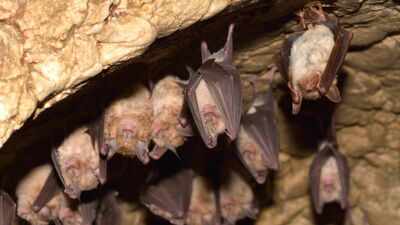
A mouse-sized bat that lives for decades appears to have evolved some of the same biological protections that help it resist cancer and viral disease. Researchers comparing eight closely related Myotis species found an extraordinary range of lifespans, from about seven years in some species to nearly 50 years in others. Their genome analysis revealed…

Read More
Quote of the day by Isaac Newton: "I can calculate the motion of heavenly bodies, but…" - lesson about why human behaviour is harder to predict |

Quote of the day by Isaac Newton: “I can calculate the motion of heavenly bodies, but…” – lesson about why human behaviour is harder to predict |

Quote of the day by Isaac Newton (Image source: Wikipedia) Isaac Newton’s quote captures a genuinely striking contrast between the predictability of nature and the real complexity of human behaviour. “I can calculate the motion of heavenly bodies, but not the madness of people,” he is said to have remarked. Newton devoted much of his…

Read More
Scientists turn railway track vibrations into electricity, with a system producing 7.44 W of peak power |

Scientists turn railway track vibrations into electricity, with a system producing 7.44 W of peak power |

Train movement produces vibrations along railway tracks, much of which is normally lost to the surrounding environment. Researchers have developed a system that captures some of this wasted energy from heavy-duty freight railway tracks and converts it into electricity. The study, published in ‘Applied Energy‘, describes a vibration energy harvesting system that uses the irregular…

Read More
In 2025, Japan sent rice and koji to the ISS to brew sake; just 260 grams returned after scientists confirmed alcohol was produced |

In 2025, Japan sent rice and koji to the ISS to brew sake; just 260 grams returned after scientists confirmed alcohol was produced |

Image Credit: Mitsubishi Heavy Industries Japan sent rice and koji to the International Space Station in 2025 to test whether sake could be brewed beyond Earth. As part of the DASSAI MOON Project, the ingredients were placed inside Japan’s Kibo module under conditions designed to reproduce the Moon’s gravity. After fermentation, the material was frozen…

Read More
Scientists exposed diamondback moths to extreme heat for 3 years; their descendants evolved faster development and greater heat survival |

Scientists exposed diamondback moths to extreme heat for 3 years; their descendants evolved faster development and greater heat survival |

Diamondback moth. Image Credit: Wikipedia Diamondback moths exposed to repeated heat for 3 years evolved traits that helped their descendants develop faster and survive extreme temperatures better. A 2026 study titled ‘Experimental evolution to thermal stress indicates climate resilience in a cosmopolitan arthropod’ tested moth populations under different temperatures for dozens of generations. It was…

Read More
A 3,500-year-old British timber monument is drying out underground; a £700,000 excavation will race to record it as 40% of buried archaeology risks being lost within months

A 3,500-year-old British timber monument is drying out underground; a £700,000 excavation will race to record it as 40% of buried archaeology risks being lost within months

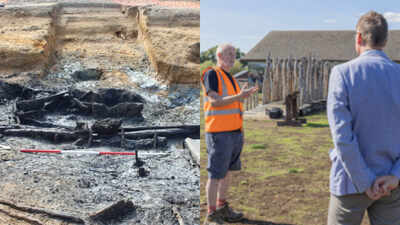
Recent evaluation excavations confirmed that ancient worked timber and other organic evidence are already deteriorating. The danger is particularly urgent because around 40% of the site’s buried archaeology could be lost within just a few months if the deterioration continues. For thousands of years, the mud beneath the fields near Peterborough quietly held onto a…

Read More
Jackie Chan backed a project trying to bring the South China tiger back from the brink; the species hasn't been confirmed in the wild for decades |

Jackie Chan backed a project trying to bring the South China tiger back from the brink; the species hasn’t been confirmed in the wild for decades |

Jackie Chan supported Save China’s Tigers, a conservation project attempting to restore the South China tiger after the subspecies disappeared from confirmed wild sightings decades ago. Once widespread across southern and central China, the tiger (Panthera tigris amoyensis) suffered a dramatic decline because of hunting, habitat loss and falling prey numbers. Founded by conservationist Li…

Read More