
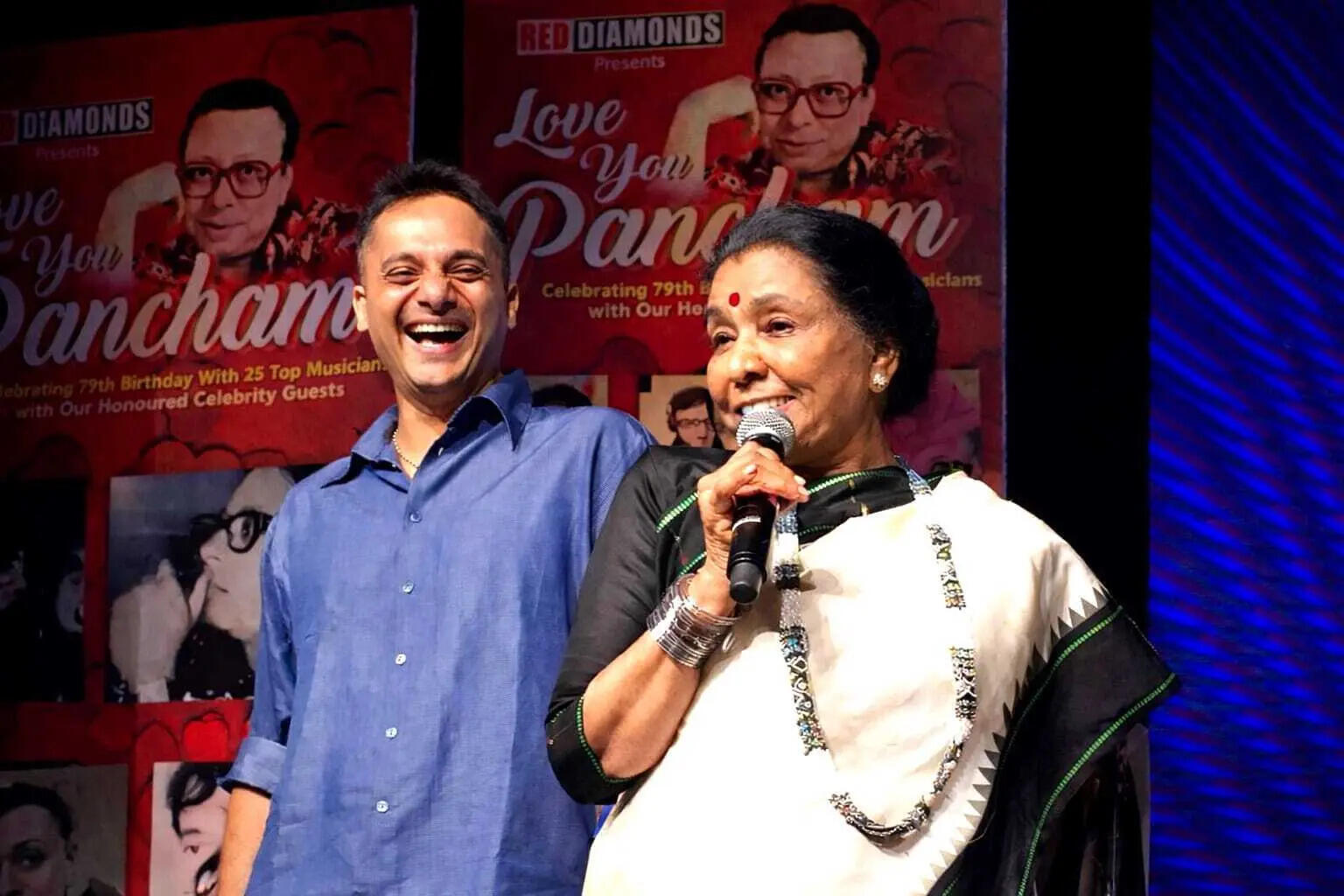
For Chin2 Bhosle, music goes far beyond legacy — it is rooted in deeply personal emotion and lived experience. The singer-composer opens up about his heartfelt tribute to his grandmother, legendary singer Asha Bhosle, the memories they shared, and the life lessons she left behind that continue to shape him.In an exclusive conversation with ETimes, Chin2 revisits the song that once moved her to tears and recalls spontaneous moments of performing together on stage, offering a rare and intimate glimpse into the person behind the legend. He also reflects on building his own identity despite carrying a celebrated surname, his shift from the corporate world to music, and the values of resilience and adaptability that have been passed down through his family.
You’ve released a tribute for your grandmother Chalte Chalte . Listening to it feels very personal and emotional. What were you going through when you decided to create this tribute?
There were two songs that I did for her. One is Chalte Chalte, which you obviously heard, and the other song is called Main Chala. It’s on the same line — from the perspective of going away. Like, I came to sing something, I lost it, and I have nothing left now, I am leaving. I had written these two songs around two years ago. At that time, she had lost my father Hemant Bhosle — her eldest son — and my aunt Varsha, her second child.We were sitting together one day and she was in great pain and grief. That’s when I wrote these songs. I composed and sang them as a scratch and told her, “Okay, the song is ready.” She heard it, had tears in her eyes, and cried. She was very emotional. She said, “Sorry Chintu, I can’t sing this because I get too emotional when I hear it. I can’t stop crying. I don’t want to hear this song again.” I said, “Okay, I’m so sorry. That was not my intention.”Three months later, she wanted to hear it again. She said, “Chintu…” and I said, “Yes.” I played it again, and again she broke down into tears. Then she said, “Actually, I don’t want to hear it. It’s the most beautiful song you’ve written and sung, but I can’t listen to it.” So I parked it. I said, no problem, I’ll revisit it later.After her passing, a lot of friends asked me, “What are you doing as a tribute?” I said, “Nothing. It’s very personal for me.” But then one day, we were sitting and listening to all the work we had done together, and I heard this song again. And I said, “This is it. This is her. This was made for her.”She had completely connected with this emotion. And finally, I am a musician — my way to emote is through music. So this became my tribute. Whether people like it, hate it, connect with it or not — that’s secondary for me.If anyone asks me, “What is your message to her? How do you feel now that she’s gone?” — this is my response. This is exactly how I feel, and this is the best way I can express it. The words and language I’ve used are exactly how I would talk to her.So for me, this song epitomises everything I want to say. We also put together photographs of our journey and created the video. And honestly, she couldn’t hear it then, and I can’t hear it now without tearing up. She really wanted to sing that song, but she couldn’t — maybe because she felt I had written it for her.
Asha ji has also performed with you?
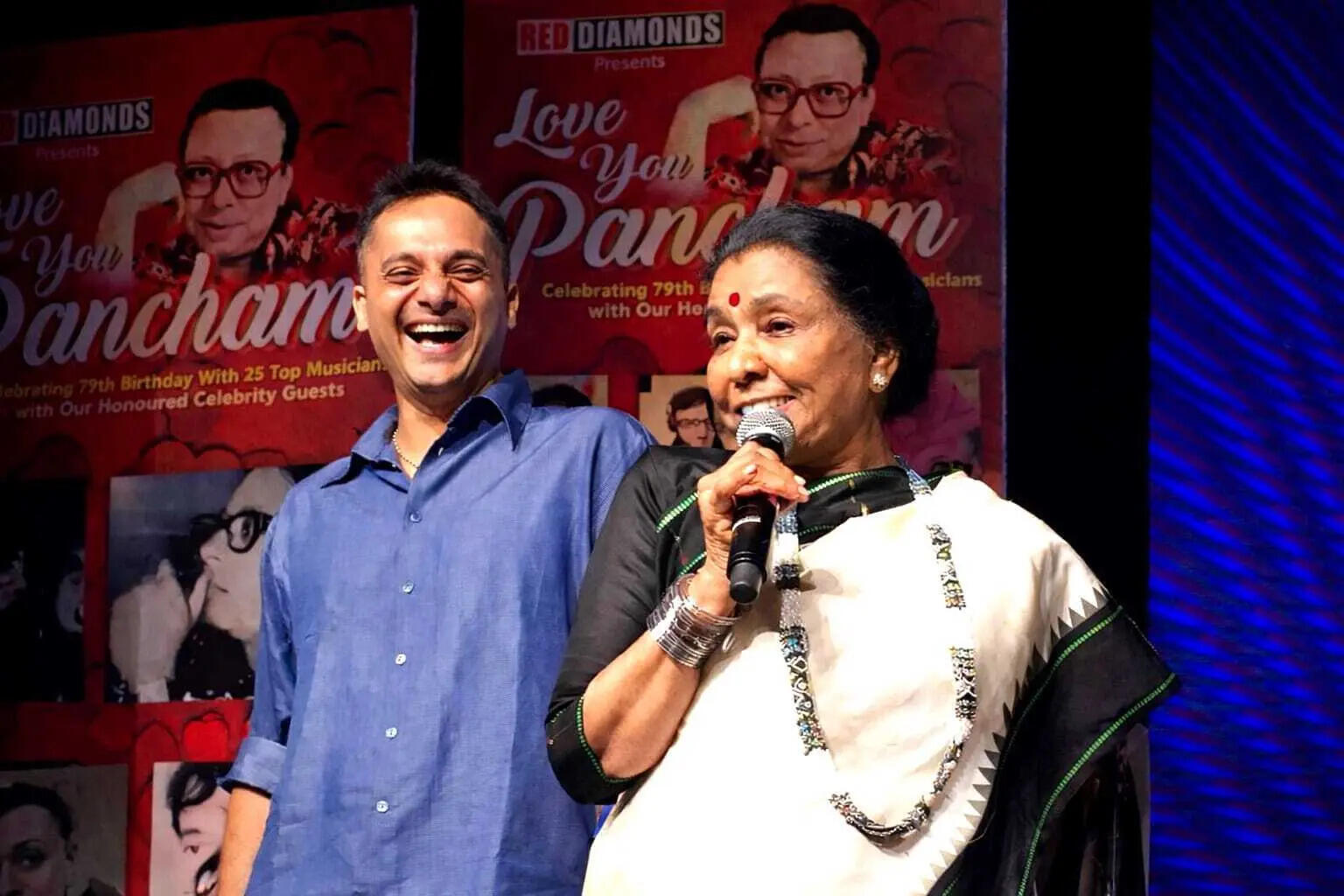
Many times. Many, many times. Our first show was around 15 years ago in Surat. We had an understanding — I told her I will never ask when I can perform with you because I don’t want to pressure you. But I also said I will use emotional blackmail as your grandson — I want to perform with you. Of course I want to perform, that’s a given. But when you feel I am ready, please tell me. I will jump — I’ll jump 10 feet high and perform with you. One day we were just chatting and she asked, “What are you doing this weekend?” I said, “Nothing.” She said, “Come.”I literally jumped out of my chair. Finally.I remember our first duet — there was an interlude. I’m more of a Western performer, so I don’t stand still. I like to move, dance. But Indian performers traditionally stand still during interludes. She was singing, looking down, looking up. So I held her hand and gave her a little twirl. We danced a bit. She was taken aback at first, then she got into it. We even did a little waltz. She later told me, “You are like Kishore da. He used to do all this.” I told her, “I wish I could see his live shows.”Then I realised once in a Marathi show, she herself started dancing mid-performance with a stick. That’s when I told her, “This is where I get it from — from you!” She laughed. We’ve had some fantastic performances together — Surat, Bangalore, Shanmukhananda. I feel very lucky.
When Asha Bhosle reacted to the song, did you feel like an artist being appreciated or a grandson being understood?
Both. As an artist, I felt great that she appreciated my singing and composition. Even though it’s a slightly Western style, she liked it. As a grandson, I wasn’t very happy seeing her break down like that. But I was touched that we were on the same emotional wavelength.
You also teach music. What conversations did you have with Asha Bhosle about taking music forward?
Yes, I teach music. And we often discussed how to take music to the next generation. When I take sessions with kids — even 17-18-year-olds — and say, “Let’s do Hindustani music,” the reaction is almost always, “No, sir, it’s boring.”That shocked me initially.But then I realised — the way we teach is very rigid. It’s a deep, beautiful art form, but kids see it as “Sa Re Ga Ma” repetition. We used to sit for hours holding one note. No wonder kids find it boring today. I told her that if we don’t adapt, we will lose an entire generation. That’s when I started working on something very close to my heart — SRGMs.
What is ‘SRGMs’?
It’s about introducing music to very young children — nursery, KG levels. Kids learn best through music. Everything — “head, shoulders, knees and toes”, “twinkle twinkle” — is through rhythm and movement. So we created songs that teach values — like not being scared of doctors, learning to say please and thank you, understanding the world.I explained this to Aai and she was very interested. She asked, “You perform in stadiums, why kids?”I said, “Why not? Given my background, your teachings, and my experience, I am in the best position to do this.”She agreed. She said nobody can take her legacy forward in the same way — it’s untouchable. But values can be carried forward. And that’s what I’m trying to do.
Did you also learn music the same way at home, like how you teach your students now?
I have learned music, of course, but the teaching that stayed with me was more about the nuances. One thing that really stayed with me was when she said — what differentiates one singer from another?I can sing a song, Lata didi can sing the same song, Alka Yagnik can sing it, Sonu Nigam can sing it — everyone can sing the same composition. We all know technique, sur, pitch, rhythm, murki, ornamentation… everything.
But what makes it different?
The difference is that it’s not about showing how skilled you are. It’s about knowing when to hold back. It’s about knowing when to ornament. I can do a thousand murkis, but I don’t need to — because the song doesn’t demand it.You have to understand what emotion the song needs and then deliver that — not show off how ‘cool’ you are as a singer. These are lifelong lessons. She would sit with us, sing her old songs, and say — “I did this here, can you tell?” or “I softened this line to create this effect.” Those learnings are far more valuable than just technical riyaaz.
You were initially inclined towards a corporate career. What changed?
Yes, I’m an MBA — I studied at NMIMS around 1997, which was among the top institutes then. I was very clear that I would keep music as a serious hobby, get a stable job, and live life that way. So I joined an advertising agency — Mudra— and worked there for about a year and a half. But like with most creative people, something felt missing.I remember going to her and saying, “I want to take a break and give music a shot.” She was actually upset. She said, “Don’t leave your job, music is a very difficult field.” But I told her, “If I don’t try now, I’ll never know.” She asked if I wanted help. I said no — not unless I was desperate. I wanted doors to open because of my talent, not just my surname. That’s how it began.
How did Band of Boys shape your journey?
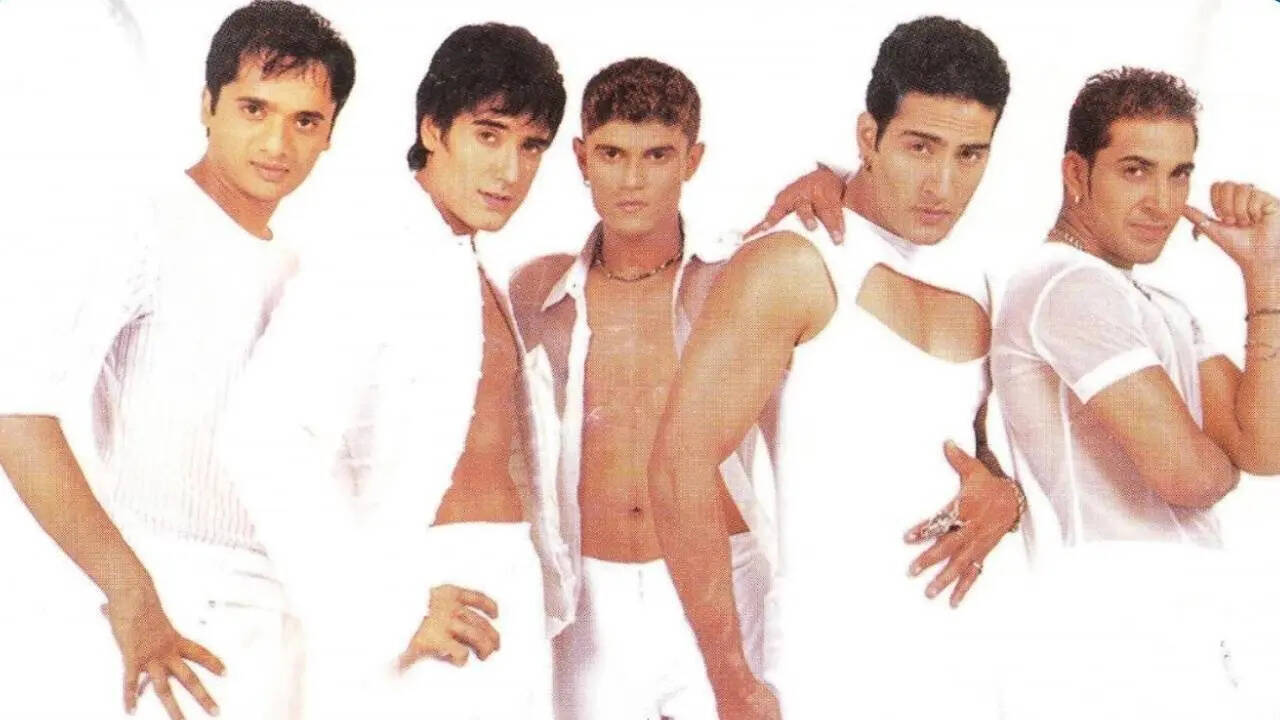
I did radio before Times FM launched — with All India Radio — and also did musical theatre like Evita. Then came Band of Boys. We did quite well, but people would ask, “Are you related to Asha Bhosle?” I wouldn’t deny it, but I would dodge it humorously. I wanted people to know me first.Later, when she heard one such interview, she was upset. She asked, “Are you ashamed of me?” I said, “Not at all. I’m proud. But I want people to say — I know Chin2, and oh, he’s also Ashaji’s grandson.” That feels more earned. Eventually, I told her — now I will proudly say it. And she said, “Yes, you should.” The first time I actually asked her for professional help was to launch Band of Boys — and she did.
Do you feel pressure to carry forward such a massive legacy?
If we put that crown on our heads — that we will carry forward her legacy — we are living in a fool’s world. What she has done is untouchable. There will never be another Asha Bhosle. The world has changed — values, skill sets, everything. Who is going to sing 12,000 songs today? It’s impossible. We can’t replicate her legacy. But we can carry forward her values in our own way. If even in a small way, something we do reflects positively on her, that’s enough.
What was Asha Bhosle like at home?
She was everything — a grandmother, a mother, a homemaker, a friend. But she carried the same energy the world knows her for — even at home. Whether it was discussing AI, cooking food, or just chatting — she had endless energy. She would come back tired from recordings, and if you visited, before you could say anything, she would be in the kitchen cooking something for you. And she never said, “I’m tired.” At 92, she was still curious, still learning, still engaging. For me, if I ever say I’m tired, I feel like I should be slapped — because she never did.
Your favourite memory with Asha Bhosle?
Mutton biryani. She would cook it like a goddess — subtle, perfect. And it didn’t stop at cooking. She would serve you herself, pick the best pieces, sit and watch you eat, and chat. Those moments — the warmth, the love — that’s what stays with me.
How did your parents shape your life?
My mom Alka Bhosle has been my backbone. She’s not a musician, but she supported me through everything — especially when I left my job. She always said — follow your passion, I’m with you. I’ve grown up around very strong women — my grandmother, my mother, my wife. Everything I am comes from them.
What’s the biggest life lesson from them?
One word — adapt. They’ve seen massive highs and lows. And in those low moments, you either give up or adapt. They always said — how you respond when life hits you defines you. When tragedy struck, I saw it firsthand. And the lesson was simple: “Adapt. Move forward.” That mindset has stayed with me.
How would you sum up your journey today?
I’m now focused on teaching music to children — building something at scale, almost like a “Disney of learning through music.” This is something very close to my heart. Music is who I am. Family values are what shaped me. Everything I am — and everything I will be — is because of my family. If I had to say one thing at this stage of life — appreciate your family. Because they make you who you are.