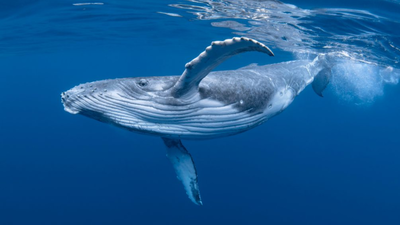
Commercial whaling killed an estimated 350,000 blue whales and 725,000 fin whales during the 20th century. More than 40 years after commercial whaling ended, however, the two largest whale species are slowly returning to parts of their former range in the southeast Atlantic. A major study published in the African Journal of Marine Science examined more than six decades of confirmed whale records from waters off Namibia and South Africa’s west coast. The research found a clear increase in sightings, with 95 per cent of all recorded observations taking place since 2012. The study was led by Dr Bridget James from the Centre for Statistics in Ecology, Environment and Conservation at the University of Cape Town. Dr Simon Elwen, director of Sea Search and a research associate in the Department of Botany and Zoology at Stellenbosch University, was a co-author.“Our results provide important evidence that these giants of the ocean are slowly recovering from the devastating impact of 20th century commercial whaling, which pushed them to the brink of extinction,” Dr James said. “Sightings remain rare, but they are becoming more frequent than in previous decades—and with sustained protection, there is reason to believe this recovery can continue.”
Tracking whales along the Benguela coast
Between 1913 and 1978, industrial whaling fleets hunted Antarctic blue whales and fin whales heavily. Their populations fell dramatically as thousands of animals were killed. To understand whether the whales were returning to their former habitats, researchers collected confirmed sightings and records of stranded animals from the Benguela upwelling system between 1964 and March 2025. The Benguela upwelling system is a nutrient-rich ocean region that runs along the western coast of southern Africa, including the waters of Namibia and South Africa. Researchers found 12 confirmed blue whale sightings, one blue whale stranding and five other published historical records. Fin whales were recorded much more often. The study found 76 sightings and six strandings. The two species also showed different patterns during the year. Blue whales were mainly seen from late spring through autumn, while fin whales were recorded throughout the year.
Populations are recovering, but slowly
The increase in sightings is encouraging, but neither species has returned to its former population size. Antarctic blue whales are still classified as “Critically Endangered” by the International Union for Conservation of Nature (IUCN). Their worldwide population is estimated to be only around 3 per cent of its historical level. Current populations are growing by an estimated 5 to 8 per cent each year. Fin whales are in a somewhat better position. The IUCN lists them as “Vulnerable”, and their global population has recovered to more than 30 per cent of its pre-whaling level. Their numbers are estimated to be increasing by around 4 to 5 per cent each year. As whale populations become larger, scientists expect them to gradually return to areas where they once lived.Dr Elwen said the growing number of sightings and strandings fits this pattern. “As populations slowly rebuild, we would expect to see these whales begin reoccupying parts of their historical range,” he said. The researchers also cautioned that the increase could partly be due to better monitoring. More vessels are now observing offshore waters, including commercial seismic survey ships used to search for oil and gas.
More sightings do not mean full recovery
One of the biggest difficulties in studying whale recovery is the lack of long-term monitoring. There is still limited systematic scientific monitoring of marine mammals along the south-western African coast. This makes it difficult to calculate exact population sizes and determine how quickly the whales are returning. The increase in sightings is therefore important, but it must be interpreted carefully. Modern human activities also continue to threaten both species.Whales can be killed or injured by collisions with ships and other vessels. They can also become trapped in fishing equipment. Underwater noise from shipping and industrial activity can interfere with their behaviour and communication.Marine pollution and changes in the availability of krill caused by climate change could create further problems. Krill are a major food source for large whales, so changes in where and when these small marine animals are found could affect whale populations. Dr James stressed that the recent increase in sightings should not be mistaken for a complete recovery. “Signs of a return to the southeast Atlantic do not signal full recovery for blue and fin whales, and these populations have a long way to go to reach their historic numbers,” she said.
A rare glimpse of blue whales
The number of blue whale records shows just how limited their recovery remains. Despite more than five decades passing since the end of commercial whaling in the region, researchers were able to identify only 12 confirmed blue whale sightings off the coast. Dr Elwen said the return of the whales demonstrates their ability to recover, but also shows how vulnerable they remain. “They point to resilience—but it should be emphasized that both species remain vulnerable to modern human pressures,” he said. He noted that after more than 50 years of recovery, only 12 blue whale records could be collected from the coast.
Protecting the returning whales
The researchers say stronger monitoring and protection will be needed if the recovery is to continue. One recommendation is to expand passive acoustic monitoring. Special underwater recording systems can detect whale calls over large areas and help scientists understand where the animals are moving, even when they cannot be seen.The study also recommends requiring trained wildlife observers on commercial vessels. These observers could record whale movements and help identify areas where collisions or other human impacts are more likely.Another recommendation is to include whale movement information in marine spatial planning. This would allow governments to consider important whale habitats when deciding where shipping, fishing, energy exploration and other activities should take place. The return of blue and fin whales to the southeast Atlantic is therefore an encouraging sign after decades of population decline.