
Gaurav Bhagat, Founder of Gaurav Bhagat Academy, a corporate sales training, business coaching, and leadership development academy, highlighted that in an environment where medical inflation continues to outpace income growth, employee health benefits are becoming a key consideration rather than just a peripheral workplace perk.
He observed that most corporate health insurance policies are often perceived as comprehensive by employees, but in reality operate within defined structures, limits, and conditions that determine the actual extent of protection.
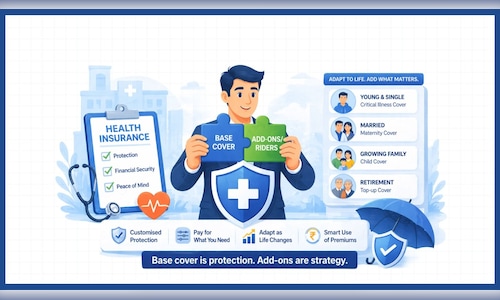
According to him, while group cover provides an important base, the question today is whether it should be viewed as standalone protection or as part of a wider safety net.
How corporate group health insurance is structuredCorporate group health insurance typically provides:
- Family floater cover for employees and dependents.
- Cashless hospitalisation across network hospitals.
- Coverage for hospitalisation expenses and select daycare procedures.
- Pre- and post-hospitalisation benefits for a defined period.
- In some cases, coverage for pre-existing conditions from day one.
Bhagat noted that while these features make group insurance a strong starting point for healthcare access, the effectiveness of coverage ultimately depends on design elements such as sum insured, exclusions, and claim conditions.
Employment-linked nature and continuity
Industry experts point out that group insurance is inherently linked to employment. Coverage remains active only during the tenure of employment and typically ends once an employee exits the organisation, unless converted or ported within specified timelines.
This employment-linked structure makes it a time-bound benefit rather than a lifelong health cover, which becomes particularly relevant during job transitions.
Group insurance as a base layer
Santosh Puri, Head – Retail Underwriting at Tata AIG General Insurance, described group insurance as a “basic layer of protection” that may not fully address evolving healthcare needs over a lifetime.
Adequacy of coverage and sum insured levels
A key industry consideration is whether group insurance provides sufficient coverage for major medical events.
Surinder Bhagat, President – Employee Benefits at Prudent Insurance Brokers, noted that group health insurance policies typically range between ₹3–10 lakh in many organisations.
ALSO READ | Amazon India expands health insurance for delivery associates, raises mediclaim to ₹1.5 lakh
While this level of coverage may be adequate for routine hospitalisation, he observed that higher-cost treatments or prolonged care often require higher protection, which is more commonly available in retail health insurance plans that can extend to ₹25–50 lakh or more.
Expanding scope of coverageGroup health insurance has gradually expanded beyond basic hospitalisation to include:
- Mental health coverage, often with sub-limits.
- AYUSH treatments at recognised facilities.
- Preventive and wellness-related services in some corporate plans.
Standard exclusions such as cosmetic procedures, self-inflicted injuries, and certain lifestyle-related treatments generally remain unchanged across policies.
ALSO READ | Ayushman Bharat health cover for West Bengal: Who is eligible, benefits explained
Role within broader health protection
Industry perspectives view group insurance as a foundational layer of health protection. It provides immediate access to medical care but is often supplemented with individual health insurance and top-up policies to address higher medical costs and long-term coverage needs.