
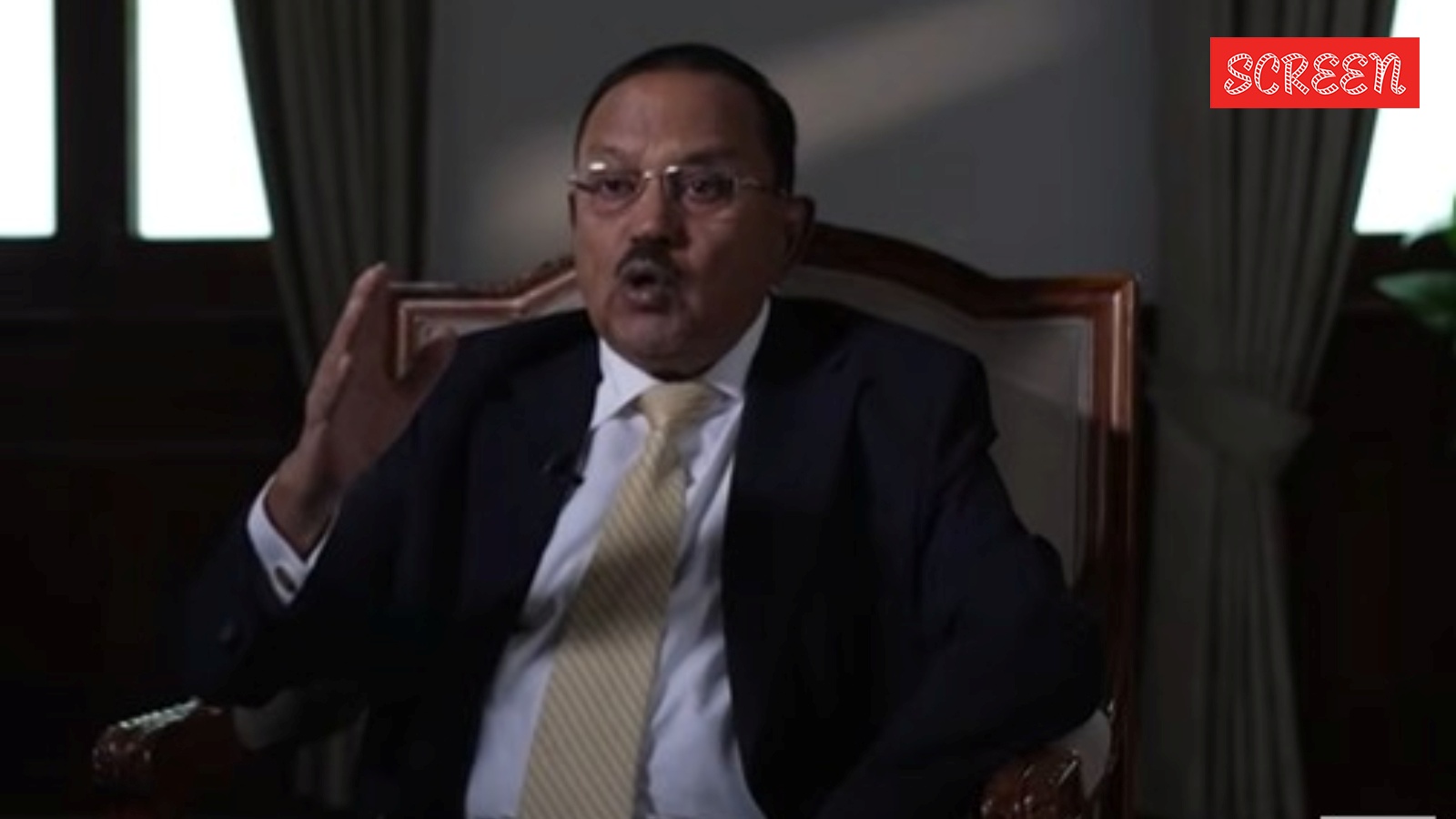
Declassified: Operation Sindoor, Discovery’s two-part documentary on India’s 88-hour military operation in May 2025, has drawn attention since its Independence Day release. The series attempts to reconstruct Operation Sindoor through first-hand accounts from the people involved in planning and executing it, offering viewers access to senior military officials as well as personnel closer to the frontline.
The series premiered on Discovery and discovery+ on August 15 and features National Security Advisor Ajit Doval, Army Chief General Upendra Dwivedi, Navy Chief Admiral Dinesh K. Tripathi and Air Chief Marshal A. P. Singh, along with former Chief of Defence Staff General Anil Chauhan and other senior military officials and personnel.
What is Declassified: Operation Sindoor about?
The two-part series revisits the events following the Pahalgam terror attack on April 22, 2025, and traces the planning and execution of Operation Sindoor, which began on May 7. The documentary follows the 88-hour operation through accounts from India’s war rooms as well as those closer to the frontline.
The first episode, The Greenlight, focuses on the decisions and preparations leading up to the operation, while the episode Attack and Counterstrike moves into its execution and the aftermath. Alongside interviews, the series uses operational footage, photographs and archival material to piece together the events.
For directors Prabhu Asgaonkar and Manika Berry, the objective was not simply to revisit an operation that had already been extensively discussed in the media. They wanted viewers to hear directly from the people who were actually involved.
“What Prabhu and I found was that we were still not somehow getting the pulse of the operation. We really wanted to get inside the operation and see it from the inside rather than just have people tell us from the outside what happened,” Berry said in an interview with BharatShakti.
That meant attempting to speak to everyone from the highest levels of the country’s security establishment to personnel closer to the Line of Control.
Story continues below this ad
How the filmmakers got the top brass on camera
Getting such access was one of the biggest challenges of making the documentary. Berry said the filmmakers’ previous experience of working on military content helped establish trust with the armed forces.
“And given the fact that we’ve done a lot of military content, and both he and I are Fauji Bachchas, I think there’s a huge level of trust that we’ve developed with them,” she said.
Nitin A Gokhale, founder of BharatShakti, also played a key role in bringing the project’s strategic perspective to the screen. His existing relationships with senior officials helped the filmmakers approach people who had been directly involved in the operation.
ALSO READ: Anupama Parameswaran recalls ex partner using her menstrual cycle to dismiss confrontations
Story continues below this ad
How Ajit Doval came on board
One of the biggest breakthroughs was getting National Security Advisor Ajit Doval to participate.
Gokhale said he told Doval that while the military leaders could explain their individual roles and decisions, the larger strategic picture could only come from the NSA. Doval agreed, saying, “If that is the case, then I must bring in a strategic politico-military underpinning to the film.”
Doval’s participation gave the documentary an additional layer, Berry said.
“Thank God for that, because it really validated and legitimised the story. Because, you know, that way, it’s not just a military story. He also brought in what was happening in the corridors of power at that time, which is also important.”
Story continues below this ad
Why the filmmakers focused on first-person accounts
The documentary is built around the accounts of people who were directly involved in Operation Sindoor. According to Manika Berry, the interviews were allowed to unfold as conversations rather than tightly scripted responses.
“No questions were given. Always the best way is to let them speak. They spoke from the heart,” she added.
The series brings together voices from the Army, Navy and Air Force, with the filmmakers recording the participants separately. Nitin A Gokhale said that despite the separate interviews, their accounts carried a common thread.
“They are still speaking the same language. You see that the same passion is there. And what they have gone through,” he said.
Story continues below this ad
The filmmakers also wanted the documentary to retain a human element rather than becoming only a record of military strategy and weaponry. Gokhale recalled moments when senior officers became emotional while discussing the human cost of the Pahalgam attack and its aftermath.
What the filmmakers wanted to capture
The filmmakers have stressed that Declassified: Operation Sindoor was not intended to be an official account or an investigative film. Their aim was to document the experiences of those who were at the centre of the operation.
“We didn’t set out to win a perception war. It is not an official film. And the idea was also not to make it an investigative piece.”
Instead, they wanted to capture the human side of the operation and the experiences of those directly involved.
Story continues below this ad
“The human story of what everybody in the hot seat did. And I think that’s what we did.”
Why Discovery was chosen
Discovery was a natural fit for the project because Asgaonkar and Berry had previously worked with the network on military documentaries. That familiarity helped give the channel confidence in the filmmakers and their ability to handle a project involving such extensive access.
“We have been aligned, we have done a lot of military documentaries with them earlier in the past,” the filmmakers said.
The documentary premiered simultaneously on Discovery’s linear television channel and streaming platform on August 15.
Story continues below this ad
What happens to the documentary now?
The documentary is also set to reach audiences beyond its television and streaming release. The filmmakers said Discovery is looking at taking Declassified: Operation Sindoor to military units and schools for screenings.
Declassified: Operation Sindoor is available on Discovery and discovery+ following its August 15 premiere.