
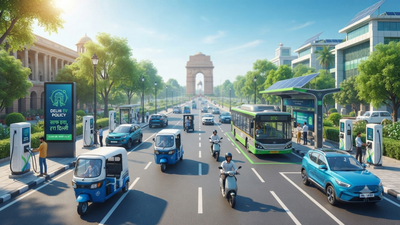
The Delhi government on Wednesday officially notified the Delhi Electric Vehicles Policy 2026, setting in motion an ambitious roadmap to accelerate electric vehicle (EV) adoption, improve air quality and strengthen the capital’s electric mobility ecosystem.According to the notification, the policy comes into effect from July 1, 2026, and will remain in force until March 31, 2030.The notification said the lieutenant governor of the National Capital Territory of Delhi had issued the policy under the provisions of the Motor Vehicles Act, 1988, following approval by the Delhi Cabinet headed by chief minister Rekha Gupta.The policy was approved by the Cabinet on Monday before being sent to lieutenant governor Taranjit Singh Sandhu for final approval.
Tax exemption for electric cars
Under the new policy, all electric cars with an ex-showroom price of Rs 30 lakh or less registered in Delhi will receive a full exemption from road tax and registration fees.The government has also announced subsidies for electric two-wheelers. Buyers will receive an incentive of Rs 30,000 during the first year of the policy, Rs 20,000 in the second year and Rs 10,000 in the third year.Buyers of electric three-wheelers will also receive purchase incentives of up to Rs 50,000 in the first year, Rs 40,000 in the second year and Rs 30,000 in the third year.
Registration of petrol two-wheelers to end
The policy lays down a phased transition towards electric mobility across vehicle categories.Only electric auto-rickshaws will be registered in Delhi from January 1, 2027. Registration of new petrol and CNG two-wheelers will be phased out from April 1, 2028, after which only electric two-wheelers will be eligible for registration.The government has also decided not to extend incentives to hybrid vehicles, keeping the policy focused exclusively on battery electric vehicles.
Rs 15,000 crore investment, 30,000 charging points planned
The Delhi government plans to invest around Rs 15,000 crore over the next four years to promote electric mobility and reduce vehicular pollution.To support the growing EV fleet, more than 30,000 EV charging points will be established across the city.The policy also includes a dedicated online portal to process incentives through Direct Benefit Transfer (DBT) and introduces a three-year lock-in period, preventing beneficiaries of government subsidies from registering their electric vehicles in another state during that period.
Scrapping incentive for old vehicles
As part of efforts to replace older polluting vehicles, the policy also introduces a scrapping incentive for electric car buyers.Buyers purchasing a new electric car priced up to Rs 30 lakh will be eligible for a scrapping incentive of Rs 1 lakh if they scrap a Delhi-registered Bharat Stage-IV or older car through an authorised scrapping facility and complete the purchase within six months of receiving the Certificate of Deposit.The benefit will be available to the first one lakh eligible applicants.The EV Policy 2026 builds on Delhi’s first electric vehicle policy introduced in August 2020.The updated framework aims to reduce further vehicular pollution, which accounts for nearly 23 per cent of the city’s air pollution, while accelerating the shift to cleaner and more sustainable transport.