
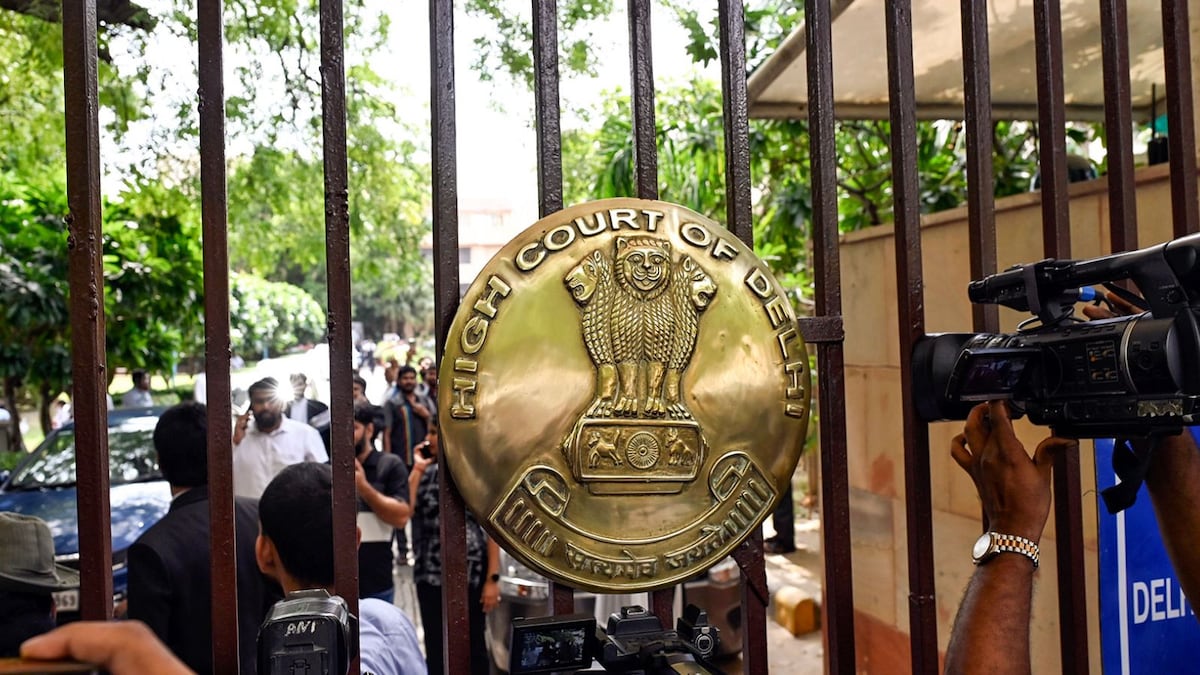
A bench of Justices Dinesh Mehta and Rajneesh Kumar Gupta has also asked the private secretaries of judges who have filed their returns under the new regime to furnish relevant details, including their Permanent Account Number (PAN), to the authorities.
The directions were passed in orders dated July 22 and August 10 on a petition filed by the Delhi Tax Bar Association.
According to the petitioner, certain allowances provided to judges are excluded from the computation of their income under Section 22D of the High Court Judges (Salaries and Conditions of Service) Act, 1954, and Section 23D of the Supreme Court Judges (Salaries and Conditions of Service) Act, 1958.
These include rent-free official accommodation, conveyance allowance, sumptuary allowance and leave travel concession.
Also Read: ITR deadline on August 31: Who needs to file and which forms apply
The petitioner has challenged a September 12, 2025 memorandum issued by the Central Board of Direct Taxes (CBDT), which stated that under the new tax regime, these allowances would not be exempted as the regime does not provide for deductions and exemptions.
In its July 22 order, the court said that, prima facie, Sections 22D and 23D override the provisions of the Income-Tax Act and that the issue raised in the petition requires consideration.
The court allowed judges to file their returns or revised returns by reflecting the disputed allowances under the caption “receipts not in the nature of income”.
It further ordered that the returns filed by Supreme Court and High Court judges “shall not be processed and proceeded with, until further orders.”
During the August 10 hearing, the Income Tax Department’s counsel submitted that returns are processed electronically and the software cannot identify which return belongs to a sitting judge. He said there was a likelihood that around 98% of returns would be processed without human intervention by the end of August.
The court consequently directed the private secretaries of the judges to furnish the relevant details to the authorities.
It also directed that if any demand is raised after processing of the returns, it would be kept in abeyance during the pendency of the petition. If any amount is found refundable, it will not be refunded for the time being. Any amount already refunded to the judges will remain subject to the outcome of the case.
The petitioner has contended that the CBDT’s September 2025 memorandum is contrary to law and amounts to “nothing short of interference in the independence of judiciary”.
It has also argued that the memorandum takes away the vested rights of judges and violates Articles 125 and 221 of the Constitution, which protect the salaries and allowances of Supreme Court and High Court judges from being curtailed or varied to their detriment after appointment.
Also Read: SC asks states to consider framing policy on demolition, regularisation of illegal constructions
(from agencies input)