
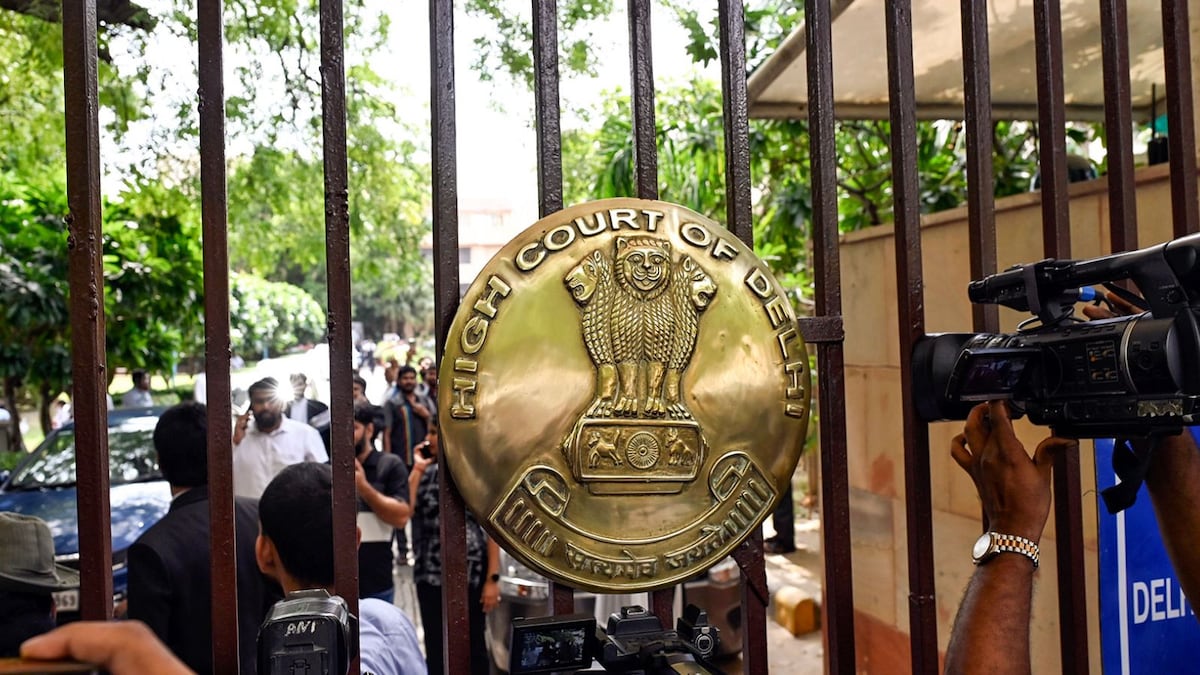
According to a Bar and Bench report, the Delhi Tax Bar Association (DTBA) has challenged a September 12, 2025 office memorandum issued by the Central Board of Direct Taxes (CBDT), which said that the tax treatment available to judges for specified allowances would continue only under the old tax regime.
The matter came up before a Bench of Justices Dinesh Mehta and Rajneesh Kumar Gupta on Tuesday. However, the hearing was adjourned after Delhi High Court Bar Association (DHCBA) president N. Hariharan urged the petitioner’s counsel not to argue the matter in view of the ongoing lawyers’ strike.
What is the dispute?
The petition relates to Section 22D of the High Court Judges Act, 1954, and Section 23D of the Supreme Court Judges Act, 1958.
These provisions state that certain benefits provided to judges—including rent-free official accommodation, conveyance facilities, sumptuary allowance and leave travel concession—shall not be included while computing their income under the head “Salaries”.
The dispute arose after a High Court judge wrote to the CBDT on August 12, 2025, stating that the utilities for tax deducted at source (TDS) statements, Form 16 and online income-tax return filing did not allow judges to report these statutory exclusions under the new tax regime.
The CBDT maintained that the benefit under Section 22D would continue only under the old tax regime, arguing that extending it under the new regime—which already offers lower tax rates and higher rebates—would result in a “double benefit” for judges.
Petitioner’s arguments
The DTBA has argued that the CBDT incorrectly treated the statutory exclusion as a tax exemption. According to the petition, the specified allowances do not form part of taxable salary income in the first place and therefore cannot be taxed under the new regime.
The association has also contended that the CBDT’s office memorandum violates Articles 125 and 221 of the Constitution, which provide that judges’ allowances cannot be varied to their disadvantage after appointment.
During the hearing, Senior Advocate Sachit Jolly, appearing pro bono for the DTBA, suggested an interim arrangement allowing judges to disclose these amounts under the category of “receipts not in the nature of income” until the case is decided.
However, following the DHCBA president’s request to respect the ongoing strike, Jolly agreed not to press for interim relief.
The High Court posted the matter for further hearing on July 16. No interim order was passed.