
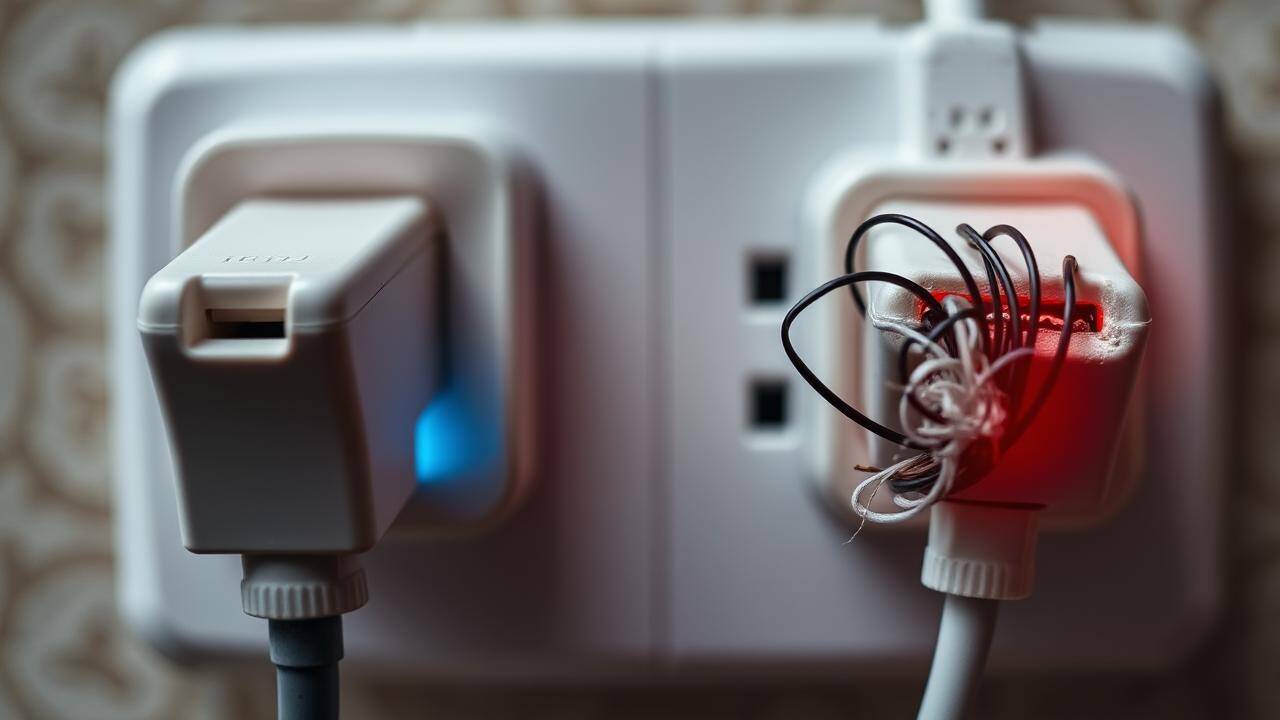
This heat sensation when one grasps the phone charger does not necessarily mean that the phone is charging very quickly or has a powerful battery. This is purely mechanical. In many homes in America, the only source of power for any electronic appliance is the wall plug, and it assumes that anything connected to it is powered well. One of the major reasons for localised overheating is having a loose plug.This is due to the nature of electricity itself. If there is some form of resistance within the circuit, such as a connection gap, there will be an increase in the amount of friction experienced. The result is that there will be an increase in temperature, especially in a confined area, such as the wall socket. This may lead to melting.High price of weak spring contact pressureA steady supply of electricity in your house is sustained by physical pressure. The pressure is exerted by the metal springs on the prongs in order to facilitate a good connection between the outlet and the device. With time, the springs lose their elasticity.A study published in the Fire Safety Journal titledSimulation based analysis of electrical fire risks caused by poor electric contact between plug and receptacle used advanced computer modelling to track exactly how dangerous this becomes. The researchers discovered that as contact pressure drops, the temperature at the connection point doesn’t just rise—it can spike to alarming levels. In their simulations, poor contact caused temperatures to jump anywhere from a noticeable 100 degrees Fahrenheit to a catastrophic 1,600 degrees Fahrenheit, depending on the current load.Heat generated in such areas does not remain there for long. Instead, it immediately gets transferred to its surroundings, which are generally insulating materials like the plastic cable itself. Once the heat reaches temperatures greater than the maximum limit of such insulation materials, their properties start deteriorating and can result in the emission of poisonous gases or even a flame at worst.Why is airflow important in your charger?It is most dangerous when a poorly connected charger is located close to a bed or under a couch, where it becomes difficult to ventilate the area. This is because we tend to conceal the unsightly charger cable behind these places. If the same charger had been located in an airy environment, natural convective currents would have taken care of any heat produced by the electric current.
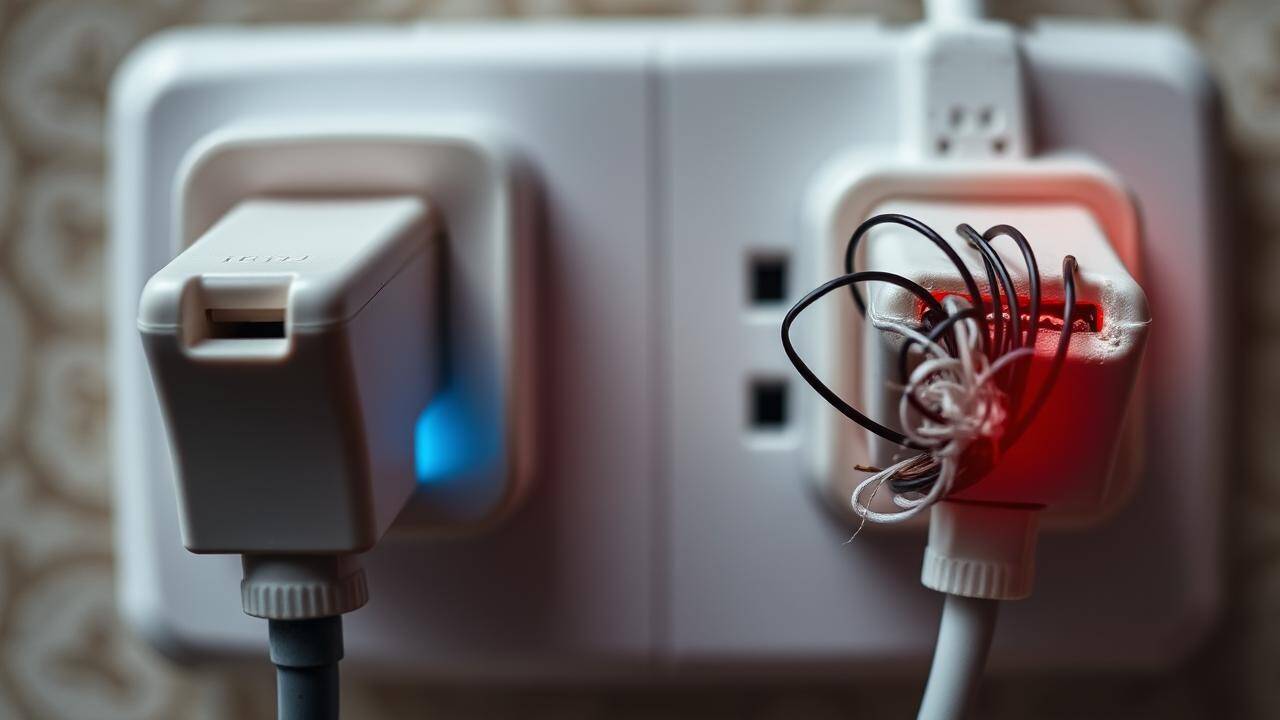
Poor ventilation exacerbates this risk. Look for signs like chargers falling out or burn marks on prongs, and replace faulty outlets for safety.
Fire Safety Journal had research conducted about the role of ventilation in these cases of overheating. It all comes down to one thing: minimal ventilation decreases the chances of fires through cooling the contact points. On the other hand, when your plug has already started heating up due to loose wiring, placing it behind a heavy curtain or inside a cupboard will only speed up the process of heating it up to the level required to start burning the surrounding material.Signs of loose wiring in your outletsThere’s no need for an electrician’s degree to take care of your home; a bit of practical knowledge is enough. One of the simplest ways to figure out whether there is a problem with the wiring in your outlet is called the gravity test. It consists of seeing whether or not your charger falls from the socket when pulled on slightly with your hand.You should also look for “pitting” or small black burn marks on the metal prongs of your charger. This is evidence of arcing, where electricity has been jumping through the air because the metal-to-metal contact was inconsistent. If you see these marks, or if you smell a faint “fishy” or ozone-like scent near the outlet, the connection is already reaching dangerous temperatures.To resolve the issue, however, resist the temptation of bending the charger plugs to allow them to fit into the socket. This is going to result in an uneven distribution of force, which is only going to exacerbate the issue. The ideal solution is simply to replace the wall socket. Nowadays, specification sockets utilise better materials, making them last for a much longer time compared to contractor-grade sockets. Once you make sure all plugs click properly when inserted, chargers are no longer going to overheat.