
He expects recovering demand and available capacity to support corporate earnings, with cyclical sectors such as financials, cement, autos and capital goods likely to outperform over the coming quarters.
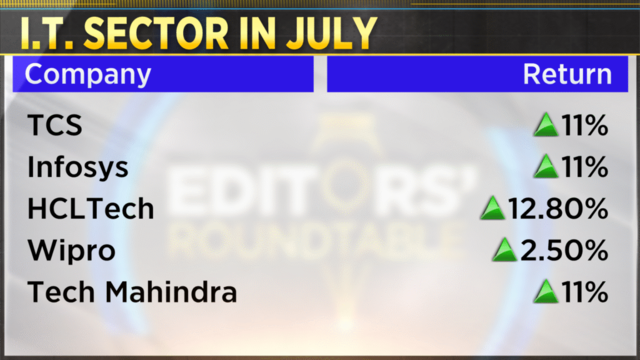
Tawakley remains cautious about IT services, saying structural changes in the industry are likely to keep margins under pressure even as artificial intelligence (AI) improves productivity. He also warns against overheating in unsecured lending and affordable housing finance, while identifying insurance as a compelling long-term opportunity as incomes rise and concerns over regulation remain overstated.
This is an edited transcript of the interview.Q: Do you want to begin with your view on the markets and where we’re headed?
A: I am reasonably comfortable with where things are. The way I am seeing the situation is that the economy is in decent shape. Why do I say that? Demand is recovering, and there’s still spare capacity, which is a good position to be in. When you have good demand along with spare capacity, I expect healthy revenue and earnings growth going forward.
Q: What will drive earnings in the second half?
A: I think the cyclical sectors should do well across the board. Sectors such as financials, cement, autos and capital goods should see steady demand, which should support earnings growth.
Q: Will the resurgence of West Asia tensions throw a spanner in the works? We were getting comfortable with crude at around $70-71 a barrel, and now prices have risen by $12-13 in just two weeks.
A: The way I see it, it’s obviously not good. Higher oil prices don’t help the economy, but I still think the economy should remain resilient. When there are issues in West Asia, global oil output falls. If oil output declines, global gross domestic product (GDP) takes a hit because oil is a critical input for production. However, not every country is affected equally. India needs around 5 million barrel of oil a day, and we have substantial foreign exchange reserves. That’s what these reserves are meant for.
When there is a shortage of oil, we should not have to cut back on consumption because that would eventually reduce economic output. I think we’re doing the right thing by not transmitting the entire burden to the economy. If we use our reserves to meet our oil needs, the economy should remain resilient.
Q: You have often said that if housing does well in India, it drives many parts of the economy. Is housing going well today?
A: Yes. If we look at cement consumption and home sales, both are doing well. If you ask me what worries me the most, it would be house prices rising to a level where they start curbing demand. That would become a setback for the economy. Now, however, that hasn’t happened.
Q: There was a concern that real estate sales were slowing, but stocks have rallied sharply. Has that concern faded?
A: Yes. There were concerns that sales would slow down, but that didn’t happen.
Q: Some believe that as under-construction homes get delivered, building material companies such as tiles and other related businesses will benefit. Is that broadly your view as well?
A: We spend a lot of time trying to forecast demand, but the reality is that you don’t make money just because demand grows. If supply grows faster than demand, you run into trouble. In many of the sectors we’re discussing whether it’s medium-density fiberboard (MDF) or several building material segments, there is very little constraint on supply expansion. I often use MDF as an example. Over the last 10 years, volume growth has been massive, but because supply also expanded rapidly, it wasn’t a particularly rewarding sector from an investment perspective.
As long as demand is growing, the more important question is whether there is any constraint on additional supply. One more point, when I say real estate is important, I mean it’s important for the overall economy. Construction activity creates jobs and generates broader economic activity. You don’t necessarily have to play the sector directly to benefit from that trend.
Q: From an investment perspective, how should investors evaluate real estate companies?
A: I think one of the mistakes investors make is focusing only on cash flows. It’s important to distinguish between cash flow and free cash flow. Free cash flow has a specific meaning. It refers to cash that can be distributed to shareholders through dividends. For that to happen, customer advances and collections aren’t enough. The business needs to report adequate profits through the profit and loss (P&L) before that cash becomes distributable.
So, it’s important to look not only at pre-sales and collections but also at reported profits.
The second question I ask is whether this is the right time to buy land or liquidate land. I would say this is a time to be a net seller of land. Land prices have been appreciated significantly, and they are cyclical. While house prices are still reasonable, land prices have moved up enough that I would prefer companies that are monetising land rather than acquiring more. If a company is a net seller of land, its balance sheet should shrink over time, and it should be able to pay healthy dividends. So, when I evaluate real estate companies, I look at whether they’re reporting profits and whether shareholders are getting some of those profits back through dividends.
Q: Is there a better way to play the housing theme through housing finance companies?
A: I just buy banks. What’s wrong with banks?
Q: IT stocks have rebounded after earnings came in better than feared. At the same time, there are concerns around aggressive pricing and competition. You have been cautious about IT. Has your view changed?
A: I am still cautious. Firstly, let’s talk about the term “irrational competition.” Competition is irrational only when companies lose money or fail to earn an adequate return on capital. As long as companies remain profitable, I wouldn’t call it irrational. It simply means margins were too high to begin with and are now moving towards more reasonable levels.
Twenty years ago, companies like Wells Fargo or JPMorgan had not discovered India. Indian IT companies could tell them, “It costs you $100 to do this work there; we’ll do it for $30.” Clients were happy with that, and they didn’t really care whether the vendor’s cost was $20 or $25. That allowed Indian IT companies to earn margins of 22-26%.
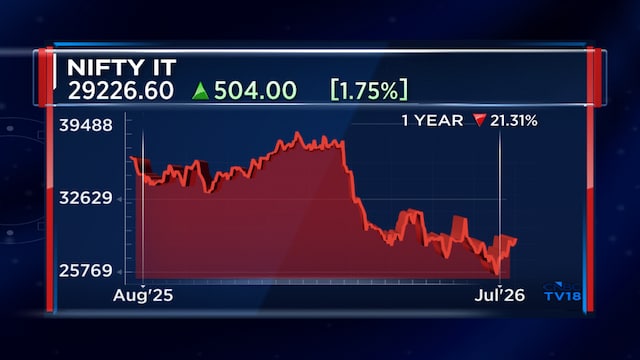
Today, the landscape has changed. Most global companies have their own global capability centers (GCCs) in India, and they are comfortable dealing with a limited set of vendors. As a result, competition has increased and margins need to moderate from earlier levels. If I were part of the industry, I might also feel it’s irrational competition. But as an economist, I wouldn’t describe it that way. Companies are simply operating at more reasonable margins now.
The second point is that, as an outsider, it’s difficult to judge demand. So, I use a simple framework. The leading indicator is whether companies are adding headcount. If they aren’t hiring, I don’t expect meaningful revenue growth because they themselves aren’t confident about future growth.
Q: But isn’t headcount disconnected from revenue in artificial intelligence (AI) era?
A: While companies may no longer bill purely on a time-and-material basis, competition ultimately keeps pricing linked to costs. When companies bid for projects, they estimate how many people they’ll need, how long the project will take and then add a reasonable markup. So pricing is still largely cost-plus. This is very different from product companies. When Microsoft sells software, the incremental cost of producing another copy is almost zero. It prices the product based on the value delivered to customers.
IT services don’t work that way. Competition ensures pricing remains linked to costs. So, I am willing to stick my neck out and say that if headcount doesn’t increase, companies may deliver more work with the same people, but the productivity gains will largely accrue to customers rather than shareholders. That’s why I continue to see headcount growth as a leading indicator of revenue growth, and I’m not seeing that in the numbers yet.
Q: You also believe margins in the capital goods sector have peaked. Why?
A: I am simply looking at history. I am not negative on the sector. I still expect demand to remain healthy because it’s a cyclical business. However, if I look across companies, whether engine manufacturers or other capital goods businesses, their margins are already close to historical peaks. So, earnings growth is likely to be driven mainly by revenue growth rather than by further margin expansion.
Q: Within large caps, are you finding enough investment opportunities? Which sectors do you like?
A: I am not saying valuations are cheap. The trailing P/E is around 21 times. My point is that I am expecting healthy earnings growth because the economic outlook is healthy. If you stay invested for three years and earnings continue to grow strongly, even if the market multiple compresses from 21 times to 19 times, you’ll lose around 10% from valuation compression, but earnings growth should more than offset that. You may not feel great about lower valuations, but you also won’t feel that investing was a mistake.
Q: Are there any sectors where you are particularly cautious?
A: One area that concerns me is what people call affordable housing finance. In fact, I don’t even like using the term “affordable housing.” What’s affordable depends on a person’s income.
My concern is that we are calling sub-prime lending “affordable housing.” Too much capital has flowed into this segment. There are now many lenders focused on this market. If you compare India with developed markets, people often say retail lending is underpenetrated because household credit as a percentage of GDP is much lower. That statistic is true, but it’s misleading.
In countries like the US and the UK, most household credit is housing finance.
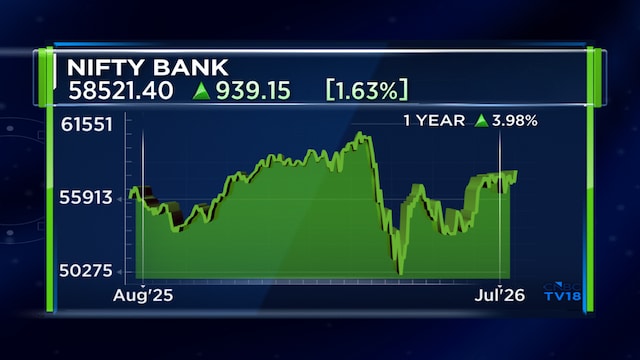
When you compare unsecured lending on a like-for-like basis—and include microfinance as unsecured lending—you don’t really see the same level of underpenetration. So, in my view, the two overheated segments in lending today are unsecured consumer lending and what is being called affordable housing finance. I prefer to think of lending as prime and sub-prime, rather than affordable and unaffordable housing.
Q: Is there any sector that the market has ignored but where do you see value?
A: I think insurance. I don’t fully understand why the sector has become so unloved. Even in this quarter, earnings were reasonably good, yet the market reaction was quite negative. I get the sense that investors are worried about regulatory changes. But if you look at the value chain, there are insurers and there are distributors. Supernormal profitability exists more at the distribution end than at the insurance company level. Insurance companies themselves earn reasonable profits; they’re not excessively profitable. So even if there is regulatory tightening, I think the burden is more likely to fall on distributors rather than insurers.
Watch the full conversatio here

Q: What about the argument that insurance penetration in India remains low?
A: I think insurance penetration is appropriate for India’s current stage of development. If someone doesn’t have enough money to meet today’s needs, they aren’t going to worry about life after death. People first need to pay school fees and put food on the table. So, it’s not useful to argue that people are underinsured without considering income levels. The right way to look at it is that insurance demand will naturally grow as income rises. That is why I am constructive in the sector.
Q1 banking results LIVE: Follow all the updates here