
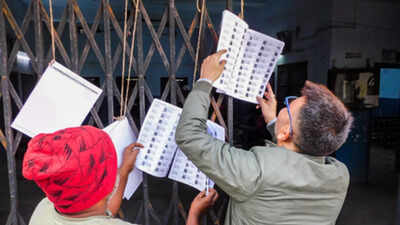
NEW DELHI: The Election Commission (EC) has informed the states that it would be conducting a Special Summary Revision of electoral rolls in 17 states, including the poll-bound states of Uttar Pradesh, Uttarakhand, Punjab, Manipur and Goa.In a letter to the chief electoral officers of the states and Union territories concerned, including Uttar Pradesh, Uttarakhand, Punjab, Manipur and Goa, the Election Commission said January 1, 2027, would be the qualifying date for the exercise.The Special Summary Revision (SSR) is intended to add eligible voters, especially young people and first-time electors, rectify errors in existing entries and ensure electoral rolls are accurate and up to date.The current term of the 403-member Uttar Pradesh assembly ends on May 22 next year. The tenures of the assemblies in Manipur, Goa, Punjab and Uttarakhand, which have 60, 40, 117 and 70 seats, respectively, are due to end on different dates in March 2027.Under the Representation of the People Act, 1950, the Election Commission is permitted to conduct elections “earlier than six months before the term expires”.
Notice by EC
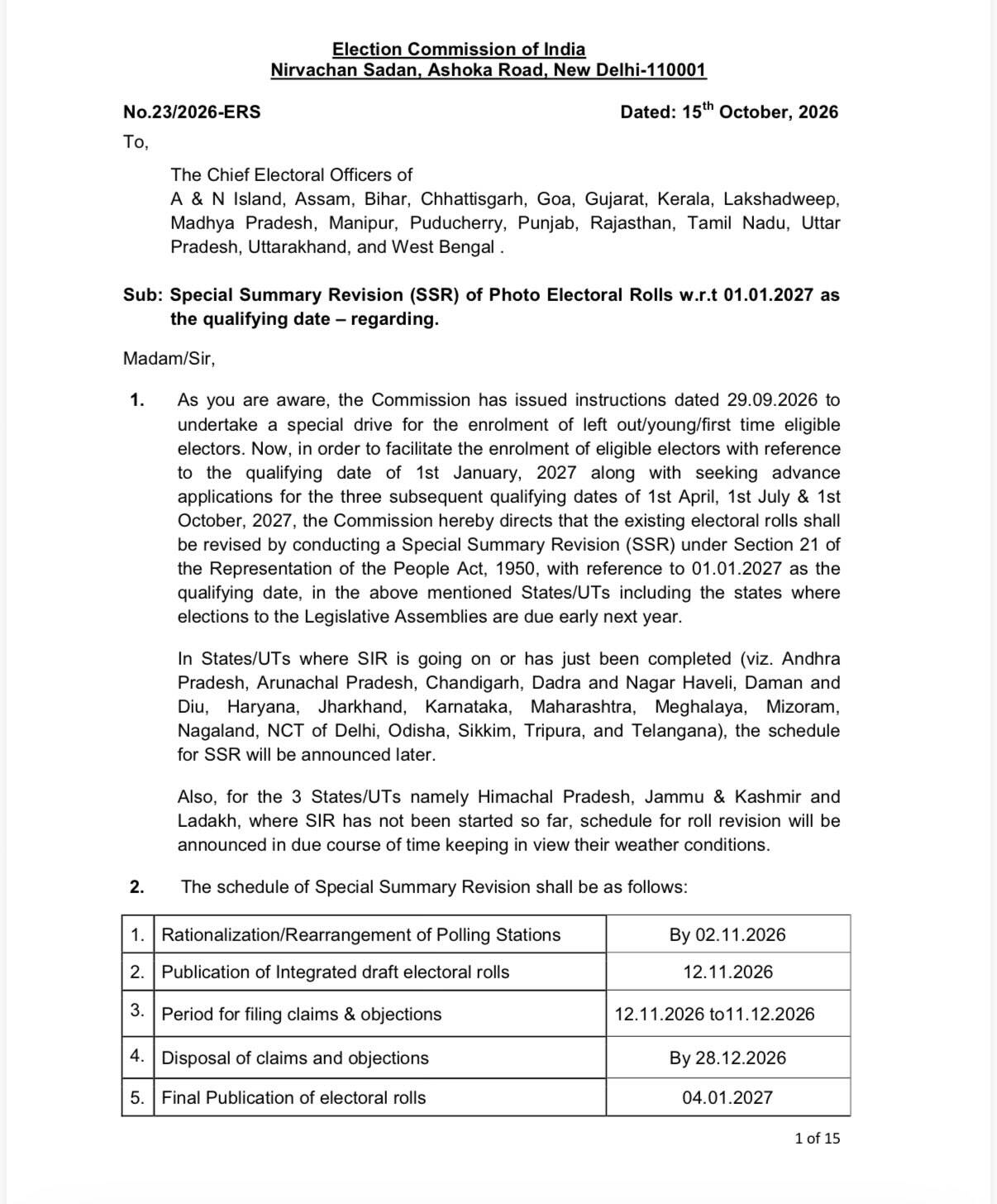
ECI’s notice to states.
How’s Special Revision different from SIR
While a Summary Revision focuses on new eligibles and routine corrections, SIR goes far deeper, involving statewide house-to-house verification, detailed scrutiny of entries, and large-scale data audits.For instance, under a Summary Revision, a voter who has shifted homes must file a form to update their address. Under SIR, the Booth Level Officer visits that address, confirms whether the voter still lives there, checks if anyone new has become eligible, and updates the roll based on physical verification rather than waiting for the voter to initiate the change.The SIR of electoral rolls has triggered a political controversy, with opposition parties raising concerns over the deletion of voters’ names and the possibility of eligible citizens being left out of electoral lists.The poll panel has maintained that the exercise is aimed at cleaning up electoral rolls by removing duplicate and ineligible entries, including those belonging to deceased voters, while ensuring that all eligible citizens are included.
Share your thoughts in the comments
Be respectful · TOI community guidelines
However, opposition parties have questioned the process, alleging that the exercise could lead to genuine voters losing their right to vote. They have also raised concerns over documentation requirements, verification procedures and the possibility of disproportionate effects on vulnerable groups, including migrant workers, the elderly and economically disadvantaged people.One of the main concerns surrounding SIR is the potential deletion of eligible voters’ names during the verification process.The dispute has also reached the Supreme Court, with petitions raising concerns about the manner in which the revision is being conducted. The legal debate centres on the Election Commission’s authority to revise electoral rolls and the safeguards available to voters who challenge their exclusion.