
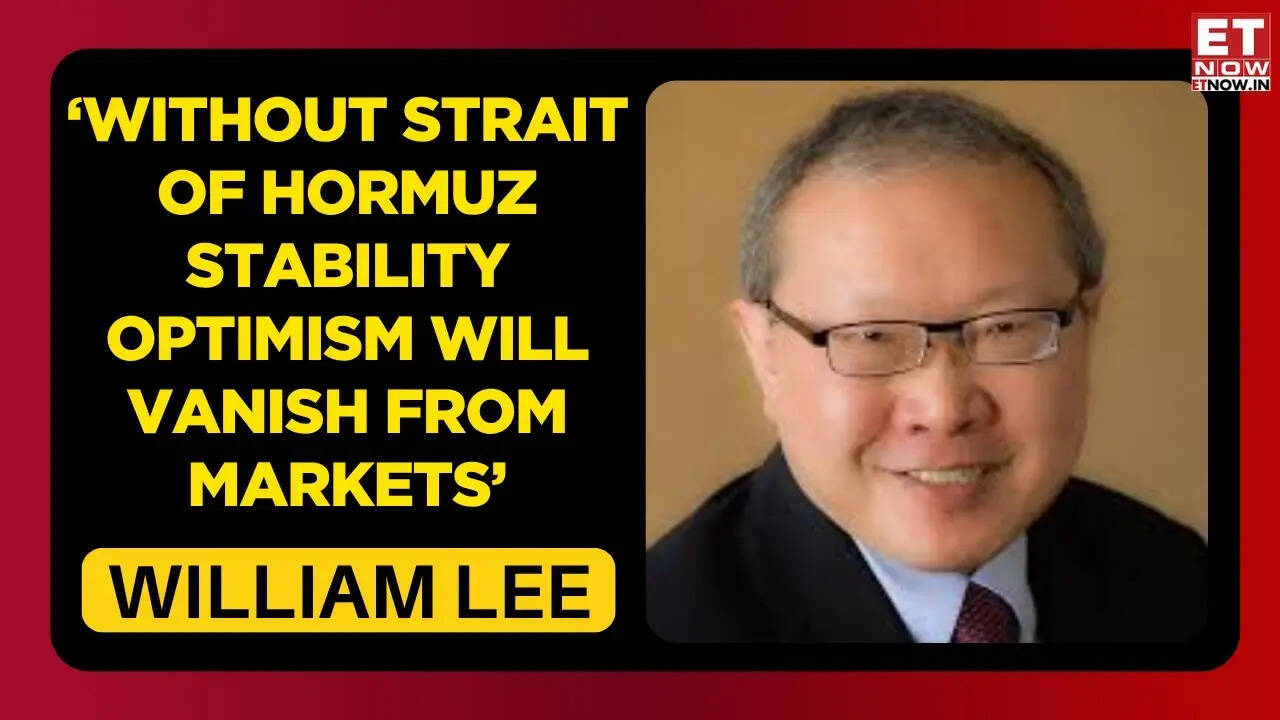
US-Iran Peace Deal: A potential thaw in US-Iran relations is lifting global market sentiment, with early signs of a tentative understanding easing concerns around disruptions in the Strait of Hormuz, one of the world’s most critical oil transit routes. The shift has triggered a broad “risk-on” mood across financial markets, fuelling expectations of an equity rally and softer oil prices if stability holds.
Speaking in an interview, William Lee, Chief Economist and Managing Director, Global Economic Adviser, underscored that the success of the agreement hinges heavily on unresolved nuclear concerns. “That really is the crux of the matter,” Lee said, noting that Iran has yet to formally commit to abandoning nuclear weapons ambitions. “Right now, we don’t have an agreement from Iran saying it will not have nuclear weapons. And now we’re hoping to negotiate with them to get that agreement.”
Despite these uncertainties, Lee pointed to economic incentives as a key driver behind the progress. “My reason for optimism… is that we’re hoping that the kind of bribe that we can give Iran will bring them to their senses,” he remarked, referring to Western efforts to reintegrate Iran economically. According to him, the promise of redevelopment and access to global markets could help “re-industrialize” the country and deliver long-denied economic benefits to its population.
Financial markets have already begun responding to the shifting geopolitical landscape. Lee pointed to early signals of recovery in equities, particularly in regions most exposed to energy supply disruptions. “The countries that have most depended upon energy from the Strait of Hormuz, that’s where the relief is going to be,” he said. He added that sustained stability in the waterway could support “a more permanent upswing in the equity prices,” while cautioning that any renewed tensions would quickly reverse gains.
Beyond geopolitics, Lee noted that structural themes such as the artificial intelligence (AI) trade continue to influence market direction, particularly in Asia. “The AI trade really is beginning to mature,” he said, highlighting a growing divide between companies delivering tangible productivity gains and those struggling to convince investors. “Investors are having to look for companies with something that will lead to higher productivity now,” he added.
For Asian economies, including India, the stakes are particularly high. Lee emphasised that stability in the Middle East is “absolutely central to better returns for investors,” while pointing out India’s vulnerability to supply disruptions. “India… found that it is very vulnerable to supply cutoffs,” he said, adding that diversification efforts, including partnerships on small nuclear reactors, could help cushion future shocks.
(Disclaimer: The above article is meant for informational purposes only, and should not be considered as any investment advice. ET NOW DIGITAL suggests its readers/audience to consult their financial advisors before making any money related decisions.)