
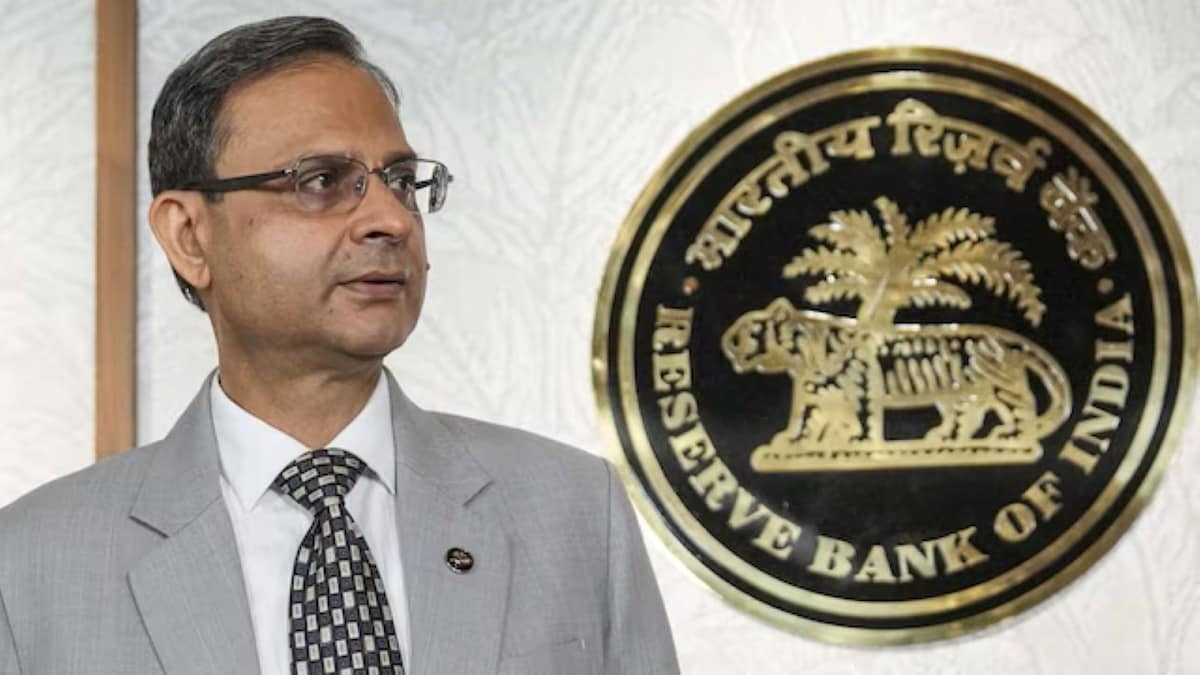
“Because there is a high growth, we should be watchful, and we should be alert, which we are,” Malhotra said in an interview with CNBC-TV18.
The governor said gold-backed loans across banks and non-banking financial companies (NBFCs) are now around ₹20 lakh crore, with NBFCs accounting for about ₹4 lakh crore.
He described the overall gold-loan book as still a single-digit share of the total credit book.
The rapid growth in gold loans has been driven by several factors, according to Malhotra. One is the rise in gold prices, which means borrowers can become eligible for a higher loan amount against the same collateral.
“The value of gold itself has increased. So they become eligible, therefore, with the same collateral, they become eligible for a higher amount of loan,” he said.
Malhotra also attributed some of the growth to the RBI’s rationalisation, clarification and simplification of its gold-loan rules, although he stressed that the central bank had not conducted a study to establish the contribution of each factor.
Why the RBI is not currently concerned
Malhotra said the RBI has “sufficient guardrails” around gold lending. These include LTV requirements, prudent benchmark prices used by lenders to value gold and supervisory monitoring.
He said the asset quality of gold-backed loans had improved for both banks and NBFCs over the past year.
“Gross NPA levels, you know, at less than 1%, about 0.4–0.5% and improving, does not suggest any overheating or matter of concern,” he said.
The governor also said the current LTV levels provide a cushion against a fall in gold prices.
He said the regulatory LTV limits are in the range of 75% to 85%, depending on the applicable loan category, and described them as conservative.
His illustration was that if the value of gold fell by 33% from 100 to 67, a loan at a 75% LTV would still remain collateralised. If gold prices fell by 50%, he said, the loss would be limited to around 13% under that illustration.
“Even then, you have collateral,” Malhotra said. “The loss is limited.”
He added that average LTV levels are currently low and within the tolerance band, while only a small proportion of loans are at levels that could be a concern.
What is driving the growth in gold loans?
The gold-loan market has expanded sharply in recent years.
A recent Motilal Oswal Financial Services estimates that the organised gold-loan segment reached ₹18.6 lakh crore in March 2026, nearly four times its size five years earlier.
The brokerage estimates that the segment grew 50% year-on-year in FY26, helped by a more than 60% increase in gold prices and higher demand for using gold to meet consumption and business requirements.
The rise in gold prices is particularly relevant because the value of the collateral determines how much a borrower can raise against pledged gold. Thus, a higher gold price can increase the loan amount available against the same quantity of gold, subject to the applicable LTV limit.
Motilal Oswal estimates current industry LTVs at around 55% for banks and 60% for NBFCs. These are average industry LTV estimates from the brokerage and should not be confused with the RBI’s regulatory LTV ceilings.
Repeat borrowing remains a risk to watch
While the RBI governor said current asset quality does not point to overheating, Motilal Oswal has flagged a separate risk: a growing dependence on repeat borrowers and top-up loans.
According to the brokerage, existing-to-asset borrowers accounted for 82% of gold-loan originations in 2025, up from 76% in 2022. Existing-to-gold-loan borrowers accounted for 90% of originations.
The brokerage said this means portfolio growth is increasingly being driven by repeat borrowing and top-up loans, which could pose an overleveraging risk.
Motilal Oswal also said the gold tonnage and customer base at Muthoot Finance and Manappuram Finance have remained broadly stagnant even as their loan books have risen, suggesting that higher gold valuations and repeat borrowing have contributed to the increase in outstanding loans.