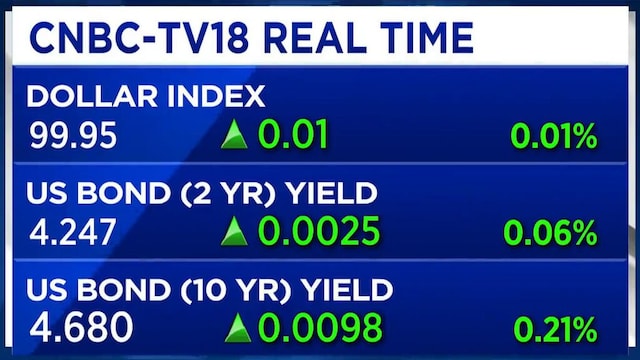
However, he cautioned that if the next two inflation readings come in hotter than expected, the September policy could see a rate hike.
Seth said the Fed’s reduced forward guidance is likely to keep markets volatile in the near term. The US bond market remains the biggest factor investors should watch, warning that further selling in long-term US Treasuries could weigh on global risk assets.
This is an edited transcript of the interview.
Q: What’s top of mind for you? We’ve had the conflict simmering for more than six months. There are worries about inflation, crude prices have risen, yields moved higher last week, and there are concerns around AI deals and AI debt funding. We also had Alphabet’s results. So, what is top of mind for you now?
A: I am still very focused on the US rates market and the steepening of the curve there. You’ve seen some big moves over the last few weeks, and you touched on the US Treasury market.
You continue to see that, and you saw the reaction function where the US Treasury, over the weekend, intervened in the Japanese yen. It was not just a currency focus; it was also about Japan’s intervention, which obviously led to the curve steepening further.
So, I think US rates will matter a lot. If you see more sell-off in the 10- to 30-year part of the curve, that’s not good news for risk assets.
Q: What level do you expect for the US 10-year yield? And do you expect the Fed to raise rates?
A: I still believe, in my base case, that the Fed is going to stay on hold for the next one to two quarters. We now have five different task forces put in place by Chair Kevin Warsh, so he’s going to wait for that.
But there is obviously a risk building up. If the inflation prints come in hot, it will be hard for the Fed Chair to hold the ground.
So, my base case is no rate hike. But there is a risk that the September meeting becomes live if the next two inflation prints are hot.
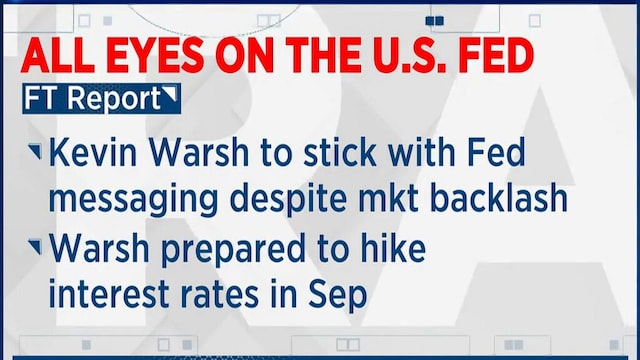
Q: But markets will keep worrying because many economists have questioned the Fed’s credibility. It has not laid out a clear path to bring inflation back to 2%, which hasn’t been achieved for the last five years or so. And it’s also not communicating clearly that it won’t raise rates. Has that uncertainty kept markets pricing in higher rates?
A: To some extent, what you are seeing in the market is that the lack of forward guidance is leading to higher volatility, and markets are trying to second-guess the Fed.
But one thing is very clear: Chair Warsh has been absolutely crystal clear about reducing forward guidance and letting the market do its work, which is how it used to be 25 years ago.
Watch the full conversation here

Most people have forgotten that era because they haven’t lived through a period without forward guidance. You have to watch the data.
So, in the short term, it will introduce more volatility and the risk of further steepening of the curve. But over the longer term, I don’t think markets will remain as worried as they are today about the Fed’s lack of communication.
Catch all the latest updates from the stock market here