
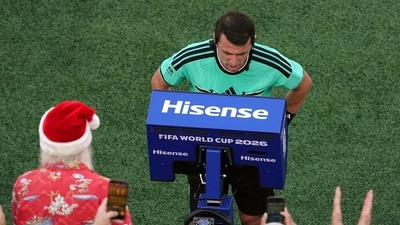
FIFA has introduced an additional layer of VAR protection for the remainder of the 2026 World Cup, placing video officials inside stadiums while retaining its centralised review operation in Dallas.
The adjustment comes during a period of intense scrutiny over refereeing standards at the tournament, although the measure itself is understood to have been introduced primarily as a safeguard against technical or communication failures.
On-site VAR officials added as technical backup
Under the new arrangement, a VAR official and a reserve VAR official will be stationed at every stadium for the remaining matches of the competition.
The central Video Operation Room at the International Broadcast Centre in Dallas will continue to handle reviews and communicate with match officials in the usual manner. The stadium-based team will only be required to step in if the connection between the venue and the central VAR hub is disrupted.
The system is intended to ensure that a technical breakdown does not leave a match without video assistance or cause significant delays while communication is restored.
The revised operation was first used during France’s quarter-final victory over Morocco. Uruguayan official Leodán González and Nicaraguan referee Tatiana Guzmán were reportedly positioned at the stadium as the on-site VAR and reserve VAR, respectively.
They remained ready to take control of the video review process if the Dallas-based operation encountered any technical problems.
The addition does not represent a change to the laws governing VAR interventions, nor does it alter the threshold for overturning an on-field decision. Dallas remains the primary centre of control, with the stadium officials functioning as an emergency backup rather than a second decision-making unit.
FIFA change operations after fury over VAR standards
Egypt were furious with several decisions during their dramatic 3-2 defeat by Argentina in the round of 16, while England manager Thomas Tuchel strongly criticised the standard of officiating following his side’s chaotic victory over Mexico.
Those complaints have placed VAR and tournament referees under considerable pressure heading into the decisive stages of the World Cup.
The new system, though, should not be interpreted as an admission that the centralised VAR model has failed or that FIFA has altered its approach because of individual refereeing decisions.
Instead, it provides the tournament with an immediate fallback option. Should the link with Dallas fail, the officials already inside the stadium can take over without forcing the match to continue without VAR or endure a lengthy technical interruption.
With the semi-finals and final approaching, FIFA’s objective is clear: whatever controversy follows a decision, it does not want technology failure to become part of it.